

When you think that a brutal regime’s descent into the inhuman has peaked, you come across a new revelation that proves you wrong.
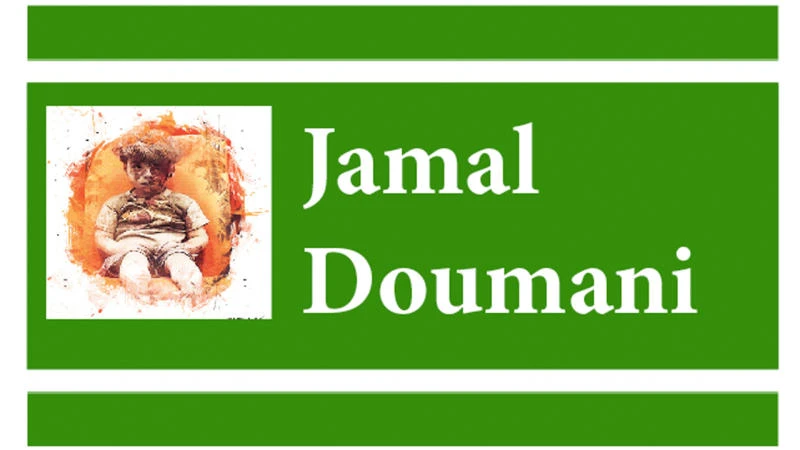
How could the regime in Damascus, you ask, top its chlorine gas attacks on Ghouta in August 2013 and the barrel bombs it dropped on its own citizens in hospitals, schools, bakeries and town squares? And what tops that haunting image from earlier this week of 5-year-old Omar Daqneesh — an image that caused outrage around the world — being rescued, still dazed and bloodied, from a destroyed building in Aleppo after an air strike, one that led to comparisons with that other image of Aylan Kurdi, a 3-year-old whose body was washed up on a Turkish beach after his Syrian family attempted to cross to Greece almost exactly a year ago?
Yes, leaders of the Syrian government have outdone themselves. A new report by Amnesty International released on Wednesday confirms that, since the beginning of the uprising in 2011, close to 18,000 people have perished while incarcerated by the authorities, equivalent to 10 souls a day dying from torture, beatings, electric shock, disease, starvation, neglect and the rest of it, all of which is standard procedure in Syrian prisons and other detention centers.
The report quotes one survivor as saying: “I saw the blood. It was like a river. I never imagined humans would reach such a level.” And yes, when it comes to the modus operandi of Bashar Assad’s regime, we have to imagine the unimaginable.
Most of the detainees in Syrian prisons are ordinary folks suspected, but never convicted, of “opposing” the government. Syria’s State Emergency law, in force since 1970, allows the authorities to arbitrarily detain political suspects at will for an unlimited duration of time, held in isolation for months or years without charge or trial. And the suspects need not be political activists. Civil society activists, newspaper reporters, citizen journalists, humanitarian staff have been equally targeted by both government forces and pro-government militias.
And once incarcerated, say in a notorious prison like Saydnaya — described by the London Guardian as “the worst place on earth” — you enter an approximate version of Dante’s Hell. The chances of you emerging from there with your internal psychic economy intact are slim indeed.
The 18,000 souls who perished in Assad’s detention facilities over the last five years are now, thankfully, no longer in their jailers’, but in their Maker’s, custody. The survivors, on the other hand, should they survive the tests of incarceration and one day be released, will go on to face other horrors — the horrors in the mind. The physical pain they had faced under torture will be left behind in the torture chamber. But now they have to face, often for the rest of their lives, the intrusive re-experiencing of their ordeal — withdrawal, numbness, hallucinations, difficulty concentrating, nightmares, memory loss, depression and other trauma-related psychotic symptoms, often classed by the therapeutic community as Post-traumatic Stress Disorder (PTSD) or Cumulative Trauma Disorder (CTD).
Torture haunts you. You continue living with it as you do with your own skin. Consider this: Many inmates released from Guantanamo, for example, reported experiencing — even now safe back in their own home countries, with loving family members and trusted friends — panic attacks upon hearing the sound of approaching footsteps or seeing someone in uniform approaching them from the other side of the street.
No question about it, the crime that Syria’s regime has committed by torturing 18,000 people to death is equaled only by the enduring pain that will stay with those tens of thousands of other detainees it may one day release from its prisons — veritable slaughter houses where, would interrogators not kill you, they would dismantle your identity, your humanity and, often, your mind.
In June 2015, we had a glimpse — intimate, direct and graphic — of what the Syrian regime does to dissidents once in its detention. A police officer, who worked as a photographer for the prison system, but who all along had been downloading thousands of high resolution photographs on flash drives, defected to the opposition. His photographs showed corpses shot at close range, with all of them showing signs of torture: Gouged eyes, mangled genitals, bruises and dried blood from beatings, burns and marks from strangulation.
Code-named Caesar, he appeared before the House Foreign Affairs Committee, but though his name was never revealed, his testimony was made public. Look it up. It reads in equal parts Darkness at Noon, The Gulag Archipelago and The Killing Fields. It shows us how some men, such as the ruling elite in Damascus today, can destroy what is of man in man and restore in him what is of beast.
Meanwhile, we bow our heads as we pay our respects to those 18,000 lost souls, and say: Rest in peace, brothers and sisters. Rest in peace.
How could the regime in Damascus, you ask, top its chlorine gas attacks on Ghouta in August 2013 and the barrel bombs it dropped on its own citizens in hospitals, schools, bakeries and town squares? And what tops that haunting image from earlier this week of 5-year-old Omar Daqneesh — an image that caused outrage around the world — being rescued, still dazed and bloodied, from a destroyed building in Aleppo after an air strike, one that led to comparisons with that other image of Aylan Kurdi, a 3-year-old whose body was washed up on a Turkish beach after his Syrian family attempted to cross to Greece almost exactly a year ago?
Yes, leaders of the Syrian government have outdone themselves. A new report by Amnesty International released on Wednesday confirms that, since the beginning of the uprising in 2011, close to 18,000 people have perished while incarcerated by the authorities, equivalent to 10 souls a day dying from torture, beatings, electric shock, disease, starvation, neglect and the rest of it, all of which is standard procedure in Syrian prisons and other detention centers.
The report quotes one survivor as saying: “I saw the blood. It was like a river. I never imagined humans would reach such a level.” And yes, when it comes to the modus operandi of Bashar Assad’s regime, we have to imagine the unimaginable.
Most of the detainees in Syrian prisons are ordinary folks suspected, but never convicted, of “opposing” the government. Syria’s State Emergency law, in force since 1970, allows the authorities to arbitrarily detain political suspects at will for an unlimited duration of time, held in isolation for months or years without charge or trial. And the suspects need not be political activists. Civil society activists, newspaper reporters, citizen journalists, humanitarian staff have been equally targeted by both government forces and pro-government militias.
And once incarcerated, say in a notorious prison like Saydnaya — described by the London Guardian as “the worst place on earth” — you enter an approximate version of Dante’s Hell. The chances of you emerging from there with your internal psychic economy intact are slim indeed.
The 18,000 souls who perished in Assad’s detention facilities over the last five years are now, thankfully, no longer in their jailers’, but in their Maker’s, custody. The survivors, on the other hand, should they survive the tests of incarceration and one day be released, will go on to face other horrors — the horrors in the mind. The physical pain they had faced under torture will be left behind in the torture chamber. But now they have to face, often for the rest of their lives, the intrusive re-experiencing of their ordeal — withdrawal, numbness, hallucinations, difficulty concentrating, nightmares, memory loss, depression and other trauma-related psychotic symptoms, often classed by the therapeutic community as Post-traumatic Stress Disorder (PTSD) or Cumulative Trauma Disorder (CTD).
Torture haunts you. You continue living with it as you do with your own skin. Consider this: Many inmates released from Guantanamo, for example, reported experiencing — even now safe back in their own home countries, with loving family members and trusted friends — panic attacks upon hearing the sound of approaching footsteps or seeing someone in uniform approaching them from the other side of the street.
No question about it, the crime that Syria’s regime has committed by torturing 18,000 people to death is equaled only by the enduring pain that will stay with those tens of thousands of other detainees it may one day release from its prisons — veritable slaughter houses where, would interrogators not kill you, they would dismantle your identity, your humanity and, often, your mind.
In June 2015, we had a glimpse — intimate, direct and graphic — of what the Syrian regime does to dissidents once in its detention. A police officer, who worked as a photographer for the prison system, but who all along had been downloading thousands of high resolution photographs on flash drives, defected to the opposition. His photographs showed corpses shot at close range, with all of them showing signs of torture: Gouged eyes, mangled genitals, bruises and dried blood from beatings, burns and marks from strangulation.
Code-named Caesar, he appeared before the House Foreign Affairs Committee, but though his name was never revealed, his testimony was made public. Look it up. It reads in equal parts Darkness at Noon, The Gulag Archipelago and The Killing Fields. It shows us how some men, such as the ruling elite in Damascus today, can destroy what is of man in man and restore in him what is of beast.
Meanwhile, we bow our heads as we pay our respects to those 18,000 lost souls, and say: Rest in peace, brothers and sisters. Rest in peace.


