
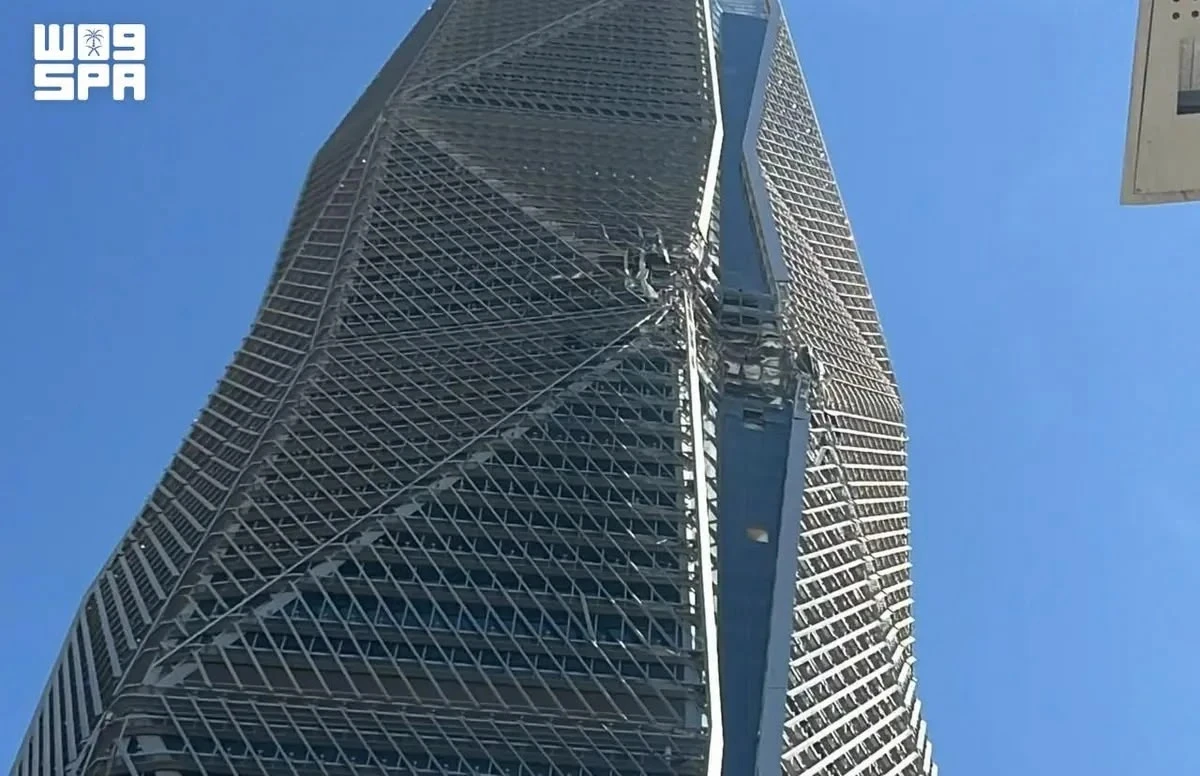

Through repeated military strikes targeting the King Abdullah Financial District in Riyadh, the Houthis are seeking to turn the site’s symbolic significance within the Saudi economy into a security and political pressure tool against the Kingdom. They aim to portray Saudi Arabia as incapable of defending one of the capital’s most vital districts, which has increasingly become a magnet for foreign companies. It is as though the Houthis are intent on undermining Saudi Arabia’s image as a modern, forward-looking country and an attractive destination for investment.
Their claims, however, are routinely exaggerated and highly misleading, often relying on images and videos manipulated using artificial intelligence. The extent of this fabrication has been exposed by Saudi statements, which have been explicit in clarifying the scale of the damage sustained in the area and confirming that it resulted from falling debris from intercepted missiles, rather than the direct, precision strikes claimed by the Houthi-run Al-Masirah channel.
Investment institutions and vital civilian infrastructure offer the Houthi group targets with considerable media appeal and symbolic and economic significance. This explains the repeated attacks against them, despite the fact that such actions violate international law, endanger civilian lives and reinforce the group’s image as a terrorist faction that targets civilians and critical infrastructure for political purposes.
The Houthis, for their part, are counting on these attacks to alter Saudi Arabia’s calculations in Yemen or perhaps to push Riyadh to seek Iranian or Omani mediation or enter into direct dialogue with the group. This is a flawed assessment. At this stage, the Saudi leadership sees the need to put an end to Houthi attacks through intensive and precise military operations by the forces of the Coalition to Restore Legitimacy in Yemen.
These operations target ballistic missile launch platforms, drone storage facilities, military installations, camps and Houthi supply lines in order to curtail the group’s ability to strike Saudi territory. They are also intended to bring the Houthis back down to their actual size and prevent them from exploiting seaports to bring in additional equipment used in weapons manufacturing. In other words, Riyadh will not make any security or political concessions to the Houthis. Instead, it will work to strengthen the legitimate Yemeni government and the fighters aligned with it, imposing substantial military and economic losses on the Houthis, even if this happens gradually.
Riyadh will not accept a situation in which militias use attacks on civilians and economic infrastructure as a means of political blackmail
Hassan Al-Mustafa
Returning to Houthi attacks on the Saudi capital, an examination of the operational pattern reveals three main categories of target. The first is financial and economic infrastructure, including the Public Investment Fund Tower in the King Abdullah Financial District, which is home to more than 140 companies, including 25 regional headquarters.
The second comprises civilian transport facilities, particularly King Khalid International Airport, where an attack on Oct. 10 killed 13 people and injured more than 300.
The third category consists of energy facilities and their administrative infrastructure, including the Aramco building in Riyadh, which was damaged on Nov. 8. The Ministry of Energy attributed the damage to debris from an intercepted missile, with no casualties reported.
Politically, the attacks are linked to the Houthis’ efforts to improve their political and operational standing, bolster their image among their supporters and intimidate Yemeni groups hostile or neutral toward them. This comes particularly after their advances along parts of the Red Sea coast, their siege of Taiz and their continuing threats against Aden. Yet this reckless gamble carries significant risks.
In my view, it is an ill-considered venture with potentially serious consequences, driven more by excessive self-confidence than by a realistic assessment of the situation. The Houthis appear to believe that these strikes could shift the balance of power. This reflects a misreading of Saudi policy and is more likely to produce the opposite result, since Riyadh will not accept a situation in which militias use attacks on civilians, energy facilities and economic infrastructure as a means of political blackmail.
Saudi Arabia’s political and military positions reflect a strategy that combines risk management, deterrence and military and intelligence operations against targets in areas under Houthi control or along their smuggling and supply routes. The Kingdom also retains its full right to take whatever measures are necessary to defend its sovereignty and national assets in accordance with international law.
This was affirmed in a Saudi Foreign Ministry statement issued on Nov. 19, which called on the permanent members of the UN Security Council to assume their responsibilities. The statement warned that the risks posed by these developments extend beyond Saudi Arabia, threatening global energy security and maritime navigation through the Bab Al-Mandab Strait and the Red Sea. It also highlighted the danger of armed groups expanding their reach and seizing control of additional territory, thereby emerging as an even more formidable threat in the future.
On the military front, Maj. Gen. Turki Al-Maliki, spokesperson for the coalition, announced that 60 targets were destroyed on Nov. 18, followed by seven targets and six workshops used to manufacture and assemble missile and drone launch platforms on Nov. 20. The pattern of operations reveals a focus on weapons depots, assembly workshops, supply chains and launch sites.
Riyadh has a comprehensive range of options, including strengthening its air defenses, protecting its economic infrastructure, degrading Houthi offensive capabilities and pursuing smuggling and financing networks in cooperation with international partners.
Saudi Arabia will continue to reinforce these complementary tracks, ensuring close coordination between political efforts and diplomatic engagement in international forums on the one hand and security and military operations on the other. The aim is to thwart the Houthis’ objectives and strengthen the legitimate Yemeni government’s ability to fight the militia, while also protecting Saudi territory against repeated attacks. Observers can see that Riyadh is determined to pursue this course without retreating until the desired security and peace are achieved.
Hassan Al-Mustafa is a Saudi writer and researcher interested in Islamic movements, the development of religious discourse, and relations between Gulf Cooperation Council states and Iran.
X: @Halmustafa


