

The British government has seen fit to dip into its new sanction powers and go after eight Israeli construction companies and one Israeli group, Tsav 9, which works to block the entry of aid into Gaza.
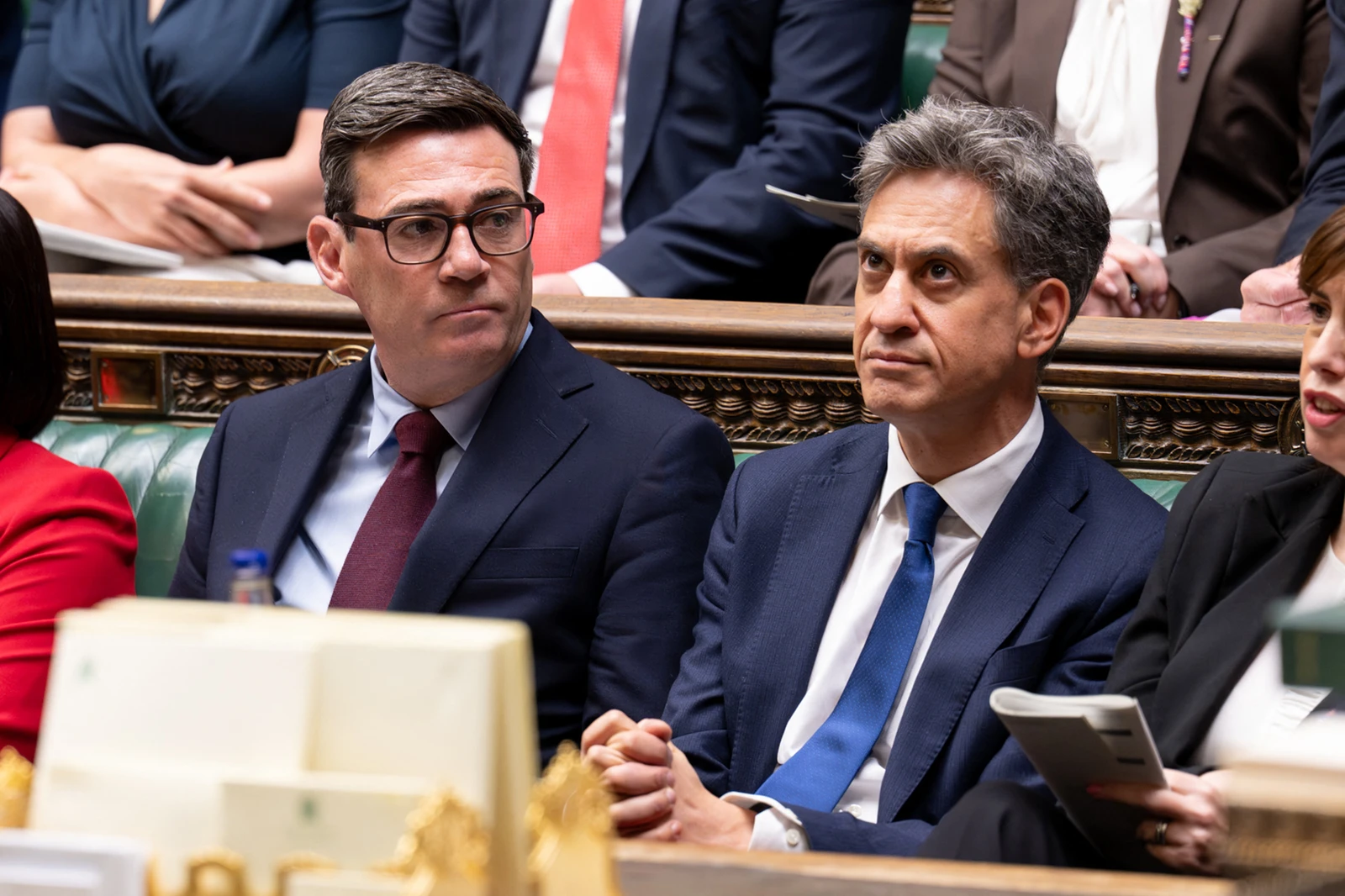
Foreign Secretary Ed Miliband, who announced in September there would be a trade ban with settlements, said: “We will not stand by and watch the two-state solution be destroyed.” However, his predecessors over recent decades certainly did.
The UK is taking action but why are no Palestinians jumping for joy and draping themselves in the British flag just yet? And why are other states not joining in?
The British government may no longer be just standing by but these measures barely amount to serious action. It is a tap on the shoulder of a government committing genocide, while merely penalizing some of its friends.
Israeli Foreign Minister Gideon Saar has pledged to protect the targeted companies and to introduce countermeasures. One option might be to close the British mission in Jerusalem completely, having forced it to downgrade its status last month.
The government has named the crime and even pointed the finger at the criminals — but still it has missed the target
Chris Doyle
The extraordinary part of this round of sanctions is that the government has named the crime and even pointed the finger at the criminals — but still it has missed the target.
The primary party responsible for restricting the entry of lifesaving aid into Gaza is, without question, the Israeli government, not least through the body known as COGAT. Tsav 9 only protests and tries to block the minimal amount of aid that COGAT allows to enter.
It is also clear who is legally responsible. The British government even states that Israel, as the occupying power, has a duty of care toward the civilian population in Gaza. The statement announcing the sanctions was clear that 150,000 tents required for sheltering Palestinians from the winter rains “are being held by the Israeli authorities,” which are also blocking the entry of timber needed for emergency shelter kits.
Another issue is that UK ministers state that they want to target those involved in settlement expansion, not just the settlements themselves. But the existing settlements should not be excluded from action and are just as illegal.
The line that the UK will go after those who profit from the entire settlement enterprise rings rather hollow
Chris Doyle
The eight construction, property development and architectural companies are all Israeli and most are based in the settlements. Just three also appear to operate within Israel itself. They have no obvious international business, so it is not clear how the UK sanctions will impact them. It is unlikely they have assets in Britain that can be frozen. Why are the major Israeli companies operating in the settlements not on this sanctions list? Tsav 9 also probably does not have a bank account that the UK can sanction.
And where are the British companies on the sanctions list? There are UK companies whose products and services are used in the settlements.
The British hesitancy stems from a reluctance to hit the Israeli nonsettlement economy for now. So, the line that the UK will go after those who profit from the entire settlement enterprise rings rather hollow.
The settlement trade ban announced in September will take, according to the government, about six to nine months to introduce. Ministers insist it has to be robust so that the measures cannot be challenged legally. But the detail is thin.
Yet, even if one accepts that the government deliberately avoided taking action against Israeli authorities, what about other targets? Why, for example, was Yulia Malinovsky, a member of the Knesset for Yisrael Beiteinu, not sanctioned? She participated in protests that blockaded aid. And should the leader of Tsav 9, Yael Sabrigo, not be sanctioned as an individual alongside others?
This is the first set of UK sanctions under its new powers. Being generous, this can be seen as a warning shot to the Israeli government, Israeli businesses and extremist groups like Tsav 9.
It is also just before decisions on the E1 settlement project may take place. Should that go ahead, it is very likely that Britain and other states will adopt tougher measures. The companies that bid for the tenders for this doomsday settlement project know they may face sanctions.
That said, Israeli press reports indicate that the British moves are having a chilling effect on the Israeli economy. The head of Bank Leumi said last week that Israeli companies are now struggling to get financing when trying to do major deals internationally. Is this the sign of a credit freeze taking place? Are there undeclared sanctions from international banks starting to come into play?
This should be seen as a first step, albeit a very weak one. Domestic pressures will mean the UK government will almost certainly have to go further. Australia did join in, sanctioning three Israeli individuals and four entities involved in settlement projects.
But what would really push things forward — and start building proper pressure — is other major European states taking action as well. Britain alone will not be the game-changer. It needs backup.
Chris Doyle is director of the Council for Arab-British Understanding in London. X: @Doylech


