
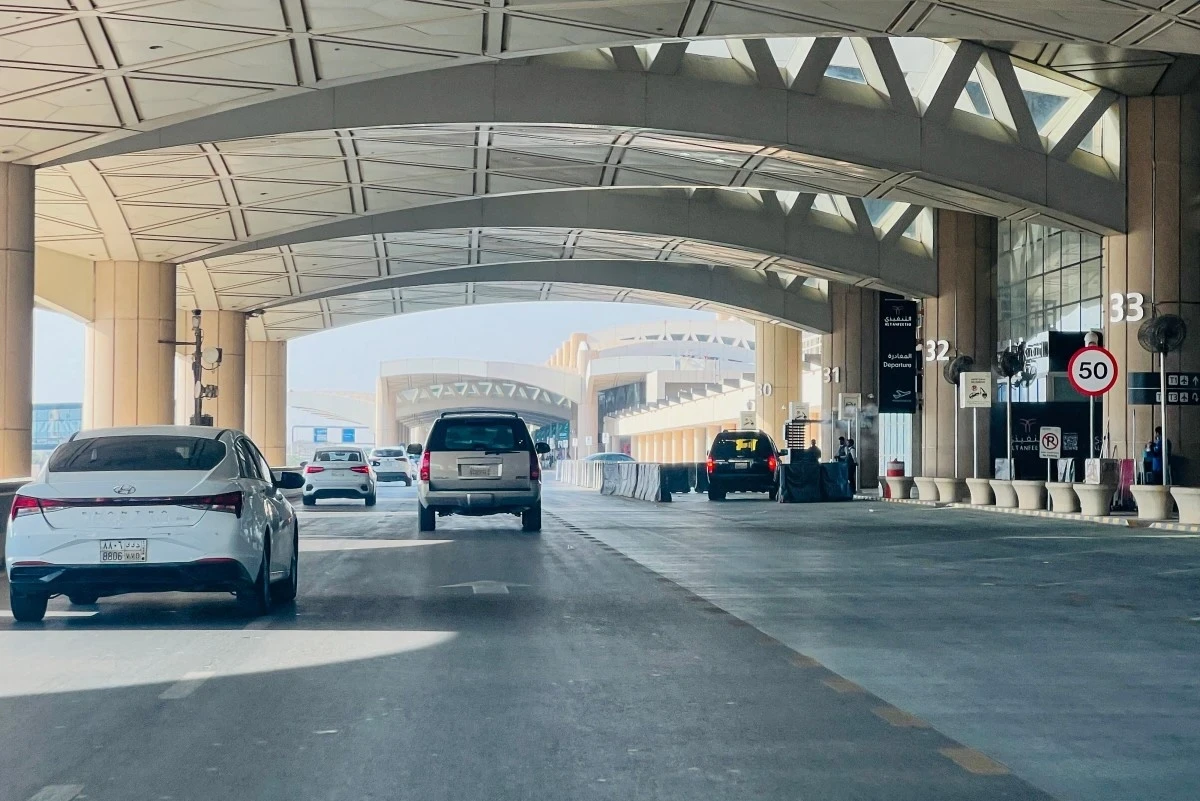

When the Houthis attack Saudi Arabia, the consequences quickly extend to global interests in energy, trade and aviation. The first price is paid by civilians, whose lives and safety are put at risk. The repercussions then reach economies and societies far removed from the attacks themselves. Treating this as a Saudi problem or a regional dispute understates a threat to the foundations of international security, leaving the world to pay for its failure to confront it.
Saudi Arabia sits at the heart of the global energy system, close to some of the world’s most important shipping routes. Its airports are hubs for travel and business across vast regions. Attacks on these assets give an armed group influence beyond its borders far out of proportion to its economic and political weight. That raises a fundamental question: How should the world respond when missiles and drones become instruments of pressure on states, people’s lives and the cost of everyday necessities?
Understanding the threat begins with the Houthis themselves. The movement emerged in northern Yemen, particularly Saada, from a Zaydi religious revival in the 1990s. It later evolved into an armed organization that fought successive wars against the state and seized Sanaa in 2014.
The movement’s local roots do not make its ties to Iran any less significant. Iranian weapons, training and expertise have helped develop Houthi military capabilities, particularly missiles and drones. Houthi operations also align with Tehran’s policy of extending its influence and pressuring its adversaries through allied armed groups. Yet the Houthis retain their own local interests and independent ambitions. We therefore cannot assume that every attack follows a direct Iranian order. This degree of autonomy leaves the Houthis responsible for their decisions, while their backer remains responsible for enabling the attacks.
The global cost begins with energy. Saudi Arabia is one of the world’s largest oil exporters and the security of its facilities and export routes directly affects manufacturing, transport and prices. The US Energy Information Administration’s October outlook noted that attacks on the Kingdom’s East-West Pipeline temporarily disrupted a vital route bypassing the Strait of Hormuz and helped push Brent crude to $131 a barrel on Sept. 15. The connection between an attack on Saudi infrastructure and higher costs for consumers thousands of miles away could hardly be clearer.
The UN’s condemnation underscores the violation of international law. But protecting civilians requires action beyond statements.
Dr. Abdellatif El-Menawy
The danger grows when alternative export routes also come under pressure. The East-West Pipeline carries oil to Yanbu on the Red Sea coast, helping Saudi Arabia bypass the Strait of Hormuz. But this outlet depends on secure facilities, ports and shipping routes. Cargoes heading south toward Asia must also pass through Bab Al-Mandab. Risks can therefore accumulate across several routes, weakening the market’s ability to absorb shocks and increasing the cost of securing supplies.
Trade is another casualty. In 2023, the Suez Canal, part of the Red Sea shipping route, handled about 12 percent to 15 percent of global trade, according to UN Trade and Development. The organization estimated that rerouting ships around the Cape of Good Hope adds about 12 days to journeys between Asia and Europe. Those extra days mean higher fuel, insurance and wage costs, delayed goods, tied-up capital and added pressure on food supplies and industry.
Attacks on airports threaten the movement of people as well. Airport closures and flight diversions disrupt airline networks and connections, affecting travel, business and tourism. Operators and passengers bear the costs. More damaging still is the erosion of confidence in the safety of civilian facilities. The consequences also reach Egypt and other Red Sea countries, whose interests depend on secure shipping and the restoration of trade through Suez.
The world pays a political price whenever an attack succeeds in forcing others to accept its terms. Allowing this pattern to continue encourages other groups to use missiles and drones to blackmail states, while undermining international commitments. It also consumes resources through constant protection and military readiness and raises the risk of a miscalculation opening another front. Yemen itself remains among the greatest losers: every expansion of the group’s military adventures beyond its borders further diminishes the prospects for peace and development.
The UN’s condemnation underscores the violation of international law. But protecting civilians requires action beyond statements. The UN Security Council must monitor enforcement of the arms embargo on the Houthis, strengthen investigations into smuggling and financing networks, and impose targeted sanctions on those responsible and their supporters. These measures should be accompanied by documentation of the attacks, investigations and accountability, while safeguarding the flow of food and medicine into Yemen. To be effective, pressure must reach the sources that sustain the attacks.
The US and Europe have a responsibility to support the defense of airports and critical facilities, share intelligence and protect shipping. Protective measures are likely to continue but ending the threat requires broader coordination and a clear political objective for military action: stopping attacks and preventing their recurrence. Deterrence requires capability and credibility. Diplomacy needs that deterrence behind it. Intermittent action gives the Houthis time to rebuild their capabilities and wait for international attention to fade.
China and Russia also have a role. Their energy and trade interests give them a direct reason to act, while their relations with Tehran offer an opportunity to exert pressure. Iran must be pressed to halt military supplies and use its influence to stop the attacks. Any Iranian offer of mediation gains credibility when words are matched by verifiable steps. The Houthis’ relative autonomy makes direct engagement with them necessary, alongside pressure on their backers.
Within the region, Saudi Arabia has the right to protect its people and infrastructure and its security deserves practical Arab support. Egypt, the Gulf states and Red Sea countries share an interest in coordinating the protection of shipping routes, exchanging intelligence and supporting the legitimate Yemeni government to strengthen security and prevent the conflict from widening. Oman’s channels of communication could help secure clear commitments to halt attacks as part of a UN-led effort to revive a Yemeni settlement.
A lasting resolution must connect that settlement with rebuilding a capable Yemeni state, bringing weapons under the authority of state institutions and securing guarantees against cross-border threats. Saudi security, international shipping and peace in Yemen are interdependent interests. The world will keep paying the price as long as it recognizes the source of the danger and does no more than describe it.
Dr. Abdellatif El-Menawy has covered conflicts worldwide. He is the author of “The Copts: An Investigation into the Rift between Muslims and Copts in Egypt.”
X: @ALMenawy


