
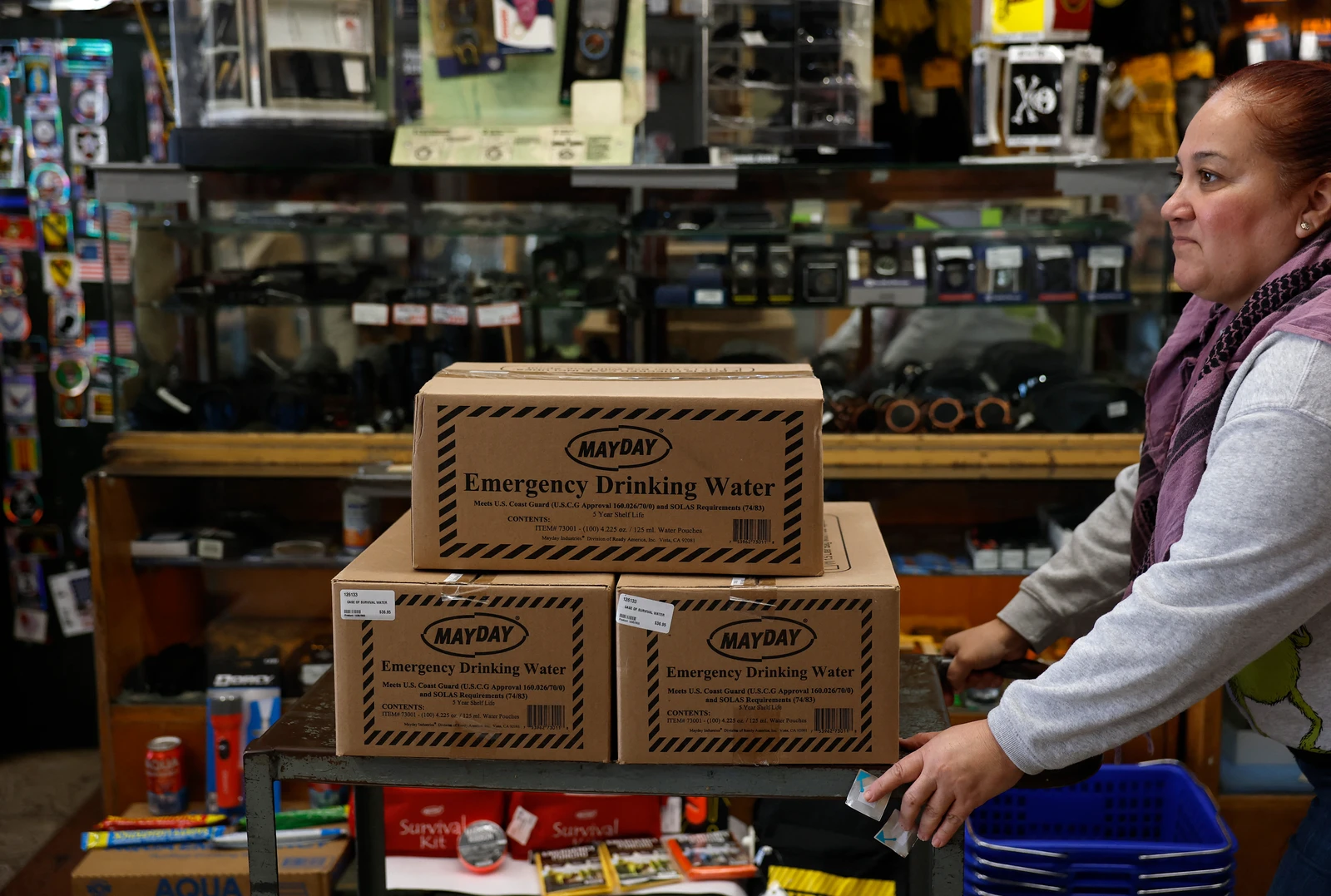

At a camping and survival store in Los Angeles, customers bought emergency kits and water while talking about Microsoft and grounded flights. It is a long way from being unable to open an email to wondering whether there will be water in the tap tomorrow. This month, some Americans covered that distance in a matter of days.
It felt like the opening of the film “Leave the World Behind.” The lights are still on and the kitchen is stocked but, without a reliable link to the outside world, the people in the house have no idea how far the trouble has spread. As false warnings of a nationwide blackout circulated on social media, some Americans started asking the kind of questions a survival video game puts to its players. How much food do you have? How long will your batteries last? Should you fill the bathtub while the water still runs?
The first major disruption came on Nov. 12, when a Microsoft outage affected Outlook and other services. The next day, a technical failure prompted the Federal Aviation Administration to halt departures nationwide. On Nov. 16, some bank customers struggled to access their accounts and a separate failure delayed United Airlines flights. The day after, a software patch disrupted the National Security Agency’s classified internal communications network. The agency staggered employee arrivals and restricted campus access to essential personnel that evening. The NSA said its critical operations continued.
A scheduled federal emergency alert test went ahead that week. The blackout predicted online never came. At a congressional hearing on Nov. 18, officials including FBI Deputy Director Christopher Raia said they had found no evidence that the outages were connected or caused by a coordinated cyberattack. Lawmakers separately asked about reports of possible Iranian-linked plots in the US.
Then news broke that White House National Cyber Director Sean Cairncross had been fired. For Americans already skeptical of Washington, the timing made it easy to wonder whether officials knew more than they were saying. On Saturday, reports indicated that the FBI was investigating an apparent breach of the National Crime Information Center, a database law enforcement agencies use to share records on fugitives, missing people and stolen property. The scope of the suspected breach was unclear and there was no immediate indication it was linked to the earlier outages.
Before governments put AI to work in public services, they should test what happens when it fails.
Dalia Al-Aqidi
By then, the earlier disruptions had already raised a question. How did a few days of outages make a much wider breakdown seem plausible?
Consider what happens when a flight is canceled. The airline sends passengers to its app. The app tells them to wait for an update. Meanwhile, they have to decide whether to stay at the gate, pay for a room or go home. A bank customer staring at a blank screen has to decide whether to resend the rent payment. A system can be down for a few hours and leave people dealing with the consequences long after it comes back.
That uncertainty landed in a country where trust in the federal government had been low for years, under presidents of both parties. In 2024, the Pew Research Center found that 59 percent of Americans trusted Washington to do what is right only some of the time. Another 17 percent said they never did. Over decades of polling, Americans have generally expressed more trust when their own party holds the White House. Elections can change who gets the benefit of the doubt. That leaves every administration facing millions of people who are already skeptical when something goes wrong.
That skepticism matters when rumors move faster than official information. A warning to stock up on food gives people something to do immediately. A statement saying an investigation is underway may be accurate but someone whose flight has been grounded still has to decide whether to leave the airport. Officials can take the time they need to establish a cause and still tell people what is affected, where to get help and when to expect more information.
Technology companies face similar doubts as they ask Americans to rely on artificial intelligence for more of daily life. Even before the outages, Pew found that 67 percent of Americans had little or no confidence in the federal government’s ability to regulate AI effectively. About six in 10 lacked confidence that US companies would develop and use it responsibly.
Before governments put AI to work in public services, they should test what happens when it fails. If an AI booking system goes offline, can a patient still make an appointment? If the software wrongly rejects an application, can the person reach someone with the authority to review and reverse the decision? A company can show how quickly its software works on a good day. The government should test what happens on a bad one, while there is still time to fix it.
Some Americans wondered whether to fill their bathtubs because they were unsure what they could count on if the trouble got worse. That is the question Washington should take seriously. Would officials tell people what they knew, even if the facts were embarrassing? Would they admit what they still could not explain? Those are the things people remember the next time their government asks them to take it at its word.
Dalia Al-Aqidi is Senior Fellow at the Center for Security Policy.
X: @DaliaAlAqidi


