
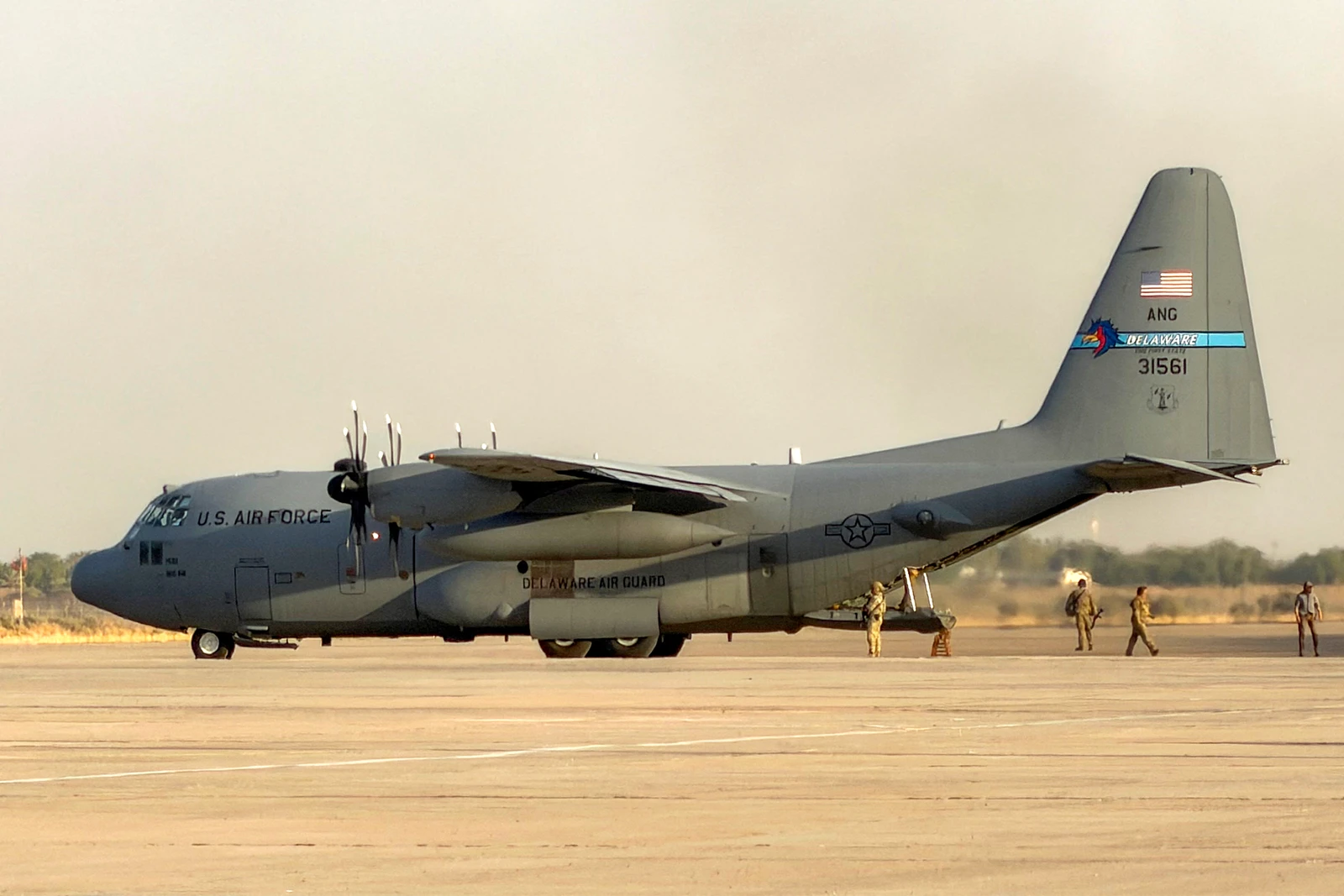

The withdrawal of American and other international forces from Iraq comes at one of the most difficult and dangerous moments amid the US-Iran war.
Over the past decade, Iraqi political forces and institutions have sought to preserve Iraq’s sovereignty and the independence of its decision-making. With the departure of the Americans, Iran now seeks to fill the vacuum. Evidence of Tehran’s project suggests that it aims to control decision-making in Baghdad and dominate key state institutions, including the military, security apparatus, and parliament.
With the withdrawal of US forces, Iraqis faces the risk of a security and political vacuum that recalls what occurred in Afghanistan and Somalia following similar withdrawals, despite the differences in circumstances and context.
Iran has models for controlling the decision-making of states it has targeted by creating parallel forces outside the state structure but under its control, such as Hezbollah in Lebanon and the Houthis in Yemen. Iraq now faces the challenge of safeguarding its independence and sovereignty.
What may happen next is a source of concern for the majority of Iraqis, as well as for neighboring countries, including Syria, Saudi Arabia, Jordan, and Kuwait.
Iran will now seek to fill the vacuum
Abdulrahman Al-Rashed
The choices made by Iraqi citizens, regardless of their political inclinations or affiliations, will determine their future, and the future of their children and country. Does Iraq want to become like Lebanon and Yemen, where Tehran’s dominance has contributed to failure, bankruptcy, and chaos? Or does it want to become a stable and economically successful country like its Arab and Turkish neighbors?
The path out of the danger posed by Iranian influence may not be paved with carpets and saffron. It requires frankness and determination in asserting the sovereignty of the Iraqi state. Iran will realize that it cannot dominate Iraq if it senses a broad Iraqi consensus rejecting such influence. Despite its ambitions toward its wealthy neighbor, Tehran ultimately does not want to become the enemy of the majority of the Iraqi people.
What Prime Minister Ali Al-Zaidi has courageously begun, through his call to restrict the possession of weapons to the state alone, is a crucial first step toward strengthening Iraq’s security backbone and will be key to the country’s stability.
Among Iraq’s pressing needs is the construction of a diversified economy that is open to the world, thereby reducing external influence. Iraq’s future, as Al-Zaidi has argued, lies in becoming a successful economic power, not a country ruled by militias or dependent on foreign aid. Economic strength serves as a balancing force in relations with regional powers, including Iran, which can be an economic partner rather than turning Iraq into a banana republic subordinate to its interests.
The period following the US withdrawal will require addressing internal wounds that have yet to fully heal and returning to dialogue in order to agree upon national principles, including respect for the constitution, borders, and sovereignty, rather than competing for factional influence. Rushing to rely on Iran through militia power would awaken sectarian and regional forces and drag the country into another cycle of violence.
Regional relations also play a critical role
Abdulrahman Al-Rashed
Although the prime minister has led Iraq for only four months, he has already earned the confidence of most domestic circles through his decisions against corruption and authoritarianism, as well as through his economic development program.
Regional relations also play a critical role in supporting Iraq’s independence, given geography and shared interests. Iran is an important neighbor, and no one expects anything other than a strong relationship between the two countries. However, that relationship should not, after the American withdrawal, deteriorate into one of domination and regional manipulation.
At the same time, the Gulf states and Jordan are closely watching developments in Iraq. Their interest lies in seeing Baghdad governed by a successful central state that exercises genuine sovereignty over its decisions, rather than one subordinate to regional powers seeking to use it as a hostile front against neighboring countries. The same applies to relations with Syria, with which Iraq shares an extensive border.
As two major developments unfold simultaneously — the US-Iran war and the American departure from Iraq — hostile activities and threats directed at countries in the region have increased. While statements made in unofficial Iraqi platforms threatening Syria and the Gulf should not necessarily be taken at face value, such inciting voices nonetheless contribute to heightened tensions and political mobilization.
Unfortunately, for nearly four decades under Baath Party rule, Iraq was known throughout the region as a source of crises for neighboring countries, from Turkiye to Kuwait and Syria.
Because of the Baath regime’s aggressive policies, its removal became both an Iraqi and regional demand, despite many people’s discomfort with the fact that change came through American occupation.
Everyone hopes to finally see Iraqis enjoy a stable and prosperous state, one that joins others in promoting development, peace, and regional cooperation. Iraq and the broader region are passing through a delicate and dangerous phase that requires clarity and cooperation.
Abdulrahman Al-Rashed is a Saudi journalist and intellectual. He is the former general manager of Al Arabiya news channel and former editor-in-chief of Asharq Al-Awsat, where this article was originally published. X: @aalrashed


