

Let’s start with the good news. The Office of the UN High Commissioner for Human Rights last month added 61 companies to its database of businesses involved in activities linked to illegal Israeli settlements, expanding the list from 158 to 214 companies.
Why is this good news? Because it further illustrates a degree of seriousness within the international community to move its position on Israel from the realm of language to that of action.
Yet more good news: five previously listed companies were removed after the office determined that their involvement in the relevant activities had ended. This matters because it suggests that the mechanism can work — sustained scrutiny can influence corporate behavior and supporting Israel’s illegal occupation of Palestine can carry a price.
Expectedly, the updated list has been welcomed by Palestinian and international human rights organizations, though they rightly insist that such lists are not enough unless they are followed by direct government action and are expanded to other facets of the Israeli military and economy.
But before focusing on what else needs to be done, we must acknowledge the significance of such reports, especially when placed within the wider context of global initiatives aimed at isolating Israel and its extremist leadership.
First, the 2026 update demonstrates continuing institutional commitment by the UN Human Rights Office. The database was not a one-off initiative issued under temporary political pressure. Its continued expansion and revision show that corporate involvement in Israel’s illegal settlement enterprise remains subject to international scrutiny.
Scrutiny can influence corporate behavior and supporting Israel’s illegal occupation of Palestine can carry a price
Dr. Ramzy Baroud
Second, the addition of 61 companies reflects extensive research and follow-up by the UN, supported by information from Palestinian civil society and human rights organizations. The database is therefore not simply symbolic: it documents the international corporate networks that sustain and profit from Israel’s settlement project.
Third, the removal of five companies suggests that the mechanism can produce results. Its impact remains far below what Palestinians need but the removals indicate that companies can end their relevant activities and subsequently be removed from the database.
The list also provides civil society with credible material for accountability and boycott campaigns. More importantly, it can help move such efforts beyond individual consumer choices toward action by governments, financial institutions and regulatory bodies.
This is particularly relevant as Western governments begin taking measures of their own.
Last month, 12 countries — Canada, Denmark, Finland, France, Iceland, Ireland, Norway, Poland, Portugal, Spain, Sweden and the UK — announced their intention either to introduce national restrictions or support European restrictions on trade with illegal Israeli settlements. Britain went further, banning settlement goods and moving against companies involved in settlement construction.
The significance was difficult to miss. Heavyweights such as Britain, France and Canada were no longer merely condemning settlement expansion; they were beginning to attach economic consequences to it.
Reports, databases and sanctions remain insufficient unless they are followed by sustained monitoring and action
Dr. Ramzy Baroud
But here lies the challenge: reports, databases and sanctions remain insufficient — and risk becoming meaningless — unless they are followed by sustained monitoring and practical action.
What is the point of sanctions if they are not enforced, expanded and accompanied by political pressure capable of changing Israeli behavior?
Decisions, lists and threats are double-edged swords. They can become launchpads for sustained and meaningful political action. Or they can be used to mollify civil society, allowing politicians to buy time and votes while avoiding any fundamental policy change.
However, there is a way to help distinguish between the two.
An independent international monitoring group, composed of and supported by civil society figures with recognized moral authority, could systematically track governments that have committed to sanctions, boycotts or trade restrictions: what was promised, what was implemented, what loopholes remain and whether measures are producing tangible consequences.
Monitoring these governments is becoming almost as important as monitoring Israel itself.
The same principle applies to UN reports. Palestinian and international civil society organizations must incorporate their findings into the growing global boycott and accountability movement, while governments must ensure that companies under their jurisdiction are not contributing to illegal settlement activities.
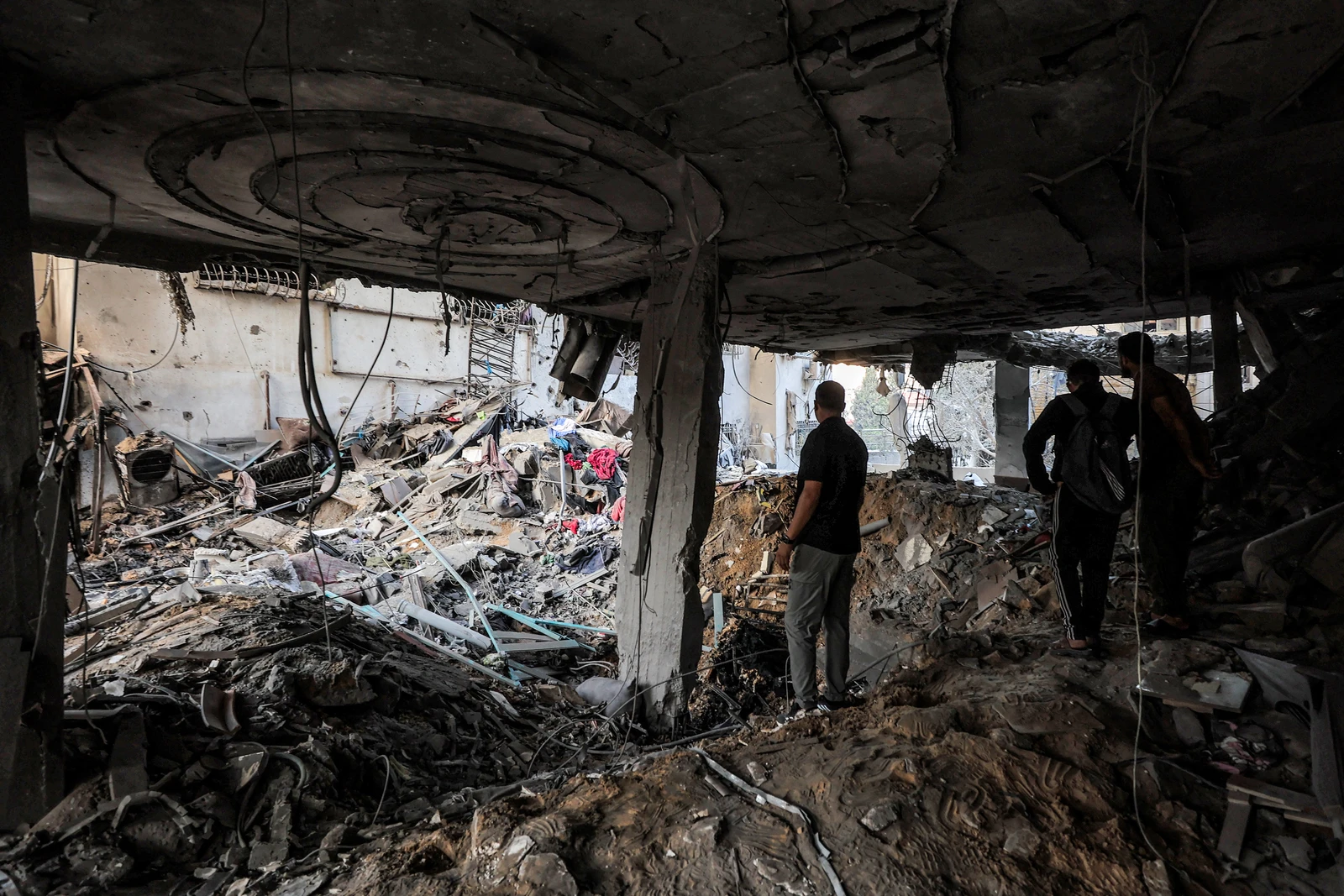
Considering that Israel continues its genocidal assault on Gaza while accelerating settlement expansion and annexation measures in the West Bank, none of these steps can ever be sufficient on their own. They are, however, meaningful steps in the right direction.
Palestinians expect — and deserve — far more than the bare minimum. The situation in the Occupied Territories is simply too urgent for symbolic politics. Every passing day should bring another measure of accountability: another restriction, another divestment, another sanction, another political or economic consequence.
Israel has operated for decades on the assumption that it is effectively untouchable — that condemnation will remain rhetorical, reports will gather dust and Western governments will ultimately retreat when meaningful pressure becomes politically costly.
That assumption must end.
For the Israeli mindset to change, the consequences of occupation, annexation and genocide must become unmistakable. Sanctions cannot merely be announced; they must be enforced. Boycotts cannot remain symbolic; they must carry an economic cost. International law cannot simply be invoked; it must have consequences.
The real measure of these initiatives, therefore, is not how many companies appear on a list or how many governments announce sanctions. It is whether these actions can finally impose a political and economic price on Israel high enough to make occupation, annexation and genocide unsustainable.
Dr. Ramzy Baroud is a journalist, author and the editor of The Palestine Chronicle. His latest book, “Before the Flood,” was published by Seven Stories Press. His website is ramzybaroud.net. X: @RamzyBaroud


