
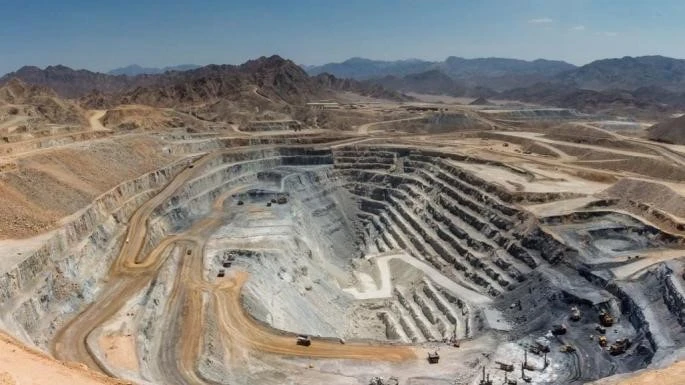

The EU has assembled an impressive toolkit for critical minerals engagement in Africa: 15 partnership agreements, 60 strategic project designations worldwide, a corridor strategy linking the Democratic Republic of Congo and Zambia to Angola’s Atlantic port, and a financing architecture that spans the European Investment Bank, the European Bank for Reconstruction and Development, and Global Gateway.
The political commitment is genuine. The institutional density is real.
However, the measure of success for any minerals strategy sits at the refinery gate, and Europe’s African pipeline remains thin at precisely the point where value is created and dependence is broken. China refines roughly 79 percent of the world’s cobalt and controls around 90 percent of rare earth processing capacity. The DRC mines about 74 percent of global cobalt, but refines less than 5 percent of its own output. Europe’s four African strategic projects under the Critical Raw Materials Act — Zandkopsdrift in South Africa, Songwe Hill in Malawi, Maniry in Madagascar, and Kobaloni in Zambia — are meaningful proof that the model can work.
They are also, in aggregate, a rounding error against the chokepoint.
China’s advantage lies in vertical integration
Hafed Al-Ghwell
Firstly, the Kobaloni cobalt sulfate refinery shows both the promise and the scale of the problem. Designed to produce 6,000 tonnes per year of battery-grade cobalt sulfate — enough for roughly 1 million electric vehicles — the project carries an estimated development cost of €75 million ($83 million), of which about €55 million is expected to be debt financed.
These are not trivial sums for a junior project, but they are modest against the $6 billion-plus committed to the Lobito Corridor alone. A single refinery at this scale can credibly supply a niche of traceable, non-Chinese cobalt for European battery makers willing to pay a premium. It cannot shift the global refining balance. For comparison, China Molybdenum produced 117,549 tonnes of cobalt in 2025 from its DRC operations, a figure that dwarfs the entire planned European-backed African refining pipeline.
Secondly, the Zandkopsdrift rare earths project in South Africa’s Northern Cape is more encouraging, precisely because it was designed as a processing operation from the outset. Only 5 percent of its $700 million capital cost is allocated to mining; the remaining 95 percent goes into a chemical separation plant. The project targets 17,000 tonnes per year of separated rare earth oxides by 2030, alongside 100,000 tonnes of battery-grade salts.
The political stakes extend beyond Brussels
Hafed Al-Ghwell
The partnership with France’s Carester, a rare earth separation specialist, is the critical enabler. Its South African partner will retain its high purity alloy outputs for direct sale while supplying mixed heavy rare earth carbonate to Carester under a 10-year agreement.
Lastly, the Lobito Corridor has become the emblematic test of Europe’s delivery model, and its early performance is a diagnostic rather than a verdict. The corridor moved just over 200,000 tonnes of total cargo in 2025, its first full year of operation, against a capacity target of 4.6 million tonnes. The first train out of the DRC carried concentrate to China. A subsequent shipment of high-purity copper anode was bought by Germany’s Aurubis for low-carbon refining in Europe.
The contrast between those two shipments captures the corridor’s value-chain neutrality: A railway can move minerals to a European buyer or a Chinese processor with equal efficiency. Transport infrastructure without bundled processing capacity and offtake contracts functions as a transit route, not a value chain. Business, rather than geopolitics, drives strategy, and that Chinese-owned mines in the DRC are already using the line to ship copper and receive sulfur for processing.
Europe is helping to build the road. The refinery at the end of it remains largely unbuilt.
However, financing fragmentation compounds the scale problem. The European Investment Bank has approved a €300 million loan to South Africa’s Industrial Development Corporation for on-lending to critical raw materials projects, supporting a total investment volume of about €900 million. The bank has also set an annual spending target of €2 billion for the critical minerals sector worldwide. These instruments lower the cost of capital at the margin, but they are intermediated facilities rather than direct project equity.
Meanwhile, the European Investment Bank’s €2 million technical assistance packages for Andrada Mining’s lithium project in Namibia and EcoGraf’s graphite processing plant in Tanzania target a “bankability gap” that cripples junior miners. While the €2 million can fund geological testing and environmental risk analysis, it cannot close a final investment decision. The binding constraint sits where equity and offtake guarantees are needed to bring processing plants into construction.
Moreover, the European offer also carries a philosophical tension that African governments experience as a commercial liability. European environmental, social, and governance standards are morally serious and politically important at home. In competitive partnership negotiations, they can read as friction.
A Belgian study last year counted nine European critical minerals green investments in Africa against 36 Chinese projects. European-listed companies hold single-digit percentage stakes in critical minerals operations, and Western firms have largely withdrawn from mining because returns on new projects hover around 7 percent while investment-grade corporate bonds yield above 5 percent.
China’s advantage lies in vertical integration: policy banks, state-owned commercial banks, offtake-linked financing, and domestic industrial policy that ties mineral access to downstream manufacturing. The European model depends on private capital following commercial logic, and commercial logic does not prioritize industrial resilience.
The political stakes extend beyond Brussels.
African governments are pursuing explicit industrial strategies, including the African Green Minerals Strategy adopted by the African Union in February 2025, which calls for 70 percent value addition by 2035. Zambia has declared it will not remain a raw copper exporter. Namibia is betting on green hydrogen. The DRC has signaled that unprocessed cobalt exports are no longer the endgame.
These governments are multi-aligning across China, the Gulf, Turkiye, Russia, and the US because that is the rational strategy when no single partner delivers at scale. Europe’s partnerships will be judged by how many processing plants are commissioned, how many offtake contracts are signed, and how many refined tonnes leave African soil for European factories.
Hafed Al-Ghwell is senior fellow and program director at the Stimson Center in Washington and senior fellow at the Center for Conflict and Humanitarian Studies.
X: @HafedAlGhwell


