
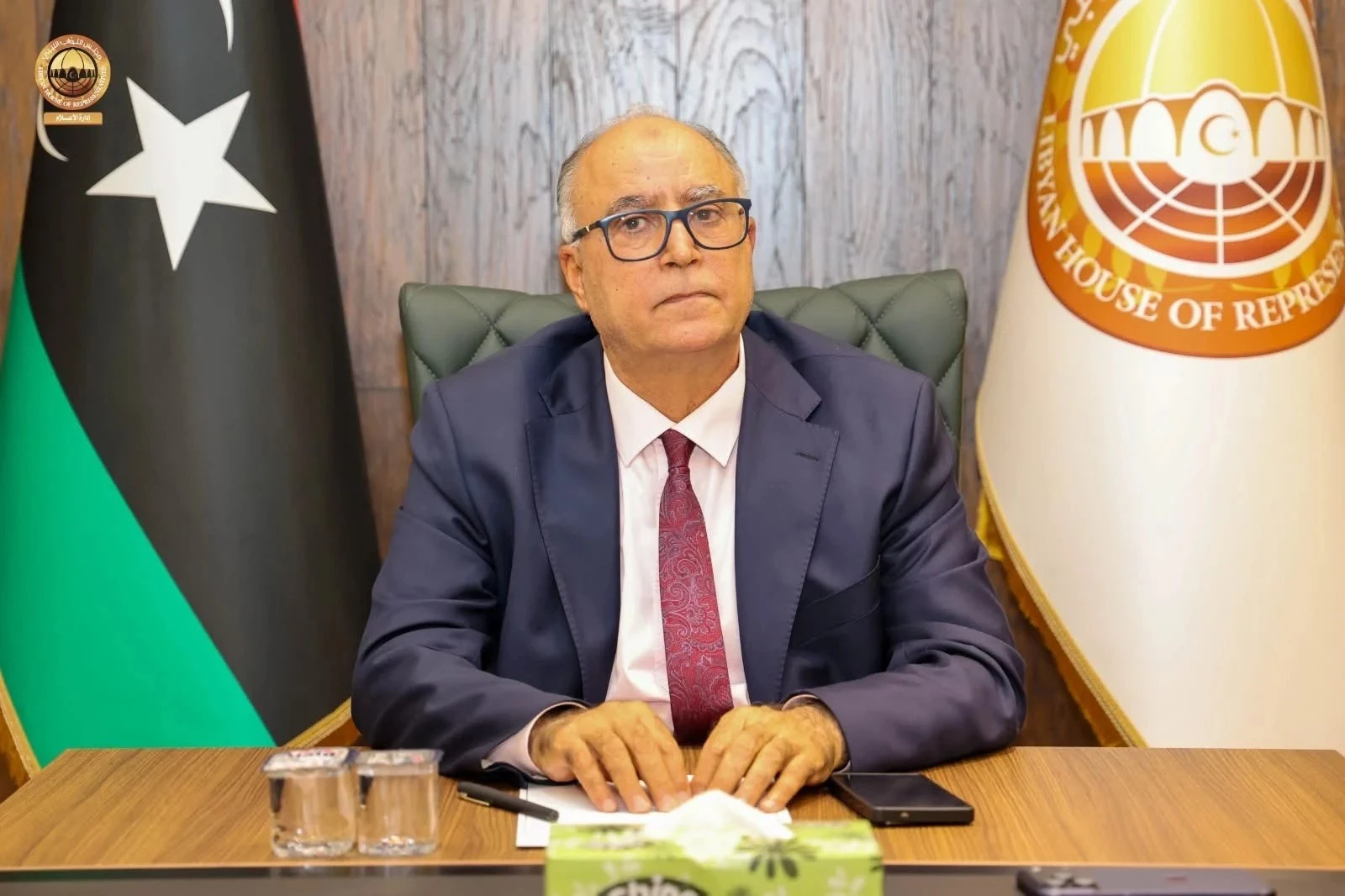

A few days ago, Libya’s eastern-based House of Representatives dismantled a leadership arrangement that had lasted for more than 12 years. Lawmakers approved amendments limiting the speaker and deputy speakers to a single 12-month term. The following day, legislators elected Al-Saleheen Abdul Nabi Al-Abidi, to replace Aguila Saleh, who had led the chamber since August 2014.
Saleh challenged the proceedings as legally invalid. His opponents, however, accused him of making decisions without consulting lawmakers in addition to allegations, made weeks earlier, of his obstructing access to parliament’s headquarters. The leadership change, therefore, emerged from what appears to have been parliamentary discontent, even as its consequences clearly favor the military establishment dominating eastern Libya.
With this change, the relationship between institutional rules and coercive power has shifted dramatically. A 12-month term can promote accountability when legislators freely choose their leadership and can reject candidates without intimidation. Under the influence of Khalifa Haftar’s Libyan Arab Armed Forces, the same arrangement can create permanent insecurity for the speaker who must regularly accommodate the priorities of his unchecked rogue force.
What is more, replacing Saleh with another Obeidat tribesman was not incidental. The Obeidat are the dominant tribal federation in Cyrenaica, with their primary base in Tobruk. Elevating a member of the same tribe avoids local discontent, prevents a tribal vacuum, and preserves equilibrium between the Tobruk and Benghazi factions that underpin the parliament’s base. More importantly, the tribal connection reduces the risk of alienating local constituencies while changing the political function of the speakership. Saleh cultivated an independent role within Haftar’s broader coalition; Al-Abidi inherits the office after a procedural overhaul that substantially weakens its occupant.
His background also bridges traditional tribal authority and modern diplomatic engagement, positioning him to manage external relationships with Ankara, Cairo, and Abu Dhabi, given his previous chairmanship of the Libyan-Turkish Parliamentary Friendship Committee. For years, Turkiye has backed political and military actors in western Libya, while Egypt and the UAE have supported Haftar’s eastern camp. Al-Abidi’s Turkish parliamentary contacts could help manage these competing relationships.
The leadership change emerged from what appears to have been parliamentary discontent.
Hafed Al-Ghwell
The suspicious timing of this change also complicates claims that the turnover will advance national reconciliation. In August, a UN-facilitated agreement established a roadmap toward presidential and legislative elections within 24 months. Yet on Oct. 5, Libya’s High Council of State, based in Tripoli, voted to reject the agreement’s outcomes. The House of Representatives’ leadership upheaval consequently occurred amid renewed disagreement over the very framework intended to reunify Libya’s divided institutions. Now parliamentary consolidation in the east could strengthen one negotiating bloc while weakening the prospects of a nationally accepted settlement.
Moreover, the struggle over the speakership matters because Libya’s parliament occupies a key position in the contest over public money. The country remains heavily dependent on hydrocarbons. Oil and gas account for about two-thirds of gross domestic product, more than 90 percent of exports, and over 95 percent of government revenues. Controlling the distribution of oil wealth, therefore, shapes far more than fiscal policy. It determines which institutions receive funding, which contractors secure projects, and which political networks retain access to state resources.
For now, however, the Central Bank of Libya, based in Tripoli, remains the sole authority managing public finances and processing payments. A parliamentary vote in Benghazi may not independently redirect the entire national treasury, but legislation and budgetary authorization can influence how resources are committed, aiding the Haftar clan to possess substantial coercive and administrative power over spending within their sphere. A more malleable speaker could further reduce parliamentary resistance to military allocations and development decisions, making the House a more predictable component of a rapidly consolidating eastern bloc.
For a country ravaged by sporadic violence, neglect, and poor governance, the first test of this new parliamentary setup will be in reconstruction. Belqasim Haftar, Khalifa Haftar’s son, heads the Libya Development and Reconstruction Fund, which is responsible for major infrastructure projects in the east. Critics have questioned the fund’s financial oversight and its relationship to the eastern administration’s wider spending. Belqasim has defended its auditing arrangements, while rival authorities have raised concerns about expenditure outside agreed-upon national budgets. The competing claims make independent disclosure and parliamentary scrutiny especially important.
With a pliant speaker, the institutional danger is straightforward: When military, legislative, and development authority become concentrated within connected networks, oversight depends increasingly on the willingness of those networks to police themselves. Al-Abidi’s tenure will reveal whether the House of Representatives can demand transparent contracts, examine development allocations, and question expenditures associated with Haftar’s command. Regular parliamentary sessions alone will provide little assurance if scrutiny becomes politically costly, or procurement decisions remain inaccessible to independent review.
Externally, Egypt has strong reasons to welcome a more predictable parliamentary partner in eastern Libya. Cairo’s foundational doctrine regarding Libya rests on maintaining an absolute security buffer zone in Cyrenaica against extremist elements and perceived insurgent factions. Beyond that, a compliant legislative ally in Benghazi and Tobruk can serve as a counterweight to the Tripoli-based Government of National Unity and Turkish influence in the west. Thus, Al-Abidi enters office with a mandate to align parliamentary action with the Libyan Arab Armed Forces-Cairo axis, unlike Saleh, whose independent diplomacy sometimes complicated coordination.
Al-Abidi’s appointment consequently marks a major advance in Haftar’s political consolidation, although the enclosure remains incomplete at the national level. The speaker faces questions over the legality of his selection, the autonomy of the House, the implementation of the unified budget, and the credibility of the election roadmap. The High Council of State’s rejection of the August agreement adds another obstacle to national consensus.
The decisive test will be whether the new leadership can demonstrate institutional independence through conduct: a parliament that meets regularly, applies its rules consistently, scrutinizes reconstruction spending, and cooperates on a credible electoral framework. Genuine renewal could still emerge from a leadership transition born of internal dissatisfaction. If the speakership instead becomes an office whose holder depends on military approval for continued survival, the outcome will be a more emboldened eastern power structure and diminished prospects of national reunification.
Libya’s fragmentation persists partly because control over public institutions carries tangible financial and political rewards. Al-Abidi’s rise brings the House closer to Haftar’s command at a moment when the country needs institutions capable of negotiating beyond their own political camps. The question now is whether parliament retains enough autonomy to constrain the power that helped determine its leadership.
And the answer is obvious.
Hafed Al-Ghwell is senior fellow and program director at the Stimson Center in Washington and senior fellow at the Center for Conflict and Humanitarian Studies.
X: @HafedAlGhwell


