


This week France is slowly coming back to life after its annual two-month summer break. For those in the Presidential Palace, the Elysée, the scenario this year could hardly have been any more different from that which greeted them at the same time last year.
In 2018, Macron was welcomed back by the Yellow Vest protests against his policies and personality. While his policies were criticized as being pro-rich and anti-poor, as a person he stood accused of being arrogant and living in an ivory tower, ignorant of the situation of the common person. Neither perception was entirely baseless.
For almost a year, Macron battled the perceptions with limited success as the Yellow Vest protests continued even after his initial concessions on the economy and on benefits for the middle classes and the poor. As the effects of those policy changes began to trickle down and the French economy enjoyed relatively robust growth, the protests began to peter out. However, Macron took no chances with the arrangements for the G7 Summit in Biarritz in southwestern France last month.
The entire town was sealed off for nearly a week, with even the residents’ movements strictly controlled. Apart from the delegations of the leaders of the G7 and other invitee countries, only those whose registrations had been approved were allowed to enter the luxury beach resort at which the summit was held.
The preparations for the summit, choreographed by the President himself, were an indication of the importance that Macron attached to the success of the global event, which was widely covered by both the French and international media. Macron was clearly counting on the bump that such a success would yield. Hence, he also personally led the event, running between meetings and holding key bilaterals with his global counterparts.
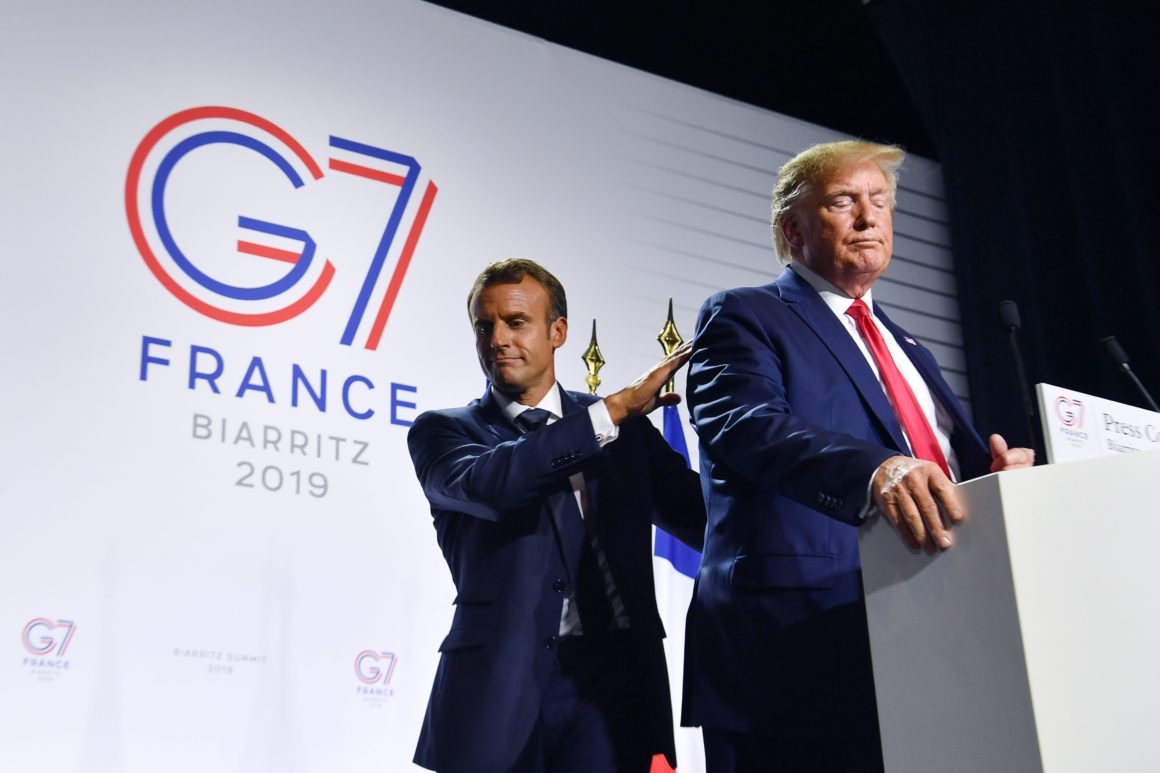
The way Macron handled US President Donald Trump — or rather skillfully massaged his larger-than-life ego — ensured the smoothening out of all the wrinkles that had threatened to derail the summit, such as the French tax on tech companies that Trump had threatened with retaliatory tariffs on French wine imports in the US. Macron also showed diplomatic skill in handling the next-most unpredictable leader at the meet, UK Prime Minister Boris Johnson, whose no-deal Brexit policy has caused much angst across the English Channel.
The plaudits that Macron won for his G7 maneuvering soon translated into a bump in his domestic popularity.
Ranvir S. Nayar
Trump heartily praised Macron for his management of the G7 and said the two-hour-plus tête-a- tête that the two leaders had over lunch on the day Trump reached Biarritz was the best meeting he had had with the French President. Trump also seemed to praise Macron’s initiative in bringing over the Iranian foreign minister in a bid to organize a meeting with the US and Iranian leaders and ease tensions between the two countries.
And praise for Macron did not come only from Trump. By the end of the three-day jamboree, most global leaders and media hailed Macron for his diplomacy and tactful handling of thorny issues that have, in the past, led to the ruination of international meetings. He was most-widely praised for his attempts to thaw Iran-US tensions, but also for addressing key issues facing the G7 — and indeed the globe — including climate change, inequality and water.
Suddenly, Macron — and indeed France, which seemed to have become almost entirely inward-looking since the beginning of the Yellow Vest protests — was back at the center of global diplomacy, raising and managing to handle tricky issues.
Macron also used his discussions with Johnson to position France as a leading EU negotiator with the UK on Brexit, thus rebalancing the space that he had ceded to German Chancellor Angela Merkel.
The plaudits that Macron won for his G7 maneuvering soon translated into a bump in his domestic popularity, which had been on a slow path to recovery from historic lows of 23 percent in December last year. Less than a week after the G7, Macron’s approval ratings stood at a more respectable 38 percent.
The upswing comes less than two years before the next presidential election and the timing could not have been better. Macron has recovered some ground with the voters for the way he has handled state affairs and key issues facing the French people, but he has also realized that voters place great importance on the image of the country and its leader globally. With an eye on the elections, Macron is bound to continue on the path of addressing his own image issues at home and carry on with his economic and social reforms, but with a more humane touch.
Also, by re-engaging with global leaders and pushing French diplomacy back into the center of regional and global action, he is hoping to reap additional benefits that could help him win more votes, ensuring that he holds off the stiff challenge that will likely be posed by the hardline right-wing National Rally in next year’s local elections and the following year’s crucial presidential election.
As things stand today, and if Macron continues to display the same level of political agility, with perhaps a bit more humility, he could ensure that he stays on in the Elysée with a strong mandate again. But as he has already learned, two years is a very long time in politics, where leaders can be made and unmade in a matter of weeks, if not days.
- Ranvir S. Nayar is the editor of Media India Group, a global platform based in Europe and India that encompasses publishing, communication and consultation services.


