
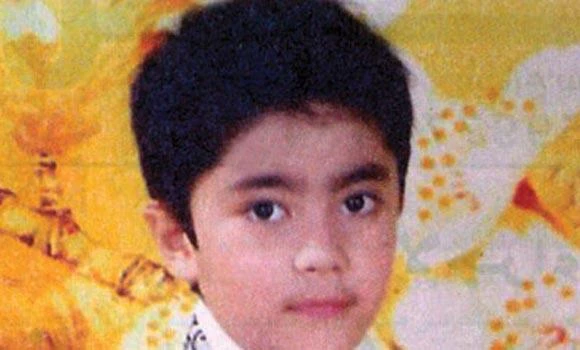
Let us not allow the horrific death of a young son of Jeddah to go in vain. On Nov. 13, medical error at Erfan and Bagedo Hospital led to the senseless and tragic death of a healthy and innocent eight-year-old boy, the son of Yousef Abdul Latif Jameel.
The Ministry of Health has now rightly closed that hospital, though its closing prior to this tragedy had been justified by many previous cases of documented malpractice there.
Salah-Aldin Jameel's death must prompt officials to conduct an immediate and thorough review of every single medical facility in Jeddah. They must demand adherence to standards of best practices and accountability, with regular outside review and harsh penalties for violators. And if a facility cannot or will not comply with such standards, it must be closed down swiftly, with no excuses, and no wavering because of wasta (influence).
Any failure to act in preventing and putting an end to medical negligence in Jeddah should be considered as complicity in that crime. Yet, the MOH investigators who uncovered malpractice in Salah-Aldin Jameel's death were rewarded by being removed from their positions. What is the meaning of this?
Officials and residents must wake up to the realization that the health care situation in Jeddah presents a real danger to us all. Countless stories abound of inexcusable negligence and malpractice, occurring even at the "best" hospitals in Jeddah. This is an outrage and absolutely unacceptable.
At the "best" hospital in Jeddah, my own small daughter was misdiagnosed with a potentially fatal condition and thus needlessly subjected to the high-level radiation of a CT scan, significantly elevating her future risk of cancer. Later, more competent doctors at a hospital abroad disproved that diagnosis and found that parts of her body were mislabled on the Jeddah ultrasound that was included in her file.
At another Jeddah hospital, my daughter's middle-aged relative entered the emergency room with chest pains and was asked by the E.R. doctor what she herself (not a medical professional) wanted to do. Wait half an hour to see a cardiologist? See an intern by appointment? How about having an EKG? The pursuit of her diagnosis and treatment was left to her own discretion. If she'd been having an actual heart attack, she'd most probably be dead now.
Another day, a well-known pediatrician performed an allergy test on that woman's daughter and proclaimed the child allergic to over 30 basic foods, leaving little for her to eat. But a definitive blood test later ordered abroad by the mother (after she alone had researched her child's condition) revealed that her child was allergic to nothing.
Though of course there are some good doctors in Jeddah, malpractice is endemic in our city. Horror stories abound of medical misdiagnoses, mistreatment, carelessness, negligence, and needless procedures for the purpose of profit. Most families here have their own stories to tell of experiences with medical incompetence.
Experience has proven that the level and competence of care at even our best hospitals and clinics is inconsistent within those facilities — they cannot be depended upon with full confidence, especially in the case of medical emergencies and serious health conditions. But the bitter experience of Salah-Aldin Jameel's death has shown us that even a minor ailment, wrongly handled, can result in a medical injury or fatality.
Greed, apathy, and perhaps false pride are the leading causes of this deplorable situation. Despite the wealth in the Kingdom, hospitals and clinics do not want to pay enough to recruit the most professional practitioners on all levels of medical care, from doctors and nurses to technicians and aides. They do not care enough to implement best practices or insist upon stringent compliance. And they are too proud to admit how far they are below world standards and thus dismiss incompetence.
The evaluation and rating of hospitals and clinics is in dire need of better governance. Perhaps Jeddah's health care and government officials would have done more, earlier, if their own children or loved ones had been harmed or killed by the same health care providers from whom they sought help and professional treatment.
I pray to God that no more of Jeddah's children will be harmed by such grievous negligence. And I pray that our leaders will act now, to ensure that a malpractice tragedy never befalls another child of Jeddah, ever again. To fail to do so now would be unconscionable and a damning proof of our lack of leadership and conscience. — Constance Conklin, stepmother of Salah-Aldin Jameel


