

The most frightening periods in history have often been interregnums — moments between the death of one king and the rise of the next. Disorder, war and even disease can flood into the vacuum when, as Antonio Gramsci put it in his Prison Notebooks, “the old is dying and the new cannot be born.” The dislocation and confusion of 2016 do not rival the turmoil of the interwar period, when Gramsci wrote, but they are certainly symptoms of a new interregnum.
After the end of the Cold War, the world was held together by an American-policed security order and a European-inspired legal order. Now, however, both are fraying and no candidates to replace them have yet emerged. Indeed, unlike in 1989, this is not a crisis of a single type of system. Countries as different as Brazil, China, Russia and Turkey are coming under heightened political and economic pressure. Even if the nightmare of a President Donald Trump is avoided, as appears increasingly likely, the US can no longer be the world’s policeman. Powers such as Russia, Iran and China are probing US reactions in Ukraine, Syria and the South China Sea. And US allies like Turkey, Saudi Arabia, Poland and Japan are forging independent and assertive foreign policies to make up for a US that cannot and will not carry its previous burdens.
Meanwhile, the European Union’s declining cohesion is undermining its moral authority on the world stage. Many of the global institutions that reflect European values and norms — from the WTO and the ICC to the UN Framework Convention on Climate Change — are gridlocked.
Regionally, the three strands of the European order are unraveling: The US is seeking to reduce its investment in NATO, the EU is de-emphasizing enlargement, and the chaos in the Middle East and Ukraine is making a mockery of the European Neighborhood Policy. The rise — and rapprochement — of illiberal forces in Russia and Turkey mean that the EU is no longer the only pole of attraction in the region. The EU proved over the last few decades that it could be a force for globalization, tearing down barriers between peoples and nations. But today its survival depends on showing that it can protect citizens from the very forces it has promoted.
Maintaining the four freedoms at the heart of the European project — the free movement of people, goods, capital, and services within Europe — will be possible only if EU governments have credible policies to protect the most vulnerable in their societies. That will mean improving protection of the EU’s external borders, compensating domestic losers from migration and free trade, and soothing public fears about terrorism.
The EU needs to distinguish between core and peripheral priorities. For issues such as EU relations with Russia and Turkey (and these two countries’ relations with each other), member states need to agree on a policy that recognizes the interests of all. But much greater flexibility is advisable in other areas, including commitments to refugee re-allocation and eurozone rules, where excessive rigidity could cause European unity to buckle and snap.
In the troubled Middle East, the EU cannot hope to be the central actor. But EU countries cannot protect their populations from instability if they are only spectators. Particularly in Syria and Libya, the EU needs to playing a more concerted role with regional powers, as well as with the US and Russia, to advance political processes that could help reduce violence, provide humanitarian aid, and stem the flow of refugees. One of the EU’s main challenges is to define success in a defensive era. During the heyday of enlargement, the goal was to deepen integration and broaden its reach across Europe.
History moves in cycles. The interregnum will eventually end and a new order will be born. What is certain is that the survivors and inheritors of the old order will write the rules of the new one. The EU’s goal, achievable only with flexibility and courage, must be to remain a viable project, and thus be one of the authors.
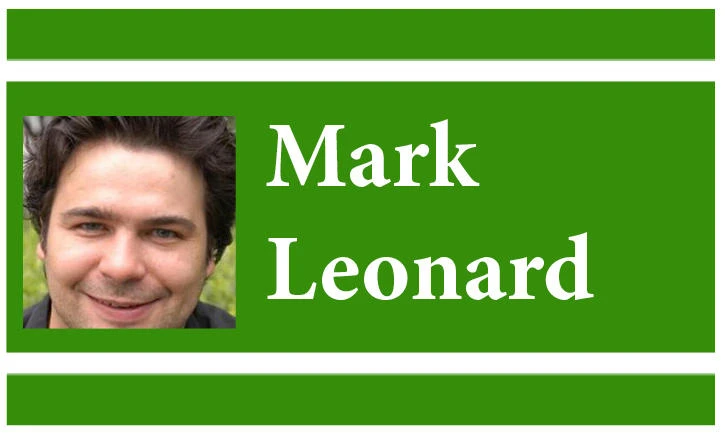
• Mark Leonard is director of the European Council on Foreign Relations
©Project Syndicate
After the end of the Cold War, the world was held together by an American-policed security order and a European-inspired legal order. Now, however, both are fraying and no candidates to replace them have yet emerged. Indeed, unlike in 1989, this is not a crisis of a single type of system. Countries as different as Brazil, China, Russia and Turkey are coming under heightened political and economic pressure. Even if the nightmare of a President Donald Trump is avoided, as appears increasingly likely, the US can no longer be the world’s policeman. Powers such as Russia, Iran and China are probing US reactions in Ukraine, Syria and the South China Sea. And US allies like Turkey, Saudi Arabia, Poland and Japan are forging independent and assertive foreign policies to make up for a US that cannot and will not carry its previous burdens.
Meanwhile, the European Union’s declining cohesion is undermining its moral authority on the world stage. Many of the global institutions that reflect European values and norms — from the WTO and the ICC to the UN Framework Convention on Climate Change — are gridlocked.
Regionally, the three strands of the European order are unraveling: The US is seeking to reduce its investment in NATO, the EU is de-emphasizing enlargement, and the chaos in the Middle East and Ukraine is making a mockery of the European Neighborhood Policy. The rise — and rapprochement — of illiberal forces in Russia and Turkey mean that the EU is no longer the only pole of attraction in the region. The EU proved over the last few decades that it could be a force for globalization, tearing down barriers between peoples and nations. But today its survival depends on showing that it can protect citizens from the very forces it has promoted.
Maintaining the four freedoms at the heart of the European project — the free movement of people, goods, capital, and services within Europe — will be possible only if EU governments have credible policies to protect the most vulnerable in their societies. That will mean improving protection of the EU’s external borders, compensating domestic losers from migration and free trade, and soothing public fears about terrorism.
The EU needs to distinguish between core and peripheral priorities. For issues such as EU relations with Russia and Turkey (and these two countries’ relations with each other), member states need to agree on a policy that recognizes the interests of all. But much greater flexibility is advisable in other areas, including commitments to refugee re-allocation and eurozone rules, where excessive rigidity could cause European unity to buckle and snap.
In the troubled Middle East, the EU cannot hope to be the central actor. But EU countries cannot protect their populations from instability if they are only spectators. Particularly in Syria and Libya, the EU needs to playing a more concerted role with regional powers, as well as with the US and Russia, to advance political processes that could help reduce violence, provide humanitarian aid, and stem the flow of refugees. One of the EU’s main challenges is to define success in a defensive era. During the heyday of enlargement, the goal was to deepen integration and broaden its reach across Europe.
History moves in cycles. The interregnum will eventually end and a new order will be born. What is certain is that the survivors and inheritors of the old order will write the rules of the new one. The EU’s goal, achievable only with flexibility and courage, must be to remain a viable project, and thus be one of the authors.
• Mark Leonard is director of the European Council on Foreign Relations
©Project Syndicate


