


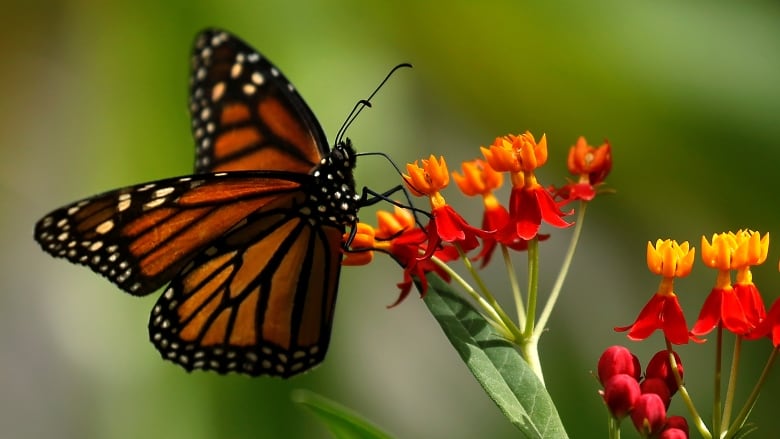
I am a butterfly, that pretty little winged creature you humans love to watch fluttering around in the garden, occasionally landing on your shoulder and bestowing a moment of happiness, and perhaps good luck, upon you. We butterflies are flattered by the fondness you have for our colors, our variety, and the joy we bring to young and old. But today I need you to listen to me, because that joyful image lies broken on the ground, as we butterflies and our insect cousins die out because of your reckless destruction of the environment. We butterflies are regarded by your human scientists as a flagship species indicating the health of ecosystems because we are so sensitive to changes in our environment. I really think you should listen.
While our butterfly lives may seem rather simple, we can still appreciate the valuable progress humankind has made over the centuries. We are happy to share our planet with you but, dear humans, we have to tell you that you have gone too far. You are overexploiting our planet’s resources, polluting the air and the seas, destroying habitats, and setting us all on a collision course with climate change, which you yourselves have induced. In chaos theory, the butterfly effect describes how a small change in a system can lead to huge changes in a later state of the system. We are certainly far beyond that stage with the effect humanity has had on the environment.
Perhaps you humans have not had enough experience on this planet yet. We butterflies first evolved 150 million years ago and we now number 250,000 species (our numbers also include moths), making up about a quarter of all species you have named on the planet. Most of us measure only a few centimeters and weigh less than a gram, yet you know that we migrate across continents. Some of us, like the monarch, can travel several hundred miles per day without ever buying a plane ticket or filling a car with gas. The painted lady can complete its 4,000-kilometer migration from Europe to sub-Saharan Africa in one lifetime, in a trip taking about two months. A round trip migration would be the equivalent of a human traveling halfway to the moon, or almost four times around the planet… walking. We butterflies are autonomous, we don’t get fat or waste water like you, we don’t need a consultant to transform from a caterpillar, and we don’t need electricity or a smartphone with GPS.
Most of all, however, we butterflies and our insect cousins are “the little things that run the world,” according to famed biologist E.O. Wilson. “If all humankind were to disappear, the world would regenerate back to a rich state of equilibrium. If insects were to vanish, the environment would collapse into chaos,” he wrote. Alongside bees and other insects, we pollinate most plants and crops that feed you or the animals you eat, we control populations of plants and species by eating them, and other species survive by eating us. As caterpillars, we cycle vast amounts of nutrients and energy through the ecosystem. Insects are also a major part of the decomposition process that keeps our ecosystems healthy and functioning. Together we insects outweigh humanity by 17 times, and without us your world would grind to a halt. We have been working hard — mostly invisibly — for millions of years to maintain a delicate balance on this planet, which we share with many others.
While it is almost impossible to carry out a comprehensive study of ecosystems and species, many millions of which have escaped human discovery, your scientists have begun to grasp the absolutely essential and increasingly fragile role we insects play in maintaining our shared environment. No matter what research one consults today, insect populations are falling rapidly, decreasing by between 40 and 70 percent in the last 30 years. The rate of extinction of insects is occurring eight times faster than that of other animals. Much of this is due to the way humans have transformed the planet.
According to a recent report by the Intergovernmental Science-Policy Platform on Biodiversity and Ecosystem Services, three-quarters of the world’s land and two-thirds of its marine environments have been “significantly altered” by human action, with 85 percent of wetlands already lost and 90 percent of ocean fish stocks overharvested. Grazing areas for livestock today represent 25 percent of the planet’s ice-free land and produce 18 percent of greenhouse emissions, while crop production uses only 12 percent of land and produces less than 7 percent of emissions.
Much of the pressure on the world’s land — from deforestation to intensive farming and pesticides — is due to man’s need to feed more than 7 billion people and counting. The UN’s Food and Agriculture Organization calculated that 70 percent more food will be needed in 2050 compared to 2010. That is why, unfortunately, we butterflies and insects have already suffered great habitat loss through deforestation, desertification and intensive farming. American agricultural lands in particular have become increasingly toxic to us, due to the widespread use of neonicotinoid pesticides, which are banned in the EU. These pesticides sterilize the soil and persist for many years after their use, effectively killing off all life, even in neighboring areas. With rising temperatures, the range of insects will be significantly reduced, particularly for those insects essential to pollination, and your sterile agricultural lands will remain lifeless.
If you were paying any attention, this summer was quite a hot one for humans and butterflies alike. As we watched the Amazon rainforest and the Arctic forest burn, the climate change you humans have caused was there for all to see. In fact, it has already made heatwaves, forest fires, severe flooding and hurricanes 10 times more likely. But, as you cut down or simply sit by and let the Amazon rainforest burn, you are not only releasing a huge amount of planet-heating carbon dioxide into the atmosphere, you are also eliminating the healthiest ecosystems boasting the greatest biodiversity on the planet. Brazil is the world’s most species-rich country but, despite having managed to bring deforestation under control in the early 2000s, deforestation and intentional forest fires are again removing more than 10,000 square kilometers of Amazon rainforest each year. Unfortunately, Borneo, the Congo Basin and Australia are other species-rich areas where deforestation is proceeding at a frightening pace. On top of acting as carbon sinks and sanctuaries of biodiversity, the forests provide oxygen, rainfall and the regulation of water runoff for the rest of the land.
Much of the pressure on the world’s land is due to man’s need to feed more than 7 billion people and counting.
Hassan bin Youssef Yassin
We butterflies saw 149.8 million years of life on Earth before you humans showed up and, while you may be the most intelligent species on the planet, there is one important concept that you have so far failed to grasp. Nature has its ups and downs, it even suffers through extinction events and recovers, but it is always finely tuned to maintaining an equilibrium of life, circulating water and nutrients, keeping species and their populations in check, allocating resources so that we all have just what we need to live and to make our planet bloom and flourish. Only humans have managed to permanently upset that equilibrium.
Mahatma Gandhi once warned that “Earth provides enough to satisfy every man’s needs, but not every man’s greed.” This is where I must ask you to completely rethink how you exist on this planet and to please follow the example of us butterflies and insects. We consume only what we need, our existence participates in, rather than destabilizes, the equilibrium of ecosystems and other species, and we even bring you good luck when we land on your shoulder.
If I had a voice, I would shout. If I could cry, I would shed many a tear. I must somehow speak for the quintillions — yes, quintillions — of living beings on Earth that also have no voice. Please do not let us down; please do what you can to bring this madness under control; please join the rest of the living beings on this planet as friends and allies to help us all to flourish without bounds.
- Hassan bin Youssef Yassin worked closely with Saudi petroleum ministers Abdullah Tariki and Ahmed Zaki Yamani from 1959 to 1967. He headed the Saudi Information Office in Washington from 1972 to 1981, and served with the Arab League observer delegation to the UN from 1981 to 1983.


