
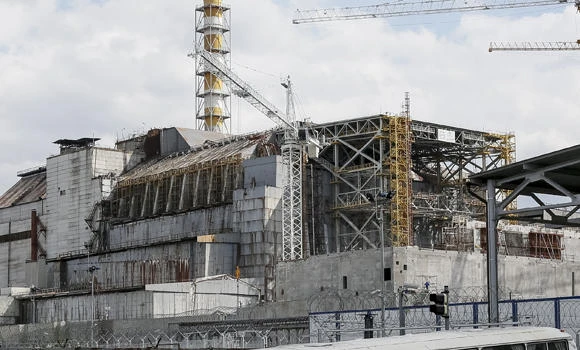

The 30th anniversary of Chernobyl on April 26 comes against the backdrop of growing apprehension that nuclear reactors may become a terrorist target.
Serious concern arose during the recent Daesh attacks in Brussels. Evidence suggested that the assailants were considering a nuclear-related incident. The terrorists had a senior Belgian nuclear official under surveillance, and two former nuclear power-plant employees were reported to have joined Daesh. This may help explain why Belgian authorities rushed military forces to protect its nuclear plants. The scare provided a reminder that nuclear reactors are radiological mines that terrorists could exploit. Destruction of a plant would mark a zenith of terrorist violence. Radioactive elements would spread across national boundaries. It would endanger the lives of many, while creating economic and environmental havoc mimicking the Chernobyl or Fukushima explosions.
How concerned should the West and other regions be? And if the peril remains so serious, why doesn’t the international community impose mandatory security standards?
Actually, Washington has tried to do just that. On June 14, 1946, the US proposed the Baruch Plan at the UN. It called for an International Atomic Development Authority that would maintain “managerial or ownership of all atomic energy activities potentially dangerous to world security” and “the power to control, inspect and license all other atomic activities.”
Had Cold War politics not intervened, reactors would likely be safer and more secure today. Instead, the international community now faces a patchwork of national regulations.
Certainly, enforcement of robust security standards are but a small price to pay to avoid yet another intentional or accidental Chernobyl or Fukushima.
Unfortunately, given inertia, we may have to wait for the intentional Chernobyl to take place to get action. Consider that nuclear critics have been concerned for decades that reactors are likely terrorist targets and not enough is being done to protect them.
But with no serious attack so far, complacency has set in. Belgium finally put armed guards at its plants only after last year’s Paris terrorist attacks. How many other nations among the 30 with power reactors have been equally complacent? But smugness has been revealed to be an embarrassment. In 2012, Greenpeace activists broke into a Swedish nuclear installation. The environmental activists scaled fences surrounding two nuclear power reactors and hid four of its party overnight on the roof of one. In 2014, another group of Greenpeace activists broke into a French nuclear power plant near the German border and hung a large banner from the reactor building. These stunts demonstrate that there is something seriously wrong with power-plant security practices in the two countries, and in perhaps many others.
Even in the US, which purports to apply the security gold standard, mock attacks have repeatedly found holes in reactor security. We should expect that only an intentional Chernobyl incident would get complacent countries to dramatically change their security culture. Here is where international groups if given authority, can do some planning to address the issue.
The plan should lay out mandatory security and safety requirements for all nuclear plants worldwide, to be administered by the IAEA or other authorized body to license plant operations. Were the security at a licensed plant found to be inadequate, the authorized agency would suspend the plant’s license until operators made the required fixes. Unfortunately, we may have to await an intentional Chernobyl to take place first to galvanize this sort of preventative action.
—
Reuters


