

The countdown has begun for COP31 in Turkiye in November. However, beforehand the governments of Australia and Fiji will be hosting a major pre-event early next month in Fiji to put Asia Pacific issues on the climate agenda.
The last time Asia hosted a COP climate event was in Bali, Indonesia, in 2007. So Australia, which was Turkiye’s main competitor to host COP31, agreed to a deal with Ankara last year whereby a pre-event would be held in October in the region.
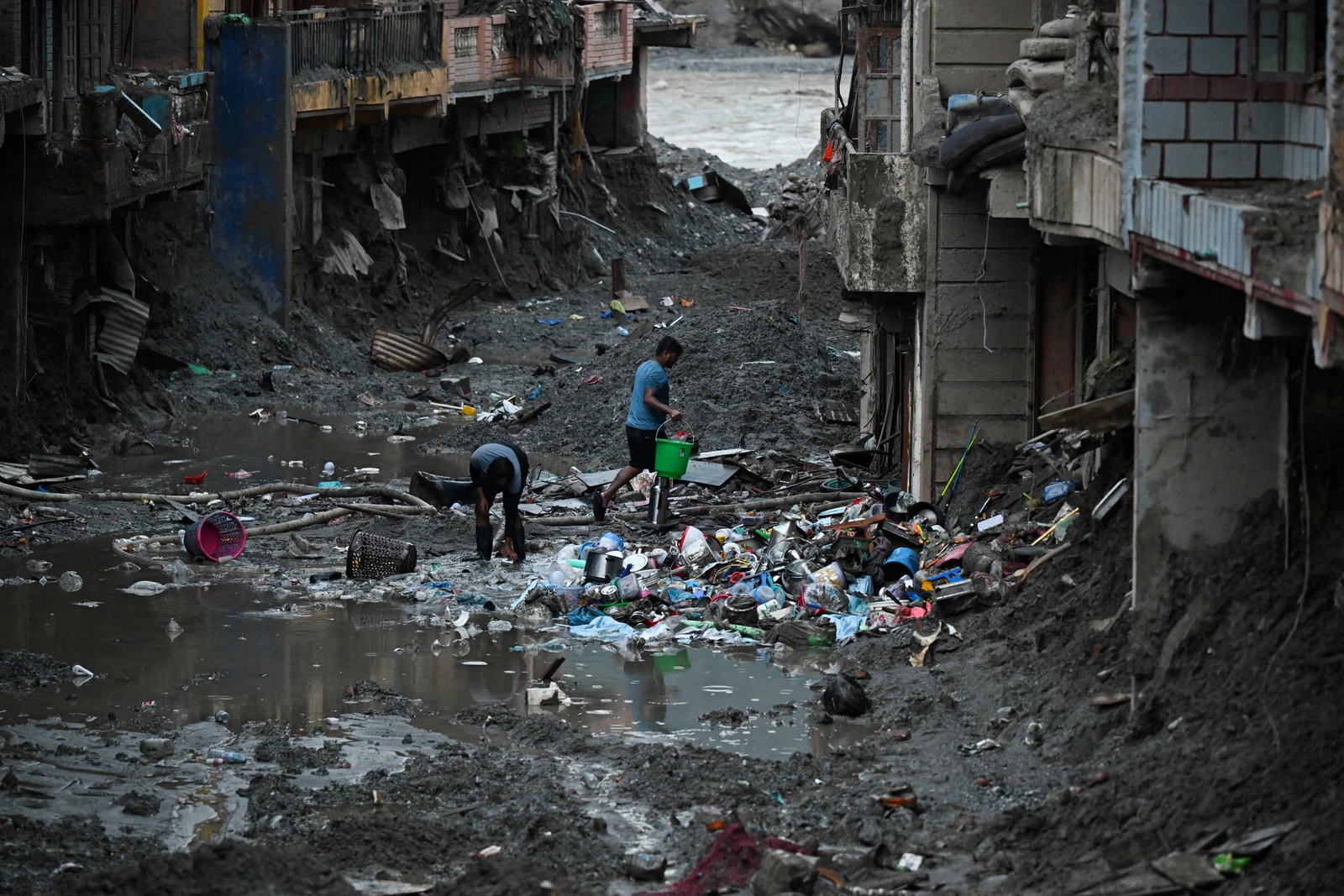
Already, data indicates that Asia accounts for 41 percent of global flooding, including from rising sea levels and storm surges. From 2013 to 2023, the wider Asia Pacific region, including Australia and Fiji, was hit by about 244 major floods, 104 droughts, and 101 severe storms.
In the future, it is forecast that Southeast Asia alone may experience around 60 more days of extreme heat annually by 2050 — this alongside about 100 climate disasters each year in the region.
One of the main reasons global warming is so serious in Asia is because much of the region’s economic growth is still largely dependent on the use of fossil fuels. At last year’s COP30 summit in Brazil, Simon Stiell, executive secretary of the UN Framework Convention on Climate Change, said there was now a clear choice between locking in what he depicted as the instability, including higher prices, of fossil fuels or accelerating a pathway to cheaper, clean energy, as may be beginning to happen. Yet this long-term goal and wider mass decarbonization will not be easy, not least given that energy demand is forecast to potentially grow significantly to help fuel economic growth.
The Iran crisis has provided a fresh push away from fossil fuels.
Andrew Hammond
Another reason the climate crisis has such an impact is that a significant slice of Asia, including much of Southeast Asia, comprises tropical countries. Many of these nations are facing larger than average global warming impacts, including rising temperatures, changing precipitation patterns, and increased frequency of extreme weather events.
Yet, there are also opportunities amid the understandable gloom about global warming in the region.
This core point was emphasized by Al Gore, former US vice president, speaking in Singapore on Sept. 8. He highlighted that the Iran crisis has provided a fresh push away from fossil fuels. This is boosting uptake of investment of renewables, such as solar and wind, which in Southeast Asia in the first half of 2026 increased by 51 percent compared with the same period in 2025.
Another source of opportunity comes from climate adaptation. The annual global costs of adaptation are forecast to be between $280 billion and $500 billion per year by 2050, according to the UN, yet only a fraction of that sum has been tapped so far.
The scale of the challenge, and potential opportunity, has also been highlighted by the India-based Coalition for Disaster Resilient Infrastructure, which found that around $850 billion in global infrastructure, about a third of it in Asia, is exposed to climate disasters each year globally. It forecasts that the amount of new climate-resilient infrastructure that will need to be built in Asia in the next three decades will be as much as the past two centuries combined.
In future, the UN and other key stakeholders hope that multilateral development banks can help ensure more money, including from the private sector, is channeled into tackling the huge climate adaptation finance gap. At COP31 in Turkiye, this will be a topic of key importance for emerging markets, including island states such as Fiji that are particularly vulnerable to climate risks.
As part of this dialogue, a lively debate is underway about extending the number of country partnerships to support just transitions to low-emission, climate-resilient economies in the Global South. The first of these was agreed on at COP26 in Scotland when South Africa announced a partnership with the key powers to raise about $8.5 billion. This Just Energy Transition Partnership model was subsequently extended to other nations, including about $20 billion for Indonesia and $15.8 billion for Vietnam.
Another reason for optimism is the growing signs that the climate agenda is becoming more coordinated and prominent within the Asia Pacific region. There is even growing speculation Beijing may seek to host COP33 in 2028. One of the reasons for China’s eagerness to host the event is that official statistics suggest the country’s greenhouse gas emissions dipped slightly from April to June 2026 after flatlining over much of the past two years.
Much data points to the Asia Pacific region increasingly being on the climate change frontlines. Yet, while this entails growing risks, there are also opportunities to step up and help mitigate the worst effects of global warming, while also helping the region adapt to change.
Andrew Hammond is an associate at LSE IDEAS at the London School of Economics.


