


It doesn’t take a political scientist to know that elections under military occupation are not feasible and certainly do not achieve the goals of a free and fair vote. But when the issue of the absence of a political horizon was presented as a major source of continuing instability in the Occupied Territories, the Americans and the Israelis thought they had the magic solution: insisting that engaging with the current Ramallah-based Palestinian leadership could only take place once a long list of democratic reforms have been carried out.
The Palestinian leadership, fully cognizant of the futility of total democracy and reform under occupation, accepted the conditions and pledged at the French-Saudi leadership meeting in New York last September — even though they were denied visas and had to attend virtually — to adhere to them. The reforms included ending support for families of Palestinian prisoners and those killed by Israel, further demands for textbook edits and holding elections to ensure that the Palestinians who will be involved in the promised political negotiations have popular legitimacy.
The Ramallah leadership has spent the entire last year meticulously adhering to the reform requests. When US officials, reading Israeli texts of sorts, claimed otherwise, the Palestinians hired an independent auditor to validate that they have indeed ceased to provide direct financial support to the families of prisoners and those killed in the conflict with Israel.
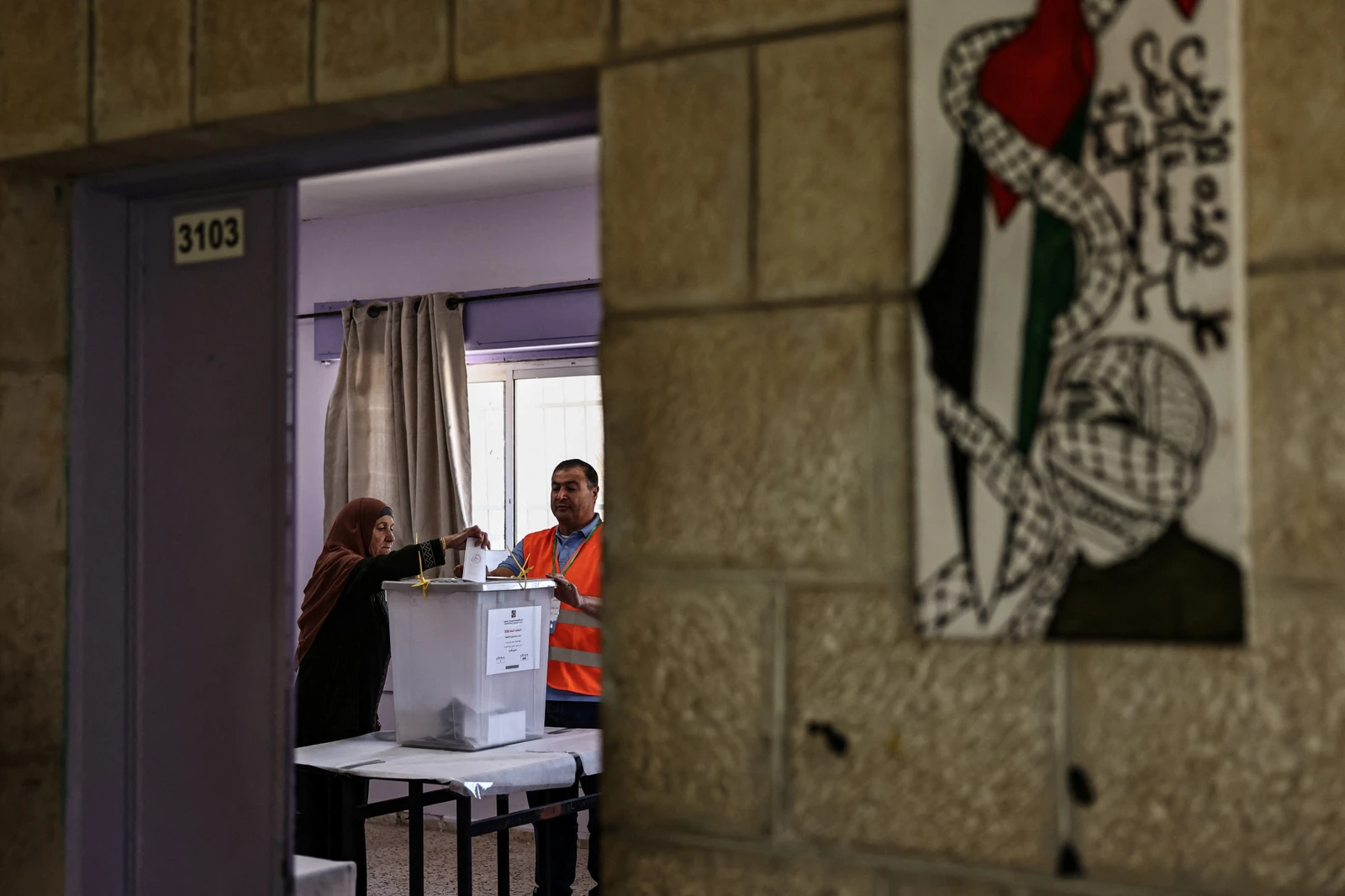
The outstanding step was elections. A series of dates was proposed, starting with municipal elections, to be followed by legislative and presidential ballots. The Palestinian municipal elections took place on April 25 throughout the West Bank and in the city of Deir Al-Balah in Gaza. The Carter Center praised the technical success of the elections, while stating in its report that “the process was impacted by the ongoing ramifications of the war in Gaza, escalating tensions in the West Bank, the continued Israeli occupation, limited competition, and a prolonged absence of national elections.”
Legislative elections were then announced for Nov. 28, with presidential elections planned for the first quarter of 2027. The Central Elections Commission has again done its job, allowing registration and providing all the technical aspects of the general election. It announced that 87 percent of Palestinians in the West Bank had registered, while noting that voters in the Gaza Strip and East Jerusalem can vote without registering.
The Ramallah leadership has spent the entire last year meticulously adhering to the reform requests
Daoud Kuttab
Palestinian factions and parties began recruiting candidates and coalitions were being worked on when doubts began to appear regarding the commitment of the US to the legislative elections. This is despite the condition that all candidates must be Palestinians who adhere to the international political commitments made by the Palestine Liberation Organization in the 1993 Declaration of Principles (also known as the Oslo I Accord) with Israel, which was signed on the White House lawn.
With the crucial election date approaching, many Palestinians now wonder where the US stands. Most know where the Netanyahu administration stands but, since the Palestinian elections are due to take place a month after the Israeli elections and considering the American claim of wanting to bring about peace, it is crucial to know where Washington stands.
Two announcements made in the second half of September by the US State Department have raised deep concerns about the Trump administration’s political will on peace. On Sept. 16, the State Department issued a bizarre report to Congress claiming that the visa ban — which has remained in place for this year’s UN General Assembly — was aimed at defending “peace,” while effectively laundering Israel’s narrative. A statement about the report made false assertions that the Palestinian government “continued to pay stipends to terrorists and to glorify acts of terrorism and terrorists in public pronouncements and school textbooks.” The allegation that Palestinians had failed to reform was missing references to elections.
However, an enterprising Palestinian journalist on Monday asked a State Department spokesman if the US was committed to supporting the Palestinian elections. He did not get an affirmative answer. Walid Nassar, the editor-in-chief of Ajyal Radio in Ramallah, was told only that “the United States continues to hold the Palestine Liberation Organization and the Palestinian Authority accountable for undertaking verifiable reforms and adhering to long-standing commitments and agreements,” with no reiteration of Washington’s support for democratic elections.
It is clear, therefore, that the US has taken the Israeli bait that Palestinian leaders are not legitimate representatives because they refuse to reform and hold democratic elections. Yet, when the Palestinians then started an electoral process, the Americans got cold feet and became unwilling to guarantee the elections could take place.
Without a political horizon that can give Palestinians hope, the region will be doomed to years of instability
Daoud Kuttab
The Palestinian conflict is not about textbooks or social benefits to prisoners. It is a political conflict that must be resolved under international law, foremost among which is the right to self-determination and statehood. Article 19 of Trump’s 20-point Gaza peace plan, which was authorized by the UN Security Council, calls for a reform process that will end in statehood.
Now that the process has begun and the American-Israeli bluff has been exposed, will Washington have the courage to break off its blind support for Israel and stop recycling failed Israeli talking points? The path to peace is clear. Without a political horizon that can give Palestinians hope, the region will be doomed to years and even decades of instability.
Ending the Israeli occupation and the illegal colonial settlement enterprise is an urgent requirement. The US should have the courage to recognize Palestine and support elected Palestinian leaders, including those in Israeli jails, to negotiate with Israeli leaders. The modalities between Palestine and Israel are the only game in town.
Daoud Kuttab is an award-winning Palestinian journalist and former Ferris Professor of Journalism at Princeton University. He is the author of “State of Palestine Now: Practical and Logical Arguments for the Best Way to Bring Peace to the Middle East.” X: @daoudkuttab


