
Protecting Saudi youths
The Syrian female academic who quit Dammam University to join the ranks of the self-ascribed Islamic State (IS) had brought her academic toolkit to pollute the thoughts of our girls by planting extremist ideology in the vulnerable minds of our youths.
The university professor had been lecturing at the university for the past several years whereas the IS is relatively a new phenomenon. This shows that she held radicals views since a long time. Interestingly, she has also written a book on the so-called Islamic State. Due to her already extremist views, it took very little time for her to embrace the deviant ideology of the brutal terrorist organization. It is surprising that despite her qualification and age, she held views similar to the IS.
Here arises a question: Who will be held responsible for recruiting a person with such radical views? The employment commission, head of section, or the rector! The truth is nobody is to be blamed. And it is also true that similar elements do exist in our universities.
This writer has always insisted that Saudi universities be cleared from people, without any gender discrimination, holding radical views. Such a step is necessary to ensure that our sons and daughters return home not only physically fit but also free from the negative impacts of harmful ideologies spread in the name of Islam.
The university teacher in question voluntarily quit her job. It is a unique case but many people with similar radical views continue to pose a threat to our youths in different educational institutions across the Kingdom.
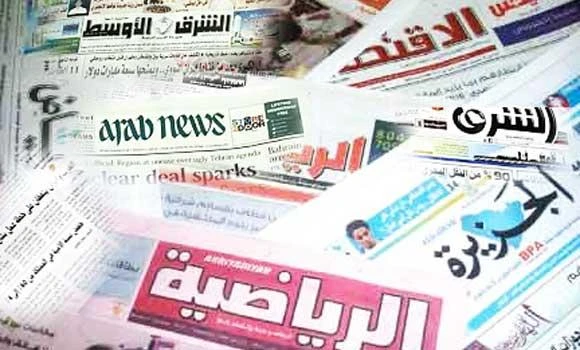
— By Haia Abdulaziz Al-Muni, Al-Riyadh
Truth be told
WHILE defining the Saudi society, one cannot ignore the fact that it is deeply religious and conservation society. At the same time, it is a society full of contradictions.
Some of its members lack the tolerance important to enter into a meaningful dialogue with other. They never seem to accept opinions of others. On the other hand, there are many who seemed to be least bothered about environment issues and above all the importance of cleanliness.
In our society, we can easily find many people who don’t respect traffic rules and regulations. We have people who don’t like standing in queues at public places. Many members of our society are living under the false impression that based on the (Saudi) society’s religious and conservative tendencies, we should enjoy a special position and preferential treatment.
It is a society where majority of its members do not pay attention or ignore the proper socialization process, education and spread awareness for children and today’s generations.
It is a society where tribal intolerance is spread among fewer members of the society clearly.
— By Hussain Abu Rashid, Al-Madinah
It’s payback time
OUR local banks are currently enjoying various privileges offered by the Saudi Arabian Monetary Agency (SAMA) basically aimed at boosting economic activities in the country. Unfortunately, when we compare these privileges with our banks contribution to the society, the situation seems to be relatively disappointing.
No sector in the national economy is gaining high profits as compared to the banking sector in the Kingdom. During the past 10 years, ratio of earning per capital (EPC) was never less than 25 percent. Even during the global financial crisis (2008), the ratio of EPC of the local banks ranged between 25.8 percent to 35.1 percent in 2008 and 2009, despite the fact that provisions of two years reached SR5.2 billion and SR10.9 billion, respectively.
Thanks to the wise policies adopted by the SAMA, our local banks weathered the 2008 crisis. It is due to SAMA’s policies that our financial and banking sector has been sailing smoothly for the past 40 years. This is a rare phenomenon experienced only by a handful of countries across the world.
The (protective) situations provided by SAMA to the local banks, however, were not substantially reflected in the national economy or in its developmental and social needs. During the last 10 years, the Saudi banks recorded profits of more than SR315 billion, or EPC ratio of 41.4 percent, but their contribution to the national economy did not exceed a mere five percent nor their funding to the small and medium enterprises (SMEs) exceeded one-percent mark.
— By Abduhamid Al-Amri, Al-Eqtisadiah
Promotion of SMEs
LAST week, the General Investments Fund (GIF) announced plans to create an industrial fund worth SR1 billion aimed at funding small and medium enterprises (SMEs) working in the industrial field.
In general, there is a noticeable activity in SMEs in the Kingdom through the financial support being given by a group of developmental funds but, however, their impact, compared to other countries, is still meager.
In the Kingdom, there is no unified definition of the SMEs and, accordingly, the Council of Saudi Chambers (CSC), the Industrial Development Fund (IDF) and Saudi Credit and Savings Bank (SCSB) maintain their own definitions of this important sector.
Based on the data released by the Ministry of Labor, the number of manpower employed by the SMEs across the Kingdom does not exceed 51 percent of the total manpower in the Kingdom. This rate is low compared to the ratio prevailing in the developed and developing countries, which stand at 69 percent and 60 percent, respectively, while the global average rate stands at 64.5 percent. Ironically, the rate of Saudi employment in SME firms does not go beyond nine percent of the total manpower working there.
On the other hand, the SME Center at CSC says the number of SMEs has increased but while 71 percent of them are operational, the remaining 29 percent are closed due to financial woes.
— By Abdulla bin Rabiaan, Al-Hayat


