

Syrians in Idlib could be forgiven for wishing the UN General Assembly lasted 90 days, not nine. The fear is that, now that this annual diplomatic jamboree is over, the Syrian regime’s onslaught will be upped to full throttle in the northwest corner of the country, probably at some point in mid-October, when the Russian-Turkey Idlib deal may collapse.
The Syrian regime (but not Syrians) was represented in New York by the ageing stalwart Walid Mouallem, its Deputy Prime Minister and Foreign Minister, who gave his annual lackluster speech at the podium.
Mouallem might as well as have just replayed his speech from last year, as ever peppering it with all the age-old regime messages — that Syria was apparently a victim of mass terrorism as well as an international conspiracy. It was a speech replete with fake news and fake claims. Whilst the regime was completely blameless, blame was dished out to others en masse. New York always gives the regime a chance to parade the fact that it was still there and had not disappeared; a poke in the eye to all those who wished it had gone away.
Yet deciphering his narrative does give clues to the future for Idlib. At the heart of the message was one of regime confidence — it had won. It was defiant. Increasingly this means it has little to no motivation to negotiate or even talk to the opposition and those that support it. The imminent delivery of Russia’s S-300 surface-to-air missile system has only boosted this conviction.
On territory, President Bashar Assad is determined to reclaim every inch of Syrian land, which might now be conceivable in a way that appeared unlikely two years ago. So nobody should expect the regime to back off Idlib for long. Moreover, both Mouallem and his Russian counterpart, Sergey Lavrov, warned that “terrorists” would try to use false flag chemical weapons attacks to frame the regime. It may well be tempting for armed groups, facing annihilation, to try this if they believed that it would provoke an American-led intervention to protect them. President Donald Trump said at the UN that the US “will respond if chemical weapons are deployed by the Assad regime.” One way or another, the chances that chlorine gas, even sarin, will be used in Idlib remain extremely high.
The harsh reality is that, as serious and devastating as the Syria conflict remains, the international community barely even has a seat as a spectator to events on the ground. The UN is just a sideshow.
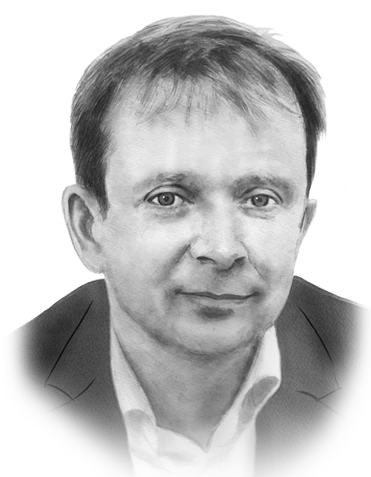
Chris Doyle
As for the Syrians, the regime is reaching out, but how many of the 5 million refugees will pay any attention to Mouallem’s statement that “every displaced Syrian is a priority for the Syrian government and the doors are wide open for all Syrians abroad to return voluntarily and safely?” It is the sound of prison cell doors closing that all refugees fear, and it is this, not Western interference, as Mouallem claimed, that stops refugee returning. The other fear is that, if they go back now, they will be frogmarched north to join the frontlines to help bomb and devastate Idlib. Yet still the regime does need some degree of refugee return. It wants to create an atmosphere of normalcy but, perhaps more importantly, it needs young Syrian males to fuel the economy as so many have perished over the last seven years. Half of Syria’s doctors have fled, and many others have been killed.
Reconstruction is vital for Syria and Syrians, not least given that the World Bank estimates that 27 percent of all homes have been destroyed or partially damaged. But perhaps it matters less to the regime. Mouallem was defiant. Those countries that had been part of what he termed the aggression on Syria were “not welcomed and not invited in the first place.” He spoke as if being allowed to help reconstruct Syria was some great honor. As it stands, major donor countries are not keen to contribute without a viable political process.
As for politics, Mouallem said little of substance. The regime has little time for UN special envoy Staffan de Mistura’s constitutional committee, even though Russia attaches more significance to it. He was clear: “The Syrians have the final say in any matter related to the constitution or any other sovereign affair.”
The harsh reality is that, as serious and devastating as the Syrian conflict remains, the international community barely even has a seat as a spectator to events on the ground. The UN is just a sideshow, with De Mistura desperately hoping to find some relevance. The future of Idlib is being decided not through some peace process, but a further iteration of great power politics between Russia and Turkey, with a bit-part role from Iran. The Syrian regime’s desire to quash this last area of Syrian opposition has been stalled by Russian and Turkish moves; yet another sign of just how weak the regime really is.
- Chris Doyle is director of the London-based Council for Arab-British Understanding (CAABU). He has worked with the council since 1993 after graduating with a first-class honors degree in Arabic and Islamic studies at Exeter University. Twitter: @Doylech


