


The spiraling tensions between two rival nations — Iran and the US — have reached an unprecedented level.
On the one hand, the Trump administration appears determined to continue pursuing its “maximum pressure” campaign and escalating the economic and geopolitical squeeze on the Iranian regime. To achieve this, the US has leveled a new wave of sanctions on Iran.
The Treasury Department last week designatedtwo networks based in Iran and Hong Kong for “engaging in covert procurement activities benefiting multiple Iranian military organizations.” The following day, the US sanctionedthe Lebanon-based Jammal Trust Bank SAL over its support of Hezbollah’s illegal financial activities. And, in cooperation with Oman, the Treasury Department sanctionedfour individuals who facilitated the transfer of tens of millions of dollars between Iran’s Quds Force and Hamas’ military wing in Gaza. On Friday, the US also blacklisted an Iranian tanker that was believed to be heading toward the Syrian port of Tartus in violation of EU sanctions on the Damascus government. Finally, on Tuesday, Iran’s civilian space agency and two research organizations were sanctioned, with the US saying they were being used to advance Tehran’s ballistic missile program.
On the other hand, the Islamic Republic is firing back at the Trump administration with heightened asymmetrical warfare tactics and a militaristic approach. Qassem Soleimani, the head of the Quds Force, which is the elite branch of the Islamic Revolutionary Guard Corps (IRGC), in May instructedthe leaders of Iran-aligned Iraqi militia groups to “prepare for proxy war.” Tehran has also been implicated in attacks against ships in the Strait of Hormuz and has shot down an American drone.
These developments have raised a crucial question in the international community: What is the endgame of the spiraling tensions between the US and Iran?
There are three scenarios. First of all, there is the possibility that a standoff between the two countries will continue until another administration enters the White House. In other words, the status quo will persist due to the fact that neither country is willing to surrender.=
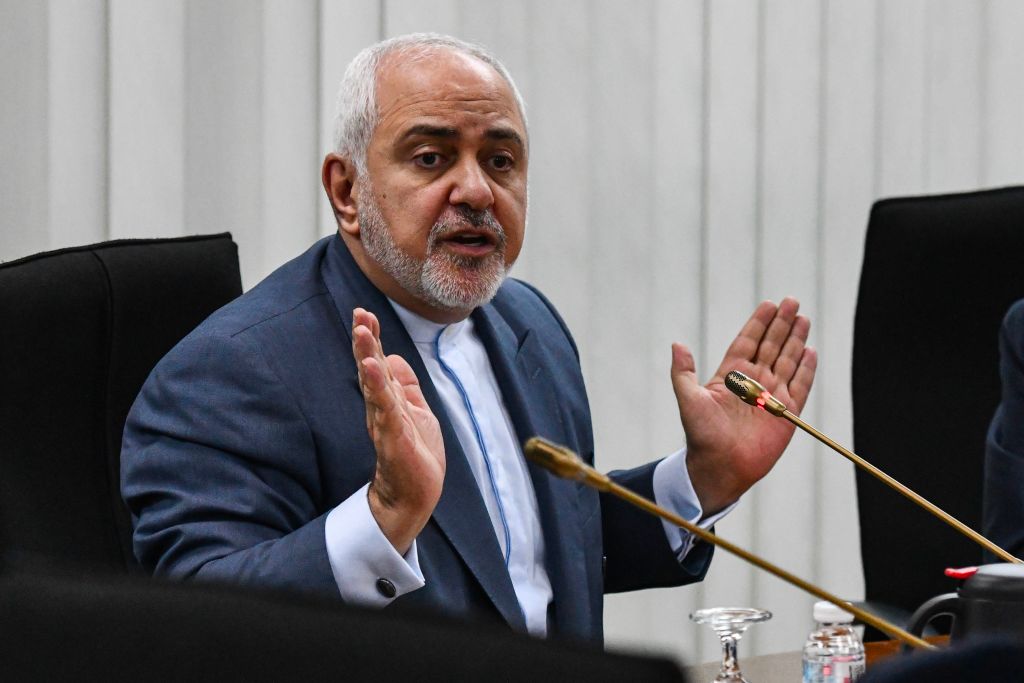
The Iranian leaders contend that there will be no negotiations until the US lifts its primary and secondary sanctions on Iran’s financial, energy and transportation sectors. Iranian politicians across the political spectrum have made it clear they will not meet with US officials until their demands are met. Most recently, Foreign Minister Mohammed Javad Zarif toldreporters in the Malaysian capital of Kuala Lumpur: “The United States is engaged in economic war against the Iranian people. It won't be possible for us to engage with the US unless they stop imposing a war, engaging in economic terrorism.” He added: “So if they want to come back to the room, there is a ticket that they need to purchase and that ticket is to observe the agreement.” President Hassan Rouhani and the senior cadre of the IRGC have echoed the same message.
But it is extremely unlikely that the Trump administration will lift the sanctions because that would give away Washington’s leverage against the theocratic establishment. In addition, the White House believes that the only way to force the Iranian regime to behave like a rational and normal state and to stop its malignant policies is to impose economic and political pressure on the ruling mullahs.
The second scenario is a potential military confrontation, which could be triggered by a country other than the US. In this case, Israel is a strong candidate. The US has made it clear that it does not want to go to war with Iran, but Israel has been steadily expandingits military campaign against Iranian-linked targets in the region. This included carrying out a series of airstrikes in Syria and Iraq last month.
It is extremely unlikely that the US will lift the sanctions on Iran because that would give away its leverage.
Dr. Majid Rafizadeh
Iran has not yet responded to Israel’s airstrikes militarily but, if Tehran makes a political or military miscalculation, the increased tensions could cause a direct confrontation that would bring the US into the war in support of its staunch ally Israel. Seeing an opportunity while Tel Aviv enjoys a strong ally in the White House, Israeli leaders might even decide to launch airstrikes against Iran’s nuclear sites in order to set the clock back on its nuclear activities. A war with Iran could also rally support for Israeli Prime Minister Benjamin Netanyahu ahead of the upcoming elections.
Finally, the third scenario is a potential domestic change in Iran. The sanctions are continuing to damage the country’s economy and increase the population’s dissatisfaction with the ruling clerics. Domestic unrest has long been beneath the surface as Iranians endure a sluggish economy and falling living standards, while seeing billions spent abroad on Tehran’s network of proxies.
None of these three outcomes appear to bode well for the ruling clerics of Iran.
- Dr. Majid Rafizadeh is a Harvard-educated Iranian-American political scientist. He is a leading expert on Iran and US foreign policy, a businessman and president of the International American Council. Twitter: @Dr_Rafizadeh


