
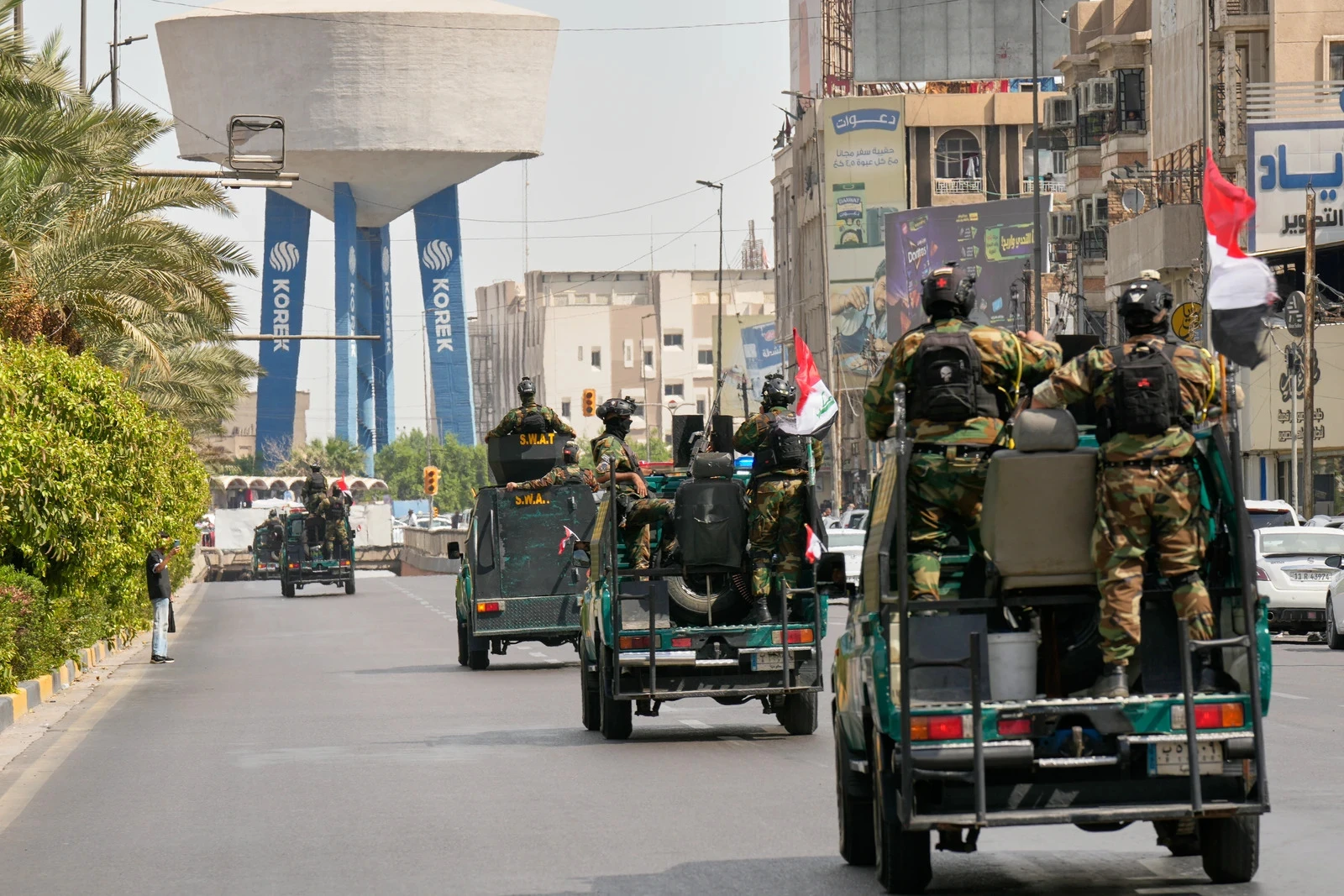

The Iraqi News Agency reported this week that Wednesday’s withdrawal of the final American troops from Iraq “represents a significant historic milestone in Iraq’s path toward completing its national sovereignty and strengthening the independence of its political and economic decision-making.” For Baghdad, this is the day the country’s sovereignty was restored. Many analysts are worried that the vacuum left by the US-led coalition will be filled by Iran. However, few analysts talk about the potential role of Turkiye.
While Baghdad and the pro-Iran factions are happy about the departure of American forces, those in Iraqi Kurdistan are worried. The region’s prime minister, Masrour Barzani, said that leaving Kurdistan without a defense system was concerning.
The Kurdistan Regional Government in northern Iraq has had a tumultuous relationship with Iran. This is especially true during the ongoing war. Iran has targeted the Kurdistan region with more than 1,000 drone and missile attacks since February. These attacks have had two purposes: to strike at Kurdish dissident groups and to attack the American presence. On Monday, two days before the American withdrawal, Iran used drones to target Irbil’s Azadi camp, which is affiliated with the opposition Democratic Party of Iranian Kurdistan. Tehran’s goal is to deter Iranian Kurdish groups from using Iraqi territory to create disturbances in Iran.
While the Iraqi Kurds view Iran’s attitude as patronizing and interventionist, Iran looks at the KRG with suspicion
Dr. Dania Koleilat Khatib
We have to remember the US-Israeli plan to create unrest in Iran. US and Israeli intelligence agencies trained and coordinated with Kurdish opposition groups based in Iraq in order to march on Iran and spark turbulence, hoping that this would ultimately lead to regime change.
According to Israeli sources, White House officials leaked the plan to Turkish President Recep Tayyip Erdogan, who persuaded Donald Trump to drop it. Both Erdogan and Foreign Minister Hakan Fidan warned the US that instigating a Kurdish-led civil war or partitioning Iran could set a dangerous precedent and destabilize the region. This has made Tehran especially suspicious and edgy when it comes to Iraqi Kurdistan.
However, the relationship between Iran and Iraqi Kurdistan was not always been so tense. Before 2003, the Iranians cooperated with the Iraqi Kurds. But with the collapse of the Baathist regime, which had been a common threat, the dynamics of the relationship changed. To start with, Iran did not need to cooperate with the Kurds anymore, as the new regime in Baghdad — despite being an ally of the US — was friendly toward Tehran. On the other hand, the Shiite-dominated government in Baghdad was not strong enough to control the KRG. Hence, Iran felt it needed to keep the Kurds in check, especially since they were close to the Americans.
In addition, the emancipation of the Kurds in Iraq was worrying Iran. The KRG was acting like a state, consolidating its autonomous status and authority and developing political and economic relations with regional states independently of Baghdad. The relationship that was most worrying for Iran was the one with Israel.
While the Iraqi Kurds view Iran’s attitude as patronizing and interventionist, Iran looks at the KRG with suspicion. Kurdish nationalism can be contagious and could create problems for Tehran at home. Iraqi Kurdistan’s desire for independence does not resonate well. The KRG is really worried about increased bullying by Iran, hence the statement of the prime minister.
With Turkiye, the relationship is different. Ankara has important economic ties with Iraqi Kurdistan. Iraq is Turkiye’s third largest export market and a large portion of the Turkish companies operating in Iraq are based in Iraqi Kurdistan. There is also the energy sector. Until 2023, Turkiye imported about 25 percent of the oil it consumed from Kurdistan. But this supply had to stop due to an International Chamber of Commerce ruling that forbade the KRG from exporting energy independently of the central Iraqi government. The supply resumed a year ago. Now, with the Strait of Hormuz closed, the Kirkuk-Ceyhan pipeline is the only way to export Iraqi oil.
Turkiye also has an interest in making sure all the parties in the KRG share its stance against the PKK
Dr. Dania Koleilat Khatib
Turkiye also has an interest in making sure all the parties in the KRG share its stance against the PKK, which Ankara considers a terrorist organization. Turkiye’s approach was to befriend the KRG to make sure the PKK does not find an ally in Iraq. However, similar to Iran, Ankara is uncomfortable with Irbil’s relationship with Tel Aviv. Kurdish nationalism and the quest for independence also put Turkiye on edge.
While Iran’s ties with Iraqi Kurdistan has been perceived by Irbil as interventionist and patronizing, the KRG has a more cooperative relationship with Ankara. The natural course of action would be for Irbil to strengthen its ties with Turkiye, thus filling the vacuum left by the US and keeping Iran at arm’s length.
Unlike a covert operation with Israel that would drive Iran to target Iraqi Kurdistan, collaboration with Turkiye could be tolerated by Tehran. Iran and Turkiye have similar goals in Iraqi Kurdistan. They both want to make sure there is no Kurdish militancy toward any neighboring country, that Kurdish nationalism is contained, and that Israel does not gain a foothold to destabilize the region.
Hence, with the withdrawal of the last American soldiers, Turkiye is expected to have more influence in Iraq — with the tacit agreement of Tehran. Those who believe that Iran will fill the vacuum left by the Americans should watch out for Ankara’s next move.
Dr. Dania Koleilat Khatib is a specialist in US-Arab relations with a focus on lobbying. She is co-founder of the Research Center for Cooperation and Peace Building, a Lebanese nongovernmental organization focused on Track II.


