


I would like to tell you about the best book I read in 2019; in fact, it is one of the most important books I have read in the last 10 years. It is titled “Range,” and its thesis is given by the subtitle: “How generalists triumph in a specialized world.” The author, David Epstein, is an investigative reporter with backgrounds (studies and work) ranging from science to sports.
The book does not bring us new knowledge in science, economics, technology or any major field. Yet it is hugely significant because its ideas — and the loads of supportive evidence it presents — may change or at least significantly redirect our world.
In a nutshell, Epstein shows that, to be creative and innovative, people need to have a wide range of learning and interests. This applies from sports to technology and from arts to science. Most importantly, our educational approach, from parenting toddlers to teaching various university curricula, needs major reforms in this optic.
Epstein begins with sports, where he compares for us — in storytelling style — Tiger Woods, who got drilled in golf techniques by his father from the age of two or three, and Roger Federer, who played various sports and didn’t specialize in tennis until his teenage years. Indeed, Federer shows his versatility and creativity, having benefited from his wide and diverse training, whereas Woods, while undoubtedly great, is more of a specialized “technician.”
Epstein then moves to arts and tell us the story of Vincent van Gogh, who did not paint until a few years before his death, having spent years hopping from one career (teacher) to another (book seller), even considering becoming a pastor and a missionary. However, in the last three years of his life, he found his calling — and various influences came together to lead him to become an extraordinary artist. Likewise for Paul Gauguin, who led another mini-revolution in painting (“synthetism”) at the same time as Van Gogh. Talk about late bloomers who, to repeat and emphasize, synthesized entire lives of varied influences.
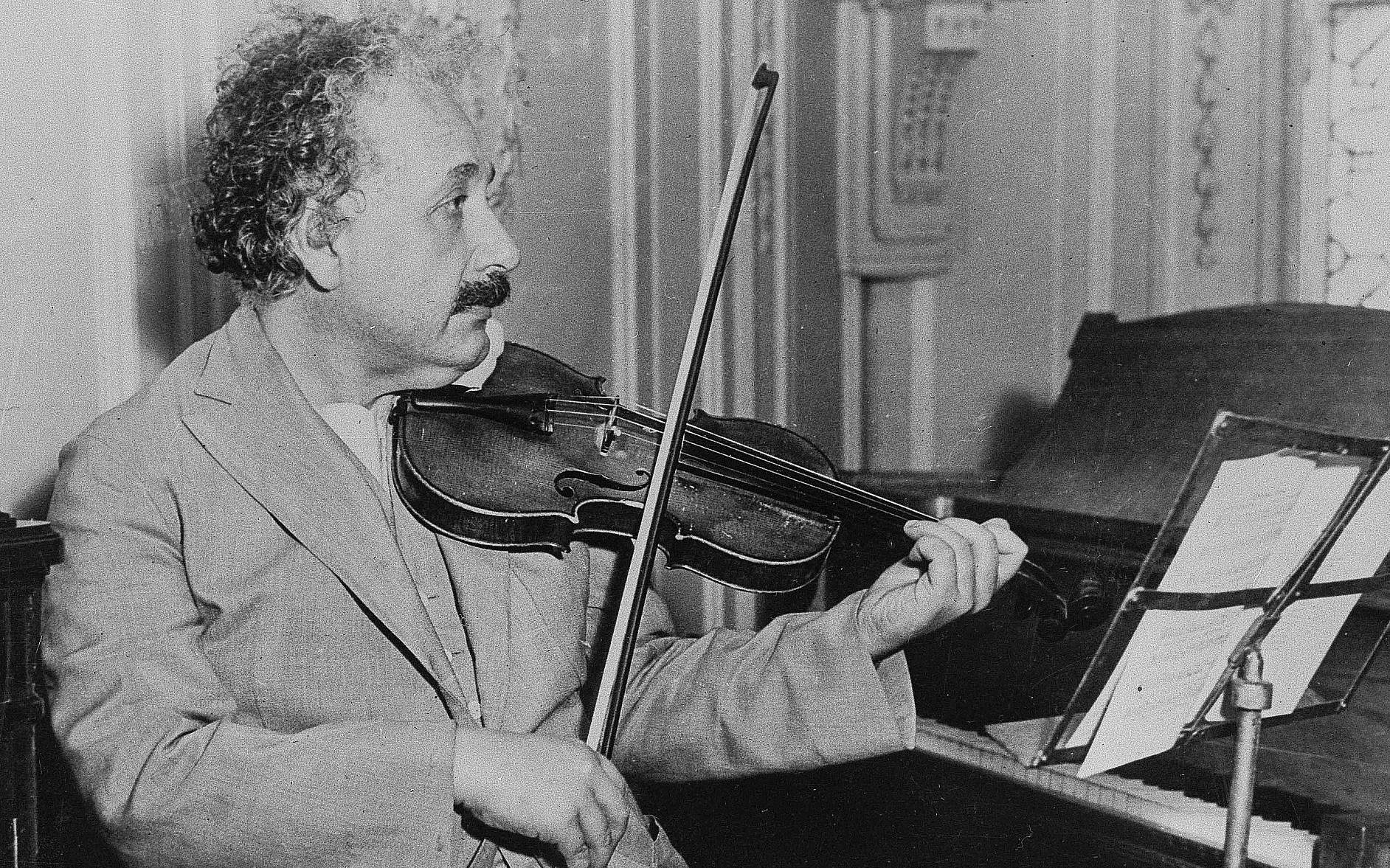
Epstein then moves to science and technology. First, he tells us: “I found a raft of studies that showed how technological inventors increased their creative impact by accumulating experience in different domains, compared to peers who drilled more deeply into one.” One telling fact is that Nobel laureates are at least 22 times more likely to have a regular artistic hobby than “typical” scientists (Einstein played the violin, to mention only the most famous example).
The impact of diverse backgrounds and experiences in research labs was noticed when a reporter decided to spend a year in a few laboratories, observing and attending regular team meetings. He noted that teams that had members from different fields and where people did not hesitate to invoke practices and examples far from the topic under examination were much more successful in solving problems — and did so in the most innovative ways.
But it was in the domain of education that I felt the book was presenting a very significant, critical and potentially revolutionary thesis.
First, Epstein shows us, with case studies and substantial evidence, that parents and kindergarten educators must let children discover things on their own, instead of directing them. Children who were creative had been allowed to discover things on their own and make mistakes. Likewise, pupils in elementary schools learned more deeply and lastingly when their teachers did not show them how to do things. This “slow learning” lasts much longer and develops more creativity.
The negative impact of drilling and specialization is felt even more acutely at the university level. Tests of British students showed that they “were no better at thinking critically when they came out of university than when they went in.” Furthermore, on wide-ranging tests, “none of the majors, including psychology, understood social science methods. Science students learned the facts of their specific field without understanding how science should work in order to draw true conclusions…. Business majors performed very poorly across the board, including in economics. Economics majors did the best overall (because) economics is a broad field by nature, and economics professors have been shown to apply the reasoning principles they’ve learned to problems outside their area.”
Epstein tells us that three-quarters of American college graduates end up in careers unrelated to their study majors, and this includes science graduates, but they all get drilled in a single discipline. Moreover, psychologists insist that the most important changes in youngsters’ personalities occur between age 18 and the late 20s, and yet we are specializing them before they have settled into a given mode of thinking or way of being. No wonder that a recent Gallup survey of more than 200,000 employees in 150 countries found that 85 percent were either “not engaged” with their work or “actively disengaged.”
We need to encourage our children to explore and discover and not specialize or settle in any given field, at least not early, and possibly not ever.
Nidhal Guessoum
Arturo Casadevall, a leading microbiologist who has made it his mission to transform graduate science education and eventually all education, thus summarized things to Epstein: “Do we really need to go through courses with very specialized knowledge that often provides a huge amount of stuff that is very detailed, very specialized, very arcane, and will be totally forgotten in a couple of weeks? You have people walking around with all the knowledge of humanity on their phone, but they have no idea how to integrate it. We don’t train people in thinking or reasoning.”
To sum up, we need to broaden our education philosophy. We need to encourage our children to explore and discover and not specialize or settle in any given field, at least not early, and possibly not ever.
- Nidhal Guessoum is a professor at the American University of Sharjah, UAE. Twitter: @NidhalGuessoum


