

The head of the most successful bloc in last month’s Israeli elections, Gen. Gadi Eisenkot, has vowed to form a national emergency government with the aim of repairing Israel’s reputation internationally and addressing its growing diplomatic isolation.
Whenever the term “improving our image” is used around the world, many think of the role of public relations firms that try to show the good side of products or services. But as the powerful Israeli leader Benjamin Netanyahu begins to exit the political stage, the last thing that the leader of Eisenkot’s change bloc should be looking for is PR tactics.
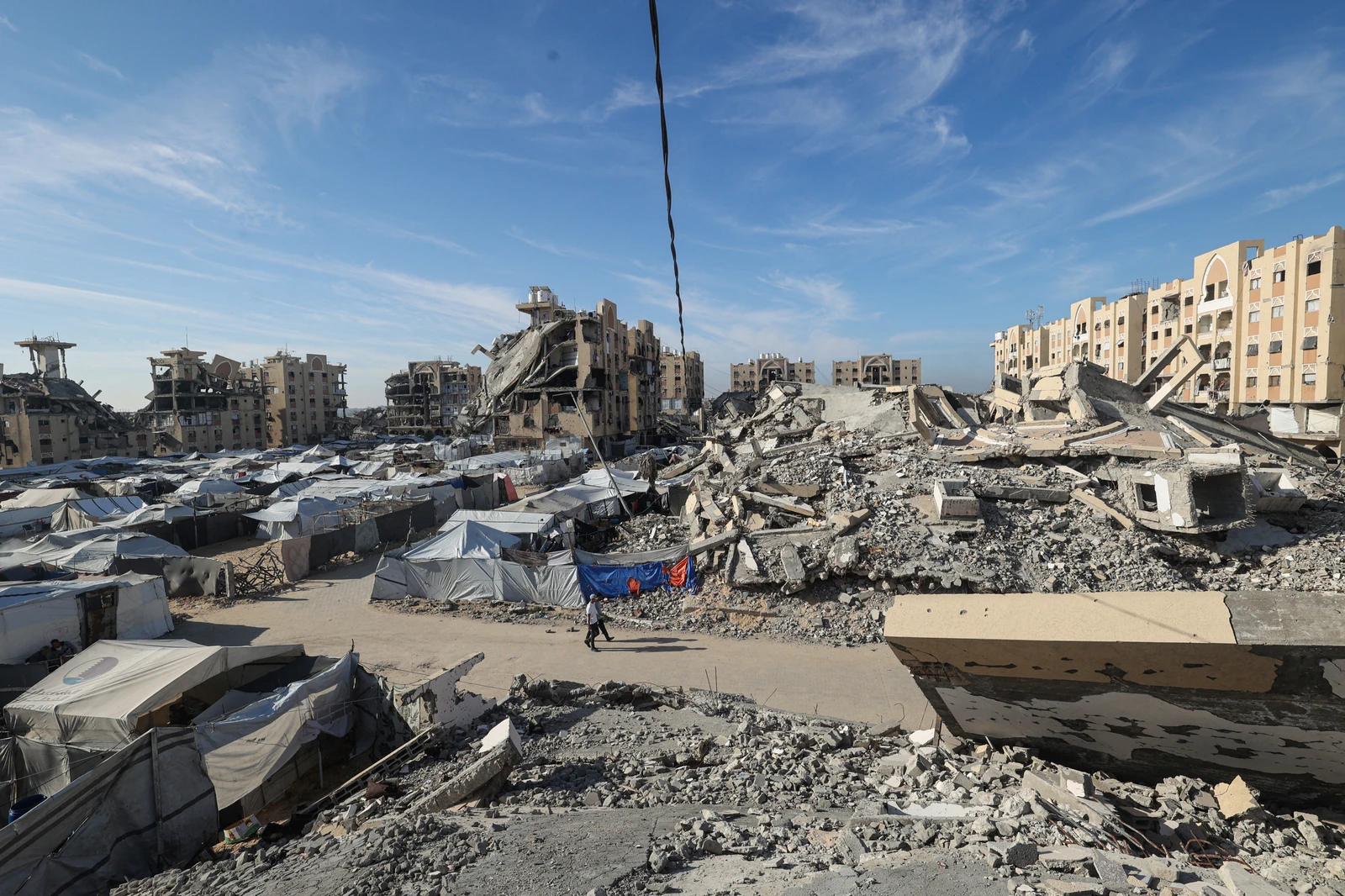
The No. 1 decision Eisenkot should take, if he truly wants to begin addressing his country’s terrible image, is Gaza. He should pay close attention to the humanitarian situation there. It is inhumane for people to be drowning in tents due to torrential rain while thousands of prefabricated homes collect dust on the Egyptian side of the Rafah border crossing. Within hours, those homes could bring relief to thousands as the winter months roll in.
Sure, Israel — and the general whose son was killed in Gaza — will want to ensure that an attack like Oct. 7 never happens again. But as all generals in history have learned, there is a limit to what guns, sieges and constant military superiority can accomplish.
As all generals in history have learned, there is a limit to what guns, sieges and constant military superiority can accomplish
Daoud Kuttab
The prospective Israeli leadership is highlighting its commitment to the rule of law in Israel. One of the first legislative initiatives following the ouster of the pro-Netanyahu speaker of the Knesset focused on reversing the antidemocratic laws passed by Netanyahu’s government of extremists.
Respect for the law should not be limited to internal laws. Last November, the UN Security Council unanimously backed a ceasefire in Resolution 2803, which US President Donald Trump — and even the Netanyahu government, as well as Palestinian President Mahmoud Abbas — endorsed. However, news reports from Gaza continue to point to Israeli army attacks that have killed nearly 2,000 Palestinians since the ceasefire came into effect. Just last week, an attack on a hospital killed a doctor and a 13-year-old patient. It is a war crime to attack a hospital unless there are people literally shooting at you from inside.
Israel might argue it was after a Hamas leader. But the ceasefire agreement does not exempt Israel if it wants to go against its enemies. Hamas, on the other hand, has not fired a single bullet — no Israeli has been shot or killed — and it has agreed to the Trump plan to disarm. No foreign journalist has been allowed into Gaza, meaning the world is fed the proven lies of the Israelis, while videos by Palestinians show the destruction of a hospital and not a military center, as Israel wants the world to believe.
The departure of Netanyahu’s government should be a real opportunity for change. But change begins on the ground
Daoud Kuttab
Addressing the injustice, collective punishment and war crimes in Gaza — as well as in the West Bank — will have little success if the illogical decisions of the Netanyahu government regarding Palestinians continue. Historians around the world say ceasefires that lack robust monitoring and efforts that do not address the political cause of a conflict will never produce the desired outcomes.
The Palestinian leaders in Ramallah have bent over backward — to the anger of their people — to retain security and intelligence cooperation with Israel. Yet they have been ignored and shunned, while the tax money collected on their behalf has been withheld for no logical reason.
But the world has changed. The US midterm election results and decisions by the UK, Australia, the EU and others demonstrate this. People are finally saying that the two-state solution is the only path to peace — and their actions show they are no longer giving it mere lip service.
An overwhelming majority of 160 countries, including four out of the five permanent member states at the UN Security Council, have recognized Palestine. Palestinian diplomats at the UN have been quoted as saying that the US and Israel can recognize Palestine even while it remains under occupation. Palestinian representatives can then negotiate with Israeli representatives about the modalities of two states living in peace side by side.
The peoples of the region have had enough trauma and bloodshed. The departure of Netanyahu’s militant and extreme government should be a real opportunity for change. But change begins on the ground — in Palestine and in Lebanon.
Everyone knows that peace requires compromise. Late Israeli Prime Minister Yitzhak Rabin began the peace process and paid with his life. Now it is up to Eisenkot to follow in Rabin’s footsteps and restart genuine efforts for peace. Addressing injustice toward Palestinians and planning a road map for peace will be the best way to improve Israel’s image. No attempt to sugarcoat the situation will do much to change public opinion in the region and around the world.
Daoud Kuttab is an award-winning Palestinian journalist and former Ferris Professor of Journalism at Princeton University. He is the author of “State of Palestine Now: Practical and Logical Arguments for the Best Way to Bring Peace to the Middle East.” X: @daoudkuttab


