
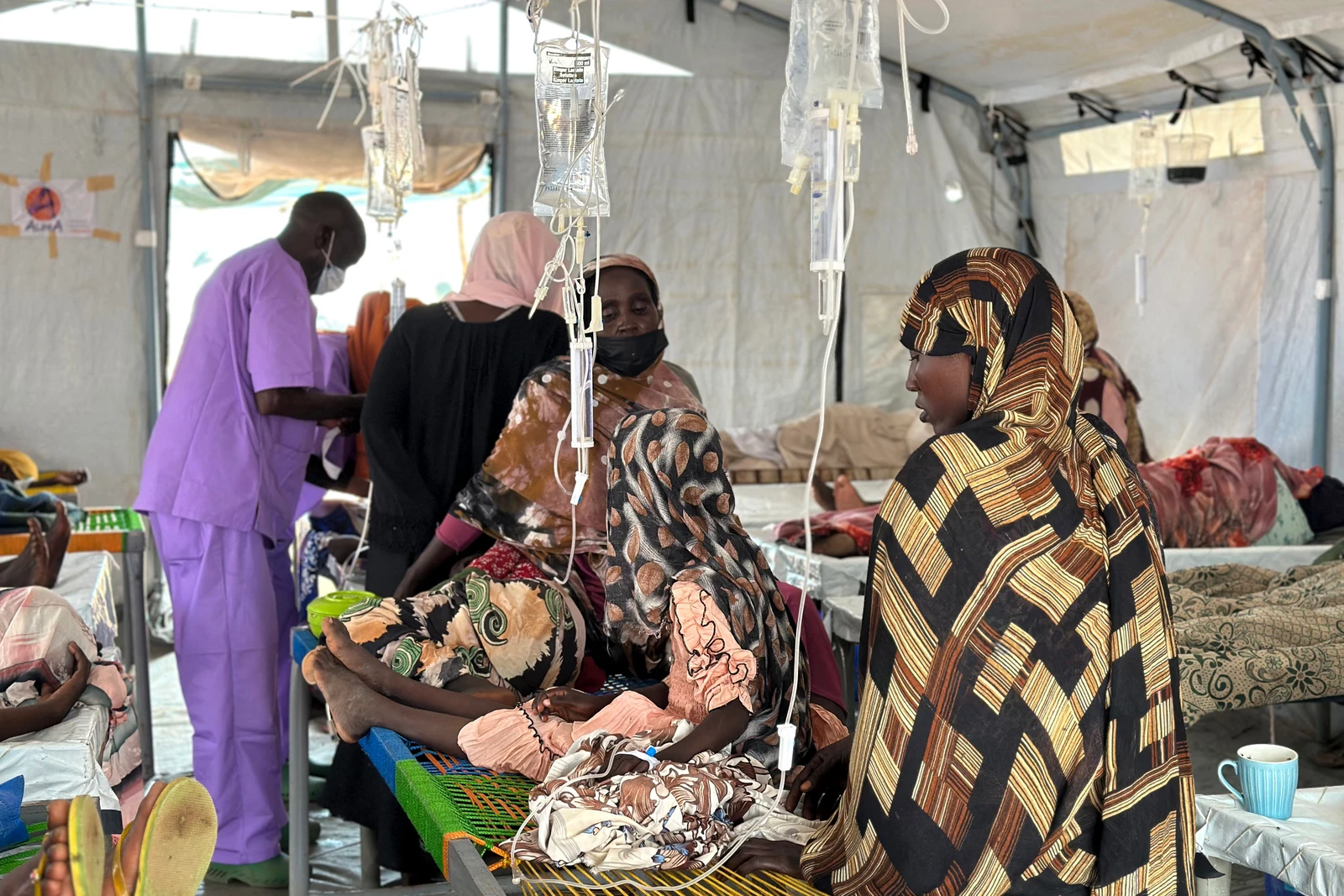

Cholera has existed for centuries. We know how to prevent and treat it. Yet in 2024 and 2025, Sudan endured the deadliest cholera outbreak recorded in its modern history.
The disease reached all 18 states for the first time, with more than 124,000 cases and 3,500 deaths, as stated by the World Health Organization.
I have spent much of my medical career working in emergencies. What haunts me about this outbreak is not simply that it happened, but that so many cases and deaths could have been prevented.
Sudan has faced at least 16 cholera outbreaks since the 1960s, including major waves in 2006, from 2016 to 2018 and in 2019. Seasonal rains and weak infrastructure exacerbated those outbreaks.
Over the past two years, war altered the pattern. Since fighting erupted between the Sudanese Armed Forces and the Rapid Support Forces in April 2023, our teams have seen cholera follow the routes of conflict and the poor living conditions in displaced sites. Cases surged in Port Sudan, El-Gedaref, Khartoum and Kosti during the dry season, months before the rains that usually accelerate transmission.
Our teams have seen cholera follow the routes of conflict and the poor living conditions in displaced sites
Dr. Micaela Serafini
In February 2025, a strike hit the power station supplying Kosti, in White Nile state. The city’s water treatment plant stopped working and families had little choice but to collect water from the river and buy water carried by donkey carts. Within days of the attack, hundreds of severely ill people arrived at Kosti Teaching Hospital with watery diarrhea symptoms. By March 5, less than one month later, more than 3,000 cholera patients had been admitted and more than 100 had died.
The same chain of events appeared elsewhere. In Khartoum, attacks on power stations in May cut electricity to pumps supplying safe water. Blackouts also disrupted water treatment and health facilities. Chlorine and other essential supplies were delayed or ran short. Funding gaps forced water-trucking services to stop, leaving families to choose between unsafe water and water they could not afford.
Two years on, we can now speak of what we have learned. These surges followed the rhythms of war rather than the seasons or the weather. The greatest burden fell on people with the least protection: families displaced within Sudan, often living in overcrowded camps or informal settlements without clean water, sanitation or healthcare close to home. In some places, outbreaks had begun within days of new arrivals.
Cholera did not spread in a vacuum. Conflict created and deepened the conditions that allowed it to develop: damaged water and power systems, mass displacement, blocked humanitarian access and a response lacking resources. The disease is preventable. The repeated failure to prevent it in the past reflects political choices to not protect civilians, to target and accept damage to civilian infrastructure, to block fast-track aid, and to cut funds allowing proper preparedness.
Where a life can be saved from a disease as preventable as cholera, we must do everything we can
Dr. Micaela Serafini
Doctors Without Borders was far from alone in this past response. Humanitarian organizations worked under extraordinary constraints. Where international teams could not go, Sudan’s volunteer-run Emergency Response Rooms often acted first. They organized water points, alerted health authorities to new cases and kept people alive before larger responses arrived. Much of the response was carried out by the Sudanese health workers and the communities themselves.
This largest outbreak was contained by March 2026 but the danger has not ended. A new outbreak was declared in West Kordofan in June, after acute watery diarrhea cases had appeared in May, before the rainy season was fully underway. Cases also emerged in North Kordofan, though numbers have been decreasing. Once again, conflict, lack of clear surveillance data and inadequate access to safe water created the conditions for disease to appear.
What did we learn? Sudanese responders, health authorities and humanitarian organizations have all worked to prepare to some extent for future outbreaks. What is still missing is speed: delay is paid for in lives. Two things must happen now, together.
The first is the sense of urgency — we must move at the speed this outbreak demands. My message to the donor community, to Sudan’s Federal Ministry of Health and to other humanitarian actors is simple: timeliness matters as much as the investment itself. Surveillance must be strengthened to identify cases early. The response cannot stay centralized, we need decentralized ways of working that strengthen surveillance on the ground and get ahead of transmission. That means investing urgently in preparedness. That includes a vaccination plan and water and sanitation services. Where a life can be saved from a disease as preventable as cholera, we must do everything we can.
The second is accountability. Parties to the conflict, and those with influence on them, must respect their obligations under international humanitarian law and the Geneva Conventions to protect civilian infrastructure such as water and power systems essential to people’s survival. These are not optional safeguards. When a power station or water treatment plant is attacked, the consequences go far beyond the destruction of infrastructure: it is seen in the next cholera ward, filled with patients, some of whom will die.
The lesson we learned from the past cholera outbreak could not be clearer. The only real question left is whether those involved are finally willing to learn from it, through humanitarian action that funds and fast-tracks preparedness and political will that protects civilians and infrastructure, before history repeats itself once more.
Dr. Micaela Serafini is President of Medecins Sans Frontieres/Doctors Without Borders in Switzerland.


