At a time when print editions of the dailies worldwide are folding up mainly due to their falling circulation, the trend in Saudi Arabia and certain other Middle East and Southeast Asian countries is just the opposite.
Circulation figures of Saudi newspapers amply give evidence to the fact that they have not only maintained their status year after year but, in cases like Arab News, their growth graph, in terms of readership, circulation and ad revenue, has maintained its ascendency.
What has made Arab News the most favorite daily for its avid readers and also for the advertising world is not far to seek.
Over the last four decades, the daily has earned the distinction of providing the most balanced coverage of news and views in its comprehensive editorial content.
Its local and international advertisers are convinced that the daily gives their messages maximum mileage that they can ever think of in this part of the world.
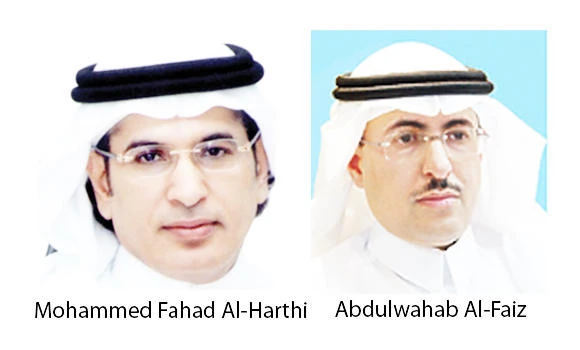
What is more, Editor in Chief Mohammed Fahad Al-Harthi has introduced a new refreshing change in the newspaper, both in its news coverage, views of columnists and appeal to its vast readership.
The other reasons for the unprecedented success of Arab News are two-fold — its consistent adaptability to incorporate changes as the engine of growth and its capability to introduce evolving technologies.
The credit for this goes, of course, to its dynamic editor in chief.
One needs to appreciate the newspaper by turning its pages.
The front page reflects the most important local, regional and world events of the previous 24 hours.
The local, regional and international pages give adequate coverage to the happenings that concern the citizens and vast expatriate communities.
The business and economy sections as well as the sports pages are among those that every reader looks forward to.
In addition, the pages dedicated to certain international communities as also the special supplements published to mark the Saudi national day and also the national days of expatriate communities, as well as major events have been uniquely contributing to the wide appeal and readership of this newspaper.
There is no bias anywhere in its news presentation and no unfair criticism in its editorial comment. Comments from well-known columnists, and well-researched features and articles on a daily basis have been adding to the popularity of the newspaper.
Above all, it strictly follows the well-known journalistic dictum, news is sacred.
No doubt, Arab News today occupies an enviable position in the publishing world.
Of course, the future is of online editions, which many of the world dailies, especially in the Western world, have already resorted to.
In this context, Arab News — Saudi Arabia’s first English newspaper and Saudi Research and Publishing Company’s (SRPC) flagship — has not lagged behind.
While devoted to its print edition, it embarked upon its online edition and developing it simultaneously in keeping with the international trend long before.
The growing popularity of the online edition is evident from the hundreds of thousands of hits it gets daily from all over the world.
During the Gulf War of 1990, for instance, it received a record one million online hits from the world over.
As an overseas visitor to the Kingdom remarked the other day, “I keep myself well informed of the goings on in the world by just clicking to arabnews.com as this is where I get all the local, regional and even international news in one go.”
Today, Arab News is an excelllent example of growth for the world to see not only in terms of circulation, readership and advertisements but also its simultaneous digital versions that have been gaining popularity across the world.
Arab News marked its 40th anniversary on April 20 this year.
It was on April 20, 1975, when the first issue hit the newspaper stands in Jeddah and elsewhere in Saudi Arabia. Today, Arab News is the Middle East’s leading newspaper.
It has had a checkered history.
Way back, some time before 1975, Hafiz brothers — Hisham and Muhammad — were on a pilgrimage to Makkah. In the course of their journey, they came across a number of international pilgrims.
During their casual discussion, they felt Saudi Arabia, where world visitors converge for their annual Haj and around-the-year Umrah pilgrimages, needed an English newspaper to keep abreast of world happenings.
They lost no time in taking a firm decision and started working on the modalities of printing, production and distribution.
Arab News, the first daily from the stable of Saudi Research and Publication Company, was thus born in a Binladin building garage.
The pilot project began with an eight-page tabloid publication with 3,000 copies, each priced at SR1.
Being a prestigious project dear to the two brothers, they themselves would carry the newspaper loads and sell them to the public, and distribute them to various supermarkets, grocery outlets and corner shops.
The initial slow response from sales did not deter them and the brothers started devoting all their time with determination to make the flagship not only viable but also a success.
They started hiring Arab and international journalists, photographers, translators, engineers, technicians and cartoonists to manage their editorial, printing and production departments.
Expatriate journalists from the US, England, Egypt, Lebanon, Jordan, Yemen, Pakistan and India were hired to join their Saudi and other Arab counterparts.
The daily’s increasing readership and popularity was reflected in the Kingdom’s first English language newspaper becoming a broadsheet daily.
What really prompted this was the influx of millions of expatriates over a period of time in the wake of the economic boom of the late 1970s.
Its offices moved from Sharafiah to its new, purpose-built multistoried building in Faisaliah district, behind the Ministry of Education Stadium, off Madinah Road, in early 1983.
The ground floor of the landmark building housed the newspaper’s printing machines and the upper three floors its admin and editorial offices.
The subsequent years marked editors, proofreaders and admin staff coming from some other countries, including Bangladesh, Sudan and Syria.
Overseas correspondents were appointed in major countries, including the US, the UK, Philippines, Pakistan and India. Like editors, a battery of reporters and translators formed an important section of the newspaper, which had to depend on translations from Arabic content circulated by Saudi Press Agency and Arabic media channels.
Editorial and printing technology also advanced with the passage of time. The newspaper started incorporating changes as advanced technologies became available.
For reporters, typewriters gave place to electrical ones, and subsequently to word processors and to the present Macintosh technology.
Today, reporters with their laptops, iPads and smartphones can type and forward their stories from anywhere in the world to catch the newspaper’s deadline.
On the printing side, the traditional hand composing, linotype composing and galley-proof system graduated to a cut-and-paste format, evolving through different stages from hot-metal technology to its present form — desktop publishing.
Today, reports, articles and features come online, thanks to the Internet revolution, which are selected, downloaded and edited, and finally pages made on computer screens by editors.
In order to keep pace with worldwide changes, Arab News took the first opportunity to promote and develop arabnews.com — which has now become the most popular online address with maximum hits in this part of the world.
The daily has become the window for the outside world for news and views of all that is happening within the Kingdom, the rest of the Middle East-Gulf region and elsewhere in the world.
Today, Arab News has expanded its presence on social media sites, including — Facebook, Instagram, Twitter, Google Plus and YouTube — with growing popularity.
The contribution of various editors in chief and managing editors as well as the editorial and technical staff has immensely enriched the newspaper’s appeal, especially from the late 1970s to the present day.
Of course, the newspaper’s editors in chief have played a pivotal role in shaping what it is today.
They included Ahmad Mahmoud, Muhammad Ali Hafiz, Zuhair Al-Faqeeh, Muhammad Al-Shibani, Khaled Almaeena, Farouk Luqman, Abdul Qader Tash and Abdulwahab Al-Faiz.
Mohammed Fahad Al-Harthi is the present incumbent to the top position who has an insatiable appetite for change and growth.
Farouk Luqman, who was associated with Arab News from day one, said: “At the time of launching Arab News we had no Arab staff. So, we resorted to Pakistanis, followed by Indians, British and Americans.”
Some of the Indians and Pakistanis are still with the newspaper completing nearly four decades of service, Luqman said. “To them I must give the credit for the development of Arab News. Today, Arab News is the most successful English daily in the Middle East.”
Mahmoud Kahil’s political cartoons that featured the editorial pages of the newspaper for several years until his death were not only appreciated but became an attraction for the readers.
In fact, cartoon loving readers would turn to the editorial page first to see the cartoon of the day and then proceed to the other pages.
“The way he made fun of world political leaders through sketches without any words spoke volumes for his cartooning ability,” an avid reader said.
The success of Arab News has made SRPC, with its 29 publications, the biggest publishing house in the Arab world.
Today, with its hundreds of thousands of readers, the newspaper has carved out a niche for itself in the publishing world.
The SRPC boasts more than 15 dailies and magazines, all in Arabic barring two dailies — Urdu News that caters to the residents hailing from Pakistan and India, and Malayalam News for the residents coming from the southern Indian state of Kerala. However, Arab News remains SRPC’s pride.
Each editor in chief has given his best to bring about changes in keeping with the emerging trends.
They introduced new thought-provoking columns and columnists, aside from reports and articles that appeal to the vast readership.
Islam in perspective, published every Friday, has been a popular page for both Muslims and non-Muslims.
In fact, some readers have gone on record to say that they maintain a collection of these pages to educate themselves and others about Islam.
Saudi Top 100, a benchmark for the Kingdom’s top 100 companies, became an annual feature that corporate houses, businessmen and readers in general looked forward to year after year.
At 40, Arab News stronger than ever