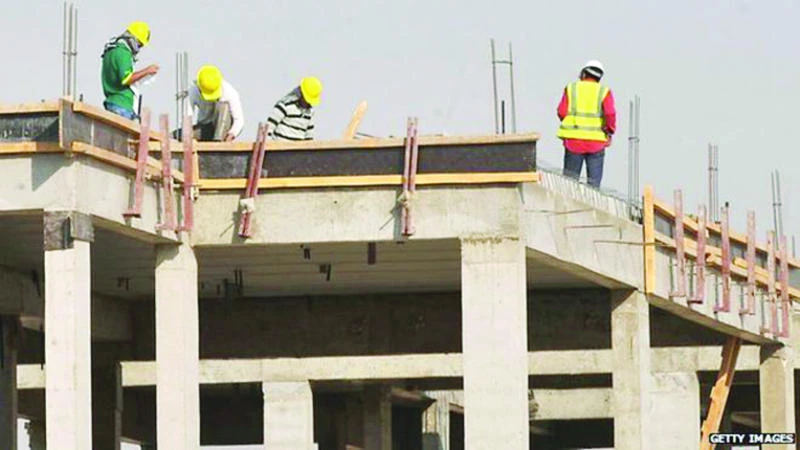
JEDDAH: A decision by the Ministry of Labor to ban employees from working during the hours when the day's temperatures are at their peak for three months in summer will increase the costs of projects by 8 to 10 percent, say contractors.
In a request submitted to the ministry, contractors have also said that they will need additional time to complete the projects, as work and productivity during night hours cannot be the same as daytime.
The new work hour schedule will be from the 28th of Shaaban (June 15) to the beginning of the month of Dhul Hijjah (Sept. 14), spanning 93 days.
Hani Mufi, member of the National Committee for Contractors in the Council of Saudi Chambers, has said that changing the working hours from day to night during summer will require some companies to reorganize the project sites in order to allow for safe and efficient work environments.
Mufi said the ministry has allowed employees to work on other activities during the day time at shaded and air-conditioned locations, provided those activities are run by the original employer. When seeking to employ workers for night shifts, they must be provided with “over-time” pay, which increases the project costs further, he said.
“Naturally, projects lose out on the benefits of daytime work during these three months, and if the project timeframe requires up to two or three years, contractors lose out on six to nine months of efficient daytime labor, which in turn creates additional problems and delays for the projects,” he said.
Mufi said that one of the main aspects that require more effective communication with government agencies is the issue of government project delivery committees, which only work during the daytime and rarely work at night. As a result, this limits the availability of specialists, engineers and laborers to take note of certain issues during the project delivery stage and creates additional delays.
Contractors: Summer peak hour work ban will raise project costs