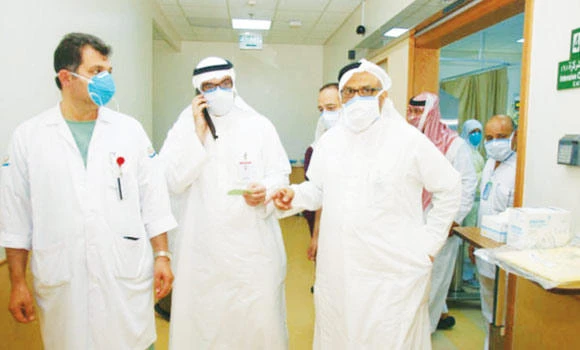
The Ministry of Health said it has recorded “sporadic cases of MERS around the Kingdom” and reiterated the need for precautions to help prevent the virus from spreading.
It announced that the coronavirus has killed one person and infected another in Taif.
The infected person under treatment is a 42-year-old woman expatriate health care worker. The person who died was a 60-year-old Saudi man. Both had pre-existing illnesses, but had not been exposed to animals, according to a statement posted by the ministry's Command and Control Center on its website on Thursday.
There have now been 765 MERS cases in the country since June 2012, with 429 people having recovered fully, 325 deaths and 11 currently under treatment, the ministry stated.
There were four other cases of infections from Saturday to Tuesday in four different parts of the country. On Saturday, a 50-year-old expat was infected in Najran and a 70-year-old Saudi in Taif, followed by two Saudis aged 44 and 82 in Riyadh and Al-Kharj on Monday and Tuesday, respectively.
The ministry has urged the public to be vigilant to protect themselves.
“In addition to monitoring, to protect the community’s health, the ministry also wants to remind people to take all preventive and precautionary procedures in dealing with the virus.”
To avoid infection, the ministry stressed the importance of frequent hand washing, keeping clear of people with respiratory illnesses and not touching one’s eyes or nose.
It said that people should sneeze on tissues, or their arms, and immediately clean themselves. They should also avoid camels with symptoms of the illness.
Measures that have been taken to ensure the reliability of information and speed of reporting include the development of an electronic case reporting system.
Tariq Madani, head of the scientific advisory board at the ministry’s command and control center, said the ministry has also upgraded the country’s laboratories and testing facilities to perform standard testing. It has also standardized testing kits, implemented quality assurance processes, and proper labeling and storage of samples in hospitals and laboratories.
There have also been measures introduced to guarantee the integrity of samples in transit, through a countrywide courier transportation system for rapid transfer of specimens to regional laboratories, he said.
“This review has informed the ministry’s policies. It took stringent action to combat MERS-CoV, announcing the new command and control center to increase the level of preparedness for future public health challenges, issuing infection control protocols to contain the spread of the virus, and directly engaging the public with an awareness campaign.”