Deputy Foreign Minister Prince Abdul Aziz bin Abdullah yesterday emphasized the need to work for the welfare and progress of citizens, preserving their honor and dignity in order to reinforce security and stability in any country.
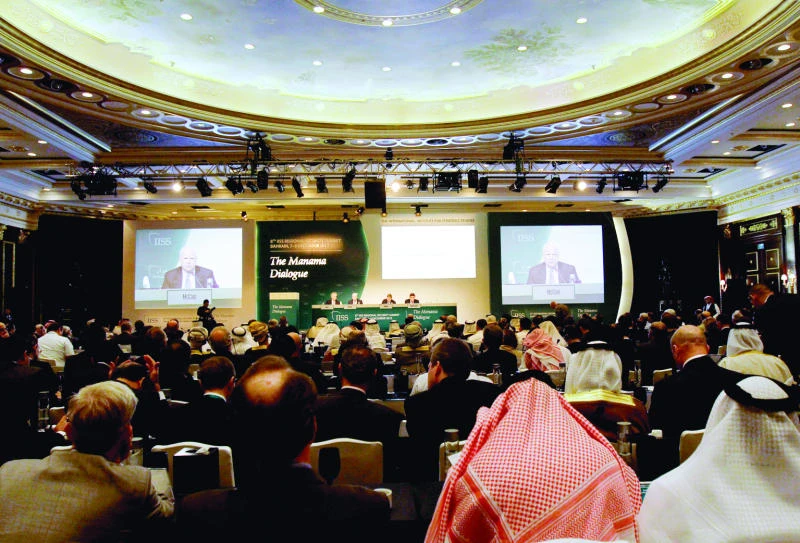
Addressing the Manama Dialogue Forum, he highlighted the Kingdom's efforts in the field of preserving the security and stability of the region. “We believe that the destabilization of any GCC state means the destabilization of the security of the rest of the states,” he added.
He said the security and fate of the Gulf Arab states are integral, stressing respect, appreciation and support of Saudi Arabia for Bahrain's efforts to promote national dialogue to achieve stability and development.
Prince Abdul Aziz added that the Kingdom would work hard for the security and stability of the region and for the political, economic, development and cultural progress of the region.
He noted that collective security is becoming a reality, as no country can enjoy security and stability in isolation from others. “Saudi Arabia appeals to other powers in the world to exercise wisdom and commit to the international legitimacy and equality as a moral responsibility so that the world can enjoy peace and security,” he said.
The Manama forum is organized by the International Institute for Strategic Studies in collaboration with the Ministry of Foreign Affairs of the Kingdom of Bahrain.
In his keynote speech, Prince Abdul Aziz highlighted the government’s efforts for the progress and prosperity of Saudi citizens. He also referred to Custodian of the Two Holy Mosques King Abdullah’s call that the GCC should move from the phase of cooperation to the phase of Gulf Union.
He highlighted Saudi Arabia's efforts to support the global economy through G20 and stabilize oil markets.
Saudi Arabia recognizes that relations with other countries and nations should be based on respect, mutual benefit, equal relationships, peaceful coexistence, the integration and interaction of civilizations and not the clash of civilizations.
Meanwhile, senior American envoys challenged assertions that Washington seeks to diminish its role in Middle East affairs, insisting that American political ties and energy must bind the US closely to the region.
The defensive tone by US officials in response to questions raised at the security summit reflects growing speculation about a possible US policy realignment toward Asia at the expense of Mideast initiatives.
Gulf Arab states, in particular, have urged the Obama administration to take stronger action on Syria. "The idea that the U.S. can pivot away from the Middle East is the height of foolishness," said Arizona Sen. John McCain at the forum, which brings forward policymakers and political figures from around the world including Iran and the Syrian opposition.
McCain, a member on the Senate Armed Services Committee, also said he believes there is a "steady increase" in fighters inspired by Al-Qaida joining the rebel's side in Syria's civil war.