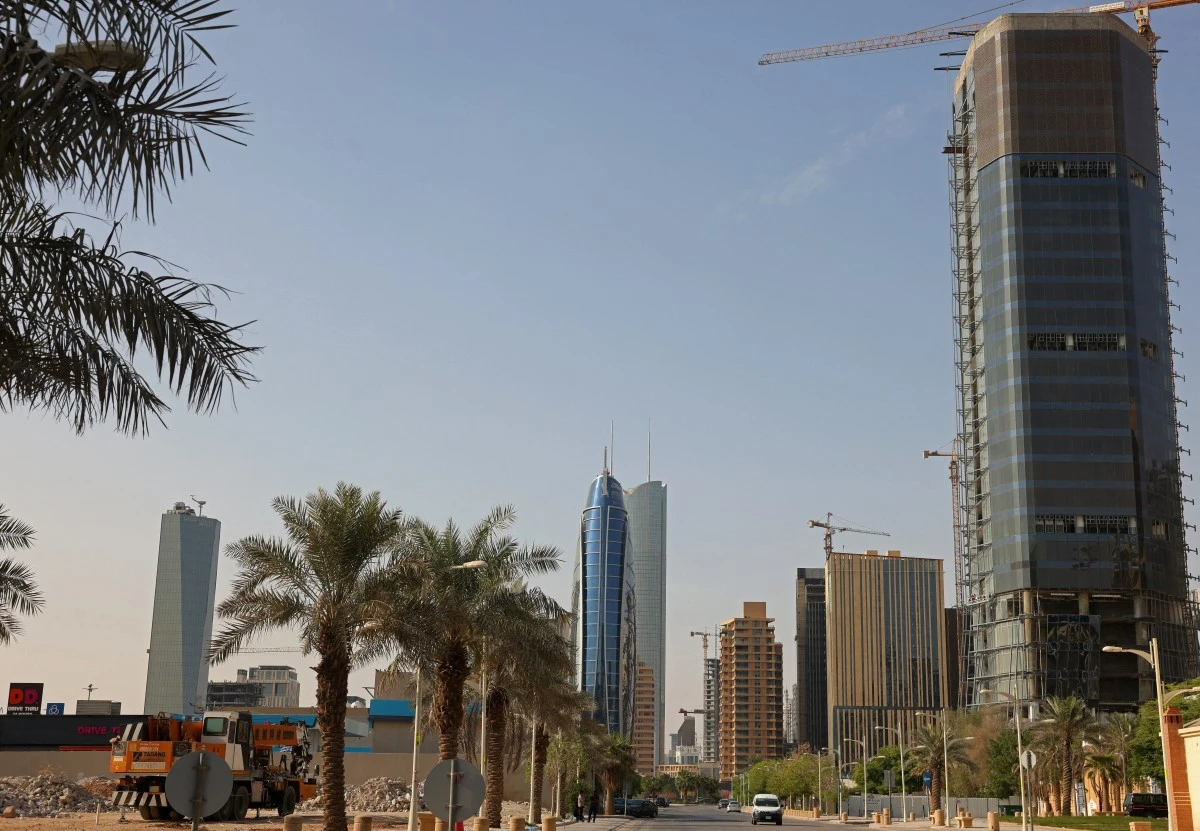
- Loud explosions were heard in Riyadh just before midnight on Tuesday as Saudi air defenses engaged hostile targets above the city
RIYADH: A Houthi ballistic missile targeting Riyadh on Wednesday has been intercepted and destroyed, Maj. Gen. Turki Al-Maliki, spokesman for the Coalition to Restore Legitimacy in Yemen, said on a social media post.
The Saudi Civil Defense also lifted danger warnings it earlier issued for Riyadh and Al-Kharj Governorate under its National Early Warning Platform.
Four people were earlier injured by falling debris in Riyadh after air defenses knocked down Houthi missiles in the Saudi capital.
Loud explosions were heard in Riyadh just before midnight on Tuesday as Saudi air defenses engaged hostile targets above the city.
Shrapnel from two intercepted cruise missiles landed around 15 residential homes and injured four people, the Saudi Civil Defense said on Wednesday.
The authority released images of the damage to the civilian residences.
Al-Maliki said early Wednesday that a cruise missile was destroyed in Al-Kharj governorate.
Latest attacks on Kingdom
The Kingdom dealt with a number of ballistic missiles and drones across the Kingdom on Tuesday.
Ballistic missiles launched at Dhahran and Haradh were stopped by authorities.
The Energy Ministry said in a statement that a Saudi Aramco admin building in Dhahran was targeted and there were no injuries reported.
Al-Maliki said late on Tuesday that three drones were also destroyed north of Riyadh.
Saudi Cabinet says Houthis will face consequences
The Saudi government promised that the Iran-backed Houthi rebels will face consequences for their repeated attacks on the Kingdom.
In a Cabinet session chaired by Saudi Crown Prince Mohammed bin Salman, ministers condemned the Houthi actions and vowed to protect freedom of navigation in the Red Sea and Bab Al-Mandab Strait, which the rebels have threatened.
They also backed a coalition operation to neutralize threats posed by the group to Yemenis, international peace and security, and global trade.
Weekend attacks on civilians
On Saturday, an attack on Riyadh’s King Khalid International airport killed 13 people and left hundreds injured.
The attack on the civilian airport was widely condemned.
The Houthis also attacked Abha’s international airport and Yemen’s Aden International Airport this week.
Video of the King Khalid attack was released by Saudi authorities and showed civilians, including many religious pilgrims who were heading to the holy cities of Makkah and Madinah, waiting for their flights before a bright orange flash engulf the terminal.
The dead included four Saudi citizens as well as two Bangladeshi nationals, a Palestinian, a US citizen, an Egyptian, a Jordanian, a Syrian and a Sudanese, according to the Kingdom’s aviation authority.
A day later a Pakistani civilian was killed when the same airport came under attack again.
Repeated attacks by Houhis on Saudi Arabia
The Houthis restarted the conflict in Yemen in July and promised to blockade Saudi oil going through the Bab Al-Mandab Strait.
The group has strong ties with the government in Tehran and are seen as a proxy for Iranian interests in Yemen.
Iran has been aiming to degrade energy supply and production in the Gulf to try to force US President Donald Trump to end the conflict with Tehran after the US and Israel started a war against the country in February.
In September, the Kingdom shutdown its East-West Pipeline after it was targeted by Iran-aligned rebel groups in Iraq.
Houthi targeting of Islamic holy cities
It’s not only energy infrastructure in the Kingdom that Iran’s proxies have targeted.
A Houthi drone was shot down south of Makkah in September, and earlier this month a drone struck a power station supplying the Prophet’s Mosque in Madinah.
In 2017, a missile was intercepted and destroyed as it approached Makkah, the coalition said.
Makkah and Madinah are the first and second holiest cities in Islam and any attack against them or against pilgrims who visit them are highly provocative to Muslims globally.