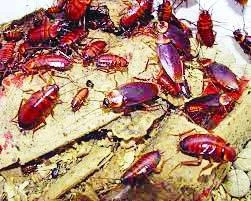
RIYADH: Employees at Al-Amal Complex for Mental Health in Riyadh have complained of the low level of hygiene in their offices and in patient rooms, in addition to the presence of insects such as cockroaches and ants.
They have called on relevant authorities in the Ministry of Health to intervene and end their sufferings.
Sources at the complex said some weeks back the complex authorities found cockroach nests in patients’ rooms and workers of the maintenance company sprayed insecticide. But instead of the situation improving, there was a dramatic increase in the number of roaches.
The source mentioned that hygiene standards are low especially in the quarters of addiction patients. He added that services and procedures in the complex are disorganized and the majority of employees dissatisfied with working in the complex and the mechanism of offering health services to mental patients. He put the number of patients in the complex at 400 men and 50 women.
In a related matter, the directorate of patients’ rights sent a letter to officials at the complex that includes complaints from patients’ families in the addiction department about lack of communication after hospitalization. The letter said that therapeutic teams only communicate with families when their relatives are released.
The letter showed that a number of patients in the addiction sections are not examined by the social specialist, and there is no social diagnosis or treatment for the majority of cases, which reflected negatively on the treatment plan in general.
Deputy Director of Public Relations and Health Information at Al-Amal Complex for Psychological Health Mutad Al-Harbi admitted to a shortage of staff which led to difficulty in offering specialized services. He neither denied nor confirmed the presence of cockroach nests in patients’ rooms or administrative offices.
He said the complex has gardens to serve patients and visitors, in addition to the presence of scheduled programs to fight pests in the complex and the general health affairs directorate.
He added that a team is assigned to draft reports about any letters and deal with them quickly. He said pests are dealt with by the insect-fighting team and the ant-infection team.
He added that there are a number of specialized programs to fight addiction worldwide, such as the follow-up program which approves a strong therapeutic relationship between the patient and a member of the treatment team, which is made up of a doctor, a social and psychological specialist and a religious counselor.
The main follow-up treatment program takes over therapeutic tasks while the patient is in the hospital, but because of the insufficient number of staff members good therapeutic results haven’t been achieved.
Insects invade Al-Amal mental health complex