RIYADH: It would be unfair to compare the progress of the Gulf Cooperation Council (GCC) with that of the European Union (EU) because of the huge difference in their ages and the context in which they were formed.
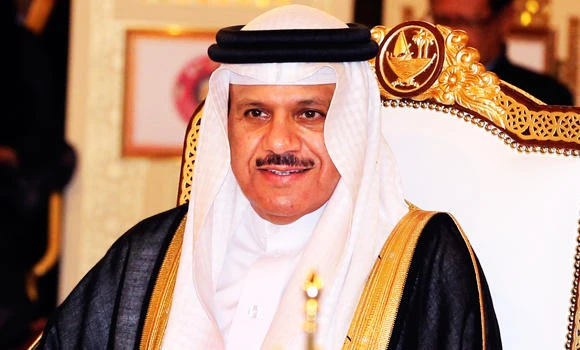
This is according to Abdullatif Al-Zayani, secretary general of the GCC, who said the organization has made significant progress over the years. “We cannot overlook the challenges and situation in which the Gulf Cooperation Council was born, and not look at it in isolation,” he said at a forum in Riyadh recently, according to a report in a local publication.
The audience at the forum had asked Al-Zayani several questions about the six-member body, consisting of Saudi Arabia, United Arab Emirates, Kuwait, Bahrain, Oman and Qatar, including the development of education systems, political initiatives and comparisons with the EU.
He said that when the GCC was born in 1980, there was a great deal going on in the region, including Iran exporting its revolution, the Iran-Iraq war, the liberation of Kuwait and efforts to confront Al-Qaeda. Then there were challenges including Daesh, or the Islamic State, and the Arab Spring, he said.
He said it must be borne in mind that the EU has now been in existence for 55 years. However, the GCC was developing policies and institutions to help further unify its member states, in line with resolutions adopted last week at the body’s Supreme Council meeting in Riyadh.
“We should concentrate on its achievements,” he said, adding that Custodian of the Two Holy Mosques King Salman has outlined a vision to ensure the members seek further political, economic and social integration.
He said the secret of the GCC’s success was the determination of its leaders to work out clear strategies for mutual and sustainable development.
He said that there can be no question about the role of Oman, which is a founding member of the GCC and has had its contribution recognized in terms of the organization’s growth.
It’s unfair to compare GCC to EU: Al-Zayani