RIYADH: 2015 was not only eventful, but also a challenging year for Saudi Arabia — politically, militarily and economically. The passing away of King Abdullah, Cabinet reshuffle and the coup in Yemen were some of the major happenings. The Kingdom has sailed through the year 2015 and resolutely marched into the New Year. Arab News has zeroed in on the top 10 events that have had a huge impact locally, regionally and globally.
Following is the list of the key events of last year.
1) King Abdullah passes away and King Salman takes over.
On Jan. 23, 2015, Custodian of the Two Holy Mosques King Abdullah died following a brief illness. King Abdullah was admitted to hospital in December as he was suffering from pneumonia, and had been put on the ventilator.
The reins were handed over to Crown Prince Salman as the new Custodian of the Two Holy Mosques and King of the country. He said King Abdullah died at 1 a.m. on Friday. “With deep sorrow we announce the death of King Abdullah,” he said in a statement issued by the Royal Court, adding that the funeral prayer would take place after the Asr prayer at Imam Turki bin Abdullah Mosque in Riyadh on Friday.
According to Saudi tradition stemming from Islamic teachings, King Salman and Prince Muqrin, who was named as crown prince, received the oath of allegiance from the people of Saudi Arabia at his palace in Riyadh. The smooth succession indicated stability in Saudi Arabia, according to observers. Since the death in 1952 of King Abdul Aziz, the founder of Saudi Arabia, the throne has systematically passed down to his sons.
2) Kingdom launches Operation Decisive Storm against Houthis in Yemen.
At midnight on March 26, Custodian of the Two Holy Mosques King Salman ordered the launch of a military operation — Decisive Storm — on Iran-backed Houthi rebels in Yemen. The operation took the form of sweeping military airstrikes on Houthi positions in that country, destroying most of an airbase used by the militia in Sanaa and most of their air defenses.
Saudi Ambassador to the US Adel Al-Jubeir told reporters in Washington that the Kingdom launched a military operation involving airstrikes in Yemen against the Houthi militia who had tightened their grip on the southern city of Aden where the country’s president had taken refuge.
The ambassador then said that a 10-country coalition had joined the military campaign in a bid “to protect and defend the legitimate government” of Yemen President Abed Rabbo Mansour Hadi. The coalition included, in addition to the Kingdom, Bahrain, Egypt, Morocco, Jordan, Sudan, Qatar, Kuwait, Pakistan, and the United Arab Emirates.
The operation came in response to requests for assistance from the internationally recognized Yemeni government of President Hadi.
The request was due to a Houthi tribal offensive aimed at its provisional capital of Aden where Hadi fled after the fall of Sanaa. Hadi left the country and came to Saudi Arabia as the coalition launched the airstrikes against the Houthis and forces loyal to former President Ali Abdullah Saleh, who was deposed in the 2011 uprising in Yemen influenced by what is called Arab Spring.
3) King Salman starts passing the country’s reins to Kingdom founder’s grandsons.
On April 29, 2015, Custodian of the Two Holy Mosques King Salman reshuffled his Cabinet — a move that started the process of passing the reins of the country’s government to the next generation, particularly the grandsons of the Kingdom’s founder. According to the reshuffle announced by Royal Decrees, Crown Prince Muqrin, deputy premier, was relieved of his position at his request, and replaced by Prince Mohammed bin Naif, who would retain the Interior Ministry portfolio and the chairmanship of the Council of Political and Security Affairs. This makes him the first grandson of the late King Abdulaziz to be named crown prince.
The decrees also named another grandson, Prince Mohammed bin Salman, as the deputy crown prince and second deputy premier and assigned the Defense Ministry portfolio and chairmanship of the Council of Economic and Development Affairs.
4) Foreign Minister Prince Saud Al-Faisal passes away.
On July 9, veteran former Foreign Minister Prince Saud Al-Faisal died at the age of 75, two months after stepping down following 40 years in the job.
Prince Saud, who was appointed in 1975, was the world’s longest serving foreign minister. Born in 1940, he was one of the high profile members of Saudi’s ruling elite and steered the diplomacy of the world’s leading oil exporter for four decades before stepping down in April citing health reasons.
King Salman appointed Adel Al-Jubeir, the Saudi ambassador to the United States, to fill the position. The appointment of a new foreign minister from outside the royal family ended a total domination of the post by members of the royal family since the foundation of the Kingdom.
5) Kingdom allows women to participate as voters and candidates in the municipal council elections.
On Aug. 16, women began to participate in the municipal elections in both Makkah and Madinah, and other cities two weeks later, by registering as candidates and voters. It was a historical decision and fulfilled the late King Abdullah’s promise to women to let them participate in these elections.
Their participation brought surprising results with as many as 21 women emerging victorious, thereby defying the general expectations of people across the Kingdom that fewer of them would win.
6) Makkah Grand Mosque crane crash.
On Sept. 11, a huge crane crashed at the Grand Mosque in Makkah following extreme weather conditions, killing 111 people and injuring 238.
Custodian of the Two Holy Mosques King Salman ordered massive payouts to the families of those killed and injured in the tragedy. The payouts included a SR1 million compensation to the close relatives of those who died and those who suffered permanent disability. Those injured without permanent disability were awarded a compensation of SR500,000.
The King stated that the payments would not exclude the families of the deceased or injured from launching lawsuits for compensation.
7) Mina Haj stampede during Haj.
On Sept. 24, the first day of Eid Al-Adha, a huge crowd collapse took place claiming 769 lives and injuring 934, according to official Saudi sources.
The incident happened in Mina during the Haj ritual at the intersection of Streets 204 and 223 leading up to Jamarat Bridge. The cause of the disaster is disputed. Witnesses quoted in press reports said the stampede happened when two large groups of pilgrims collided on arriving together at a crossroads in Mina resulting in the disaster.
8) King Salman inaugurates 4th ASPA Summit
On Nov. 10, Custodian of the Two Holy Mosques King Salman opened the 4th Summit of Arab-South American Countries at the King Abdulaziz International Center for Conferences in Riyadh.
The two-day summit was attended by leaders from 22 Arab League members and 12 nations from South America. The objective was to strengthen relations between the two blocks and ensure greater coordination between their political leaders and civil society organizations in the Middle East and North Africa region and South American countries.
The summit recommended collaboration and cooperation in different sectors to develop strategic partnerships between the two major economic blocs and called for finding peaceful solution to the conflicts in the Arab world, promoting both regions as free from nuclear weapons and strengthening economic ties.
9) Cabinet clears 2.5 percent tax on vacant lands.
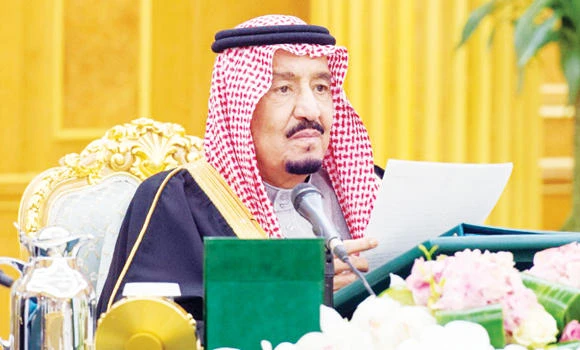
On Nov. 23, the Cabinet, in a meeting chaired by Custodian of the Two Holy Mosques King Salman at Al-Yamamah Palace in Riyadh, approved a Shoura Council decision to impose an annual 2.5 percent fee on undeveloped urban land designated for residential or commercial use, a major step in addressing the shortage of housing and developing a tax system.
10) Kingdom announces a 34-nation alliance against terrorism.
On Dec. 14, Saudi Arabia announced that it would lead a 34-nation alliance of Muslim countries to combat terrorist groups, with a joint operations center set up in Riyadh.
Deputy Crown Prince Mohammed bin Salman said in a press that the alliance would operate on UN and OIC provisions on terrorism, which affirm the “right of states to self-defense.”
He said the alliance consists of nations making up most of the Islamic world that are committed to fighting this “disease which affects first” the Islamic world and then the international community. “Today, every Islamic country is fighting terrorism individually. The coordination of efforts is very important.”
He said that the alliance would not focus only on certain groups such as Daesh, but also confront terrorist groups across the world. He said that operations in Syria would “obviously” not be carried out without working with legitimate groups and the international community.
Kingdom’s resolute march into the New Year