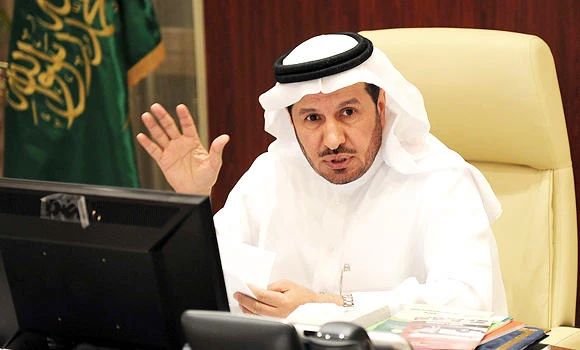
Minister of Health Dr. Abdullah Al-Rabeeah has established the Haj preparatory committees for Makkah and Madinah for the forthcoming season, according to a statement made by the ministry here yesterday.
Deputy Minister of Health for Planning and Development Mohammed Bin Hamza Khoshaim has been appointed the head of the new committee, while the other committee members include deputy ministers of health, undersecretaries and the director generals of health in Makkah and Madinah.
Khalid Al-Mirghalani, spokesman of the Health Ministry said, the committee is being appointed in a timely fashion to allow health officials to make their own arrangements for the upcoming season. The Haj central department within the Ministry of Health will coordinate with the new Haj committee for necessary arrangements this year. He explained that the functions of the committee would be sub-divided into three sections including planning arrangements, preparatory work and supervision of the Haj health related issues. The committee will also be responsible for taking preventive measures against contagious diseases and for drawing up a contingency plan for the Haj season in Makkah and Madinah.
The director generals of the two regions will be directly in charge of the Haj arrangements in their respective areas under the overall supervision of the Minister of Health.
In addition, the primary purpose of the committee will be to provide adequate manpower for health services and to ensure the health facilities for pilgrims in hospitals, clinics and dispensaries are well maintained. Every year, the ministry sends out a circular to the Foreign Ministry for dissemination to all its missions abroad spelling out the quarantine requirements to enter the Kingdom during Haj season.
According to Al-Mirghalani before announcing the health requirements, the Kingdom will carefully monitor developments that take place throughout the world, especially those in relation to infectious diseases. He pointed out that the stipulated requirements in the new circular would be in line with the World Health Organization’s requirements for combating the spread of infectious diseases.
He added that the quarantine requirements would also prescribe some vaccines, considering the incidence of infectious diseases in some of the pilgrim’s respective countries. Moreover, the ships and aircraft carrying pilgrims should also produce a certificate that the carriers are free of mosquitoes.
Meningitis vaccines are compulsory for all pilgrims but vaccines against yellow fever, cholera are advised according to the pilgrim’s country of origin. Yellow fever endemic countries include Angola, Benin, Sudan, Senegal, Burkina Faso, Central African Republic, and many other African and South American countries.
Polio vaccines are also compulsory for all pilgrims from African countries as well as for pilgrims coming from Pakistan, India, Nepal and Afghanistan. Oral polio vaccine is compulsory for pilgrims arriving from countries such as Uganda, Kenya, Benin, Angola, Togo, Niger, Burkina Faso, Mali, Central African Republic, Chad, Côte d’Ivoire, Ghana, Democratic Republic of the Congo and Ethiopia. Upon arrival, pilgrims from these countries are given another oral dose of polio vaccine irrespective of their age.
Besides these vaccinations, the spokesman said the pilgrims would be advised to take necessary precautions against influenza to prevent a flu attack during their stay in the Kingdom. The flu vaccine is not mandatory but it is desirable to take it considering the prevailing weather conditions and the susceptibility of the pilgrims to influenza. Al-Mirghalani said that high-risk patients, who have chronic ailments such as diabetes, hypertension and renal diseases, would be advised to take the flu vaccine to facilitate the performance of their Haj and Umrah rituals without any problems.
MoH sets up Haj preparatory committees for holy cities