Brig. Gen. Ahmad Al-Assiri, consultant in the office of the Defense Ministry, gave a detailed account of the operation ‘Restoring Hope,’ its aims and purposes, in an exclusive interview to Arab News. Following are the excerpts:
Could you tell us something about the operation ‘Restoring Hope’ and also about your statement that the operations against Houthi militia and forces loyal to (former president) Saleh will contine till they give in.
The statement was erroneously interpreted. Our goal is not the surrender of Houthi militia. The aims of the Operation Restoring Hope are clear: First to deter operations on the ground since the position has been changed as the Houthis have targeted the cities; secondly, protection of civilians; and thirdly, giving support and facilitation to the humanitarian relief works and the evacuation of the stranded in Yemen.
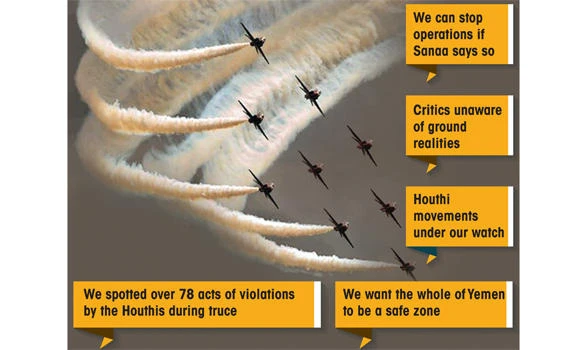
We are keeping up with the political developments undertaken by the Yemen government throughout the dialogue conference in Riyadh. If the Yemen government requests the operation to stop, as they did with the “Decisive Storm,” we would stop the operation.
There was an insistence from the coalition forces to restart the operations immediately after the end of cease-fire (truce) despite the call from the UN for an extension of the truce, does this mean there is no room for a truce in future?
When the UN envoy asked for an extension to the truce in Yemen, many people expressed wish that the truce be on a permanent basis. However, speaking without monitoring facts on the ground was not practical. The coalition forces evaluated the truce and found out that the Houthi militia never stopped their operations, while the coalition forces fully stopped operations and spotted more than 78 violations on the Saudi borders varied between shelling by mortars, planting mines and movements. Accordingly, we found the truce was counterproductive and difficult to continue. We wished that the UN was on the ground to monitor violations by the Houthi militia and their seizure of relief food and fuel and how they exploited them to war purposes. Extension of the truce without the presence of UN observers on the ground to monitor irregularities and find out who violated the truce will harm the Yemeni people. During the truce, the Houthi militias moved their missile bases, but through our close watch, we knew their places and dealt with them, accordingly. Additionally, the Yemeni government has asked not to extend the truce as indicated by the Yemeni foreign minister when they found it counterproductive.
Also, the Houthis are still targeting two cities of Saudi border (Najran and Jazan) randomly from the Yemeni border areas, and it is being handled by the coalition forces.
Do the Houthi militias and forces loyal to Saleh put burden on coalition forces in light of their military strategy and organization?
Every military action is a burden, so no one desires to see his forces sustaining material or human losses. However, the coalition forces worked for political goal and our military action came in line with the objective of the Yemeni government, notably its drive to rebuild a new government through the appointment of ministers, leaders and chiefs of staff. Therefore, our aim is to bring all parties at the negotiating table thus ending the role of the coalition when the situation becomes a Yemeni case. Regarding the field work, it is a necessity that there should be strenuous effort since we know the tactics of the militia, and we don’t want those tactics developed into a new situation that will allow the militia to enter cities and harm the civilians.
Is that really what the Houthis have done and doing it now?
Certainly, yes. The works of Houthis are ridiculous and do not serve any military objective and only come on shoot-and-run basis within cities, or shooting at citizens’ houses by artillery installed on vehicles moved from time to time. Of course, this thing is considered a burden on the coalition forces because it is hard to chase a movable vehicle in a residential area. However, our goal has not changed on the ground and we have supported the resistance since it is undertaking a good work on the ground during the past few days and that support will continue till the Yemeni government returns to Yemen enjoying a military command and ability to reorganize the Yemeni army. I am sure about their ability to gain a victory against the militias.
Do you plan to change the goals of the coalition forces on the ground as the Houthis have exploited the truce and moved their tactical missiles to the borders of the Kingdom. Also as you have mentioned that the coalition spotted weapons depots inside hospitals and schools?
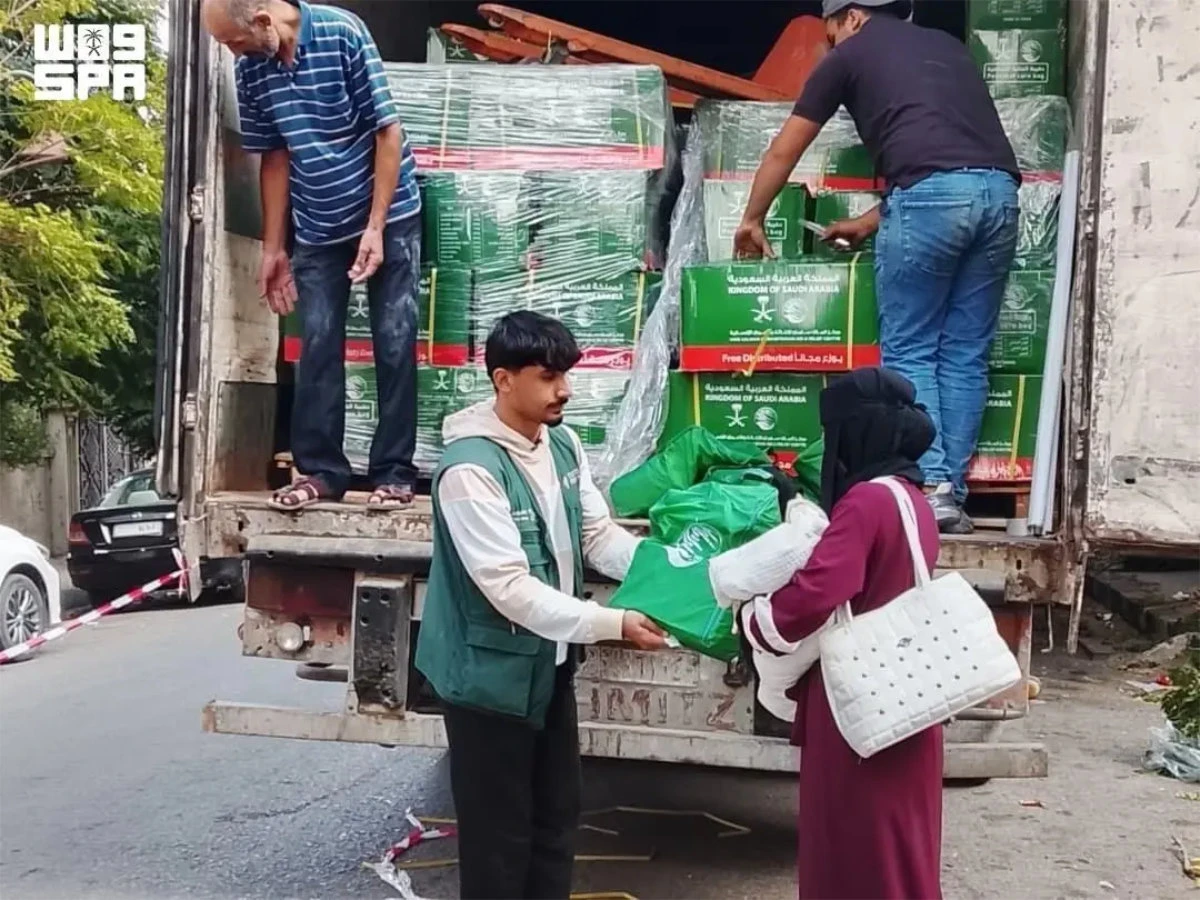
Definitely, the goals of the “Decisive Storm” were different and primarily focused on destroying all capabilities of the Houthi militia. Now, we control their movements and their attempts to change the reality on the ground. It is true that during the truce, the Houthi militia managed to spread and move their missiles, but as soon as the coalition resumed operations after the end of the truce, the coalition successfully corrected this situation especially on the border. At the moment, certain operations are under way by the coalition as required by the Yemeni government at humanitarian, military, and relief levels. In this context, the Kingdom provided aids worth $274 million to Yemeni people and, further, established King Salman Center for Humanitarian and Relief Works to this end and invited all parties to come to Riyadh being the nearest place to Yemen under one umbrella. In this sense, there is a role which has to be played by the international organizations and Yemeni government while the coalition is committed to achieve objectives of the “Restoring Hope” operations until the Yemeni government orders its end.
Earlier, we noticed operations were focusing on weapons depots while (Houthi) leaderships are currently being targeted, would you please comment on this?
We are not targeting the leaders as individuals but we emphasize on targeting the headquarters and command centers. Therefore, when we receive information that a location is used as a command center since those militias do not have a ministry of defense, the location falls under our target being a center from where operations are run and they were the same centers from where an attack was launched against Najran and Jazan. Similarly, other operations against Dhali, Shabwa and Ludar are being coordinated from Sanaa which makes it a target for our operations.
Since we started these operations, we have focused on two important things: The safety of citizens and, secondly, the safety of infrastructure including schools, hospitals and government buildings where Yemeni citizens are working which should not be targeted by our operations. However, we know and are closely following what is happening on the ground when the (Houthi) militias, while the truce in force, returned to these stores and took out weapons from hospitals.
Even the truck which was loaded with tactical missiles was hidden in one of the schools but was monitored and destroyed. In our military science, we were told that “a military target is either to be kept out of the battlefield where the enemy cannot use it, or be taken out from the store to be destroyed by our forces” and in both cases, they will not make use of it. Practically, this was what happened to them where they (militia) exploited the truce and took out weapons from caves, schools and hospitals but they were destroyed. This is typically the tactics of militia worldwide.
How do you estimate the volume of the remaining weapons with Houthis in light of your earlier statement that weapons in their hands may equalize those destroyed by coalition forces?
As is known, these militias were being armed before the start of our operations, Additionally, they stole the weapons of the Yemeni army, and seized weapon stores of the deposed president together with weapons of some tribes. Therefore, the estimate on the volume of weapons remained rough and these militias may be keeping big inventory of weapons. By the end of the “Decisive Storm” we were talking about 80 percent destruction of the militia’s known weapons but other things were not monitored. However, as long as they show their capabilities, they will be monitored and destroyed.
The UN has called for safe zones in Yemen on a humanitarian ground, how do you see such calls?
All of the Yemen land must be a safe zone, and the Yemeni citizen must feel safe all over the Yemeni lands. If the UN demanded a safe area, we asked the Yemenis to remain on the ground within Yemen. Otherwise, remaining outside the country, will give the Houthi militia an opportunity to get financial support and steal the relief materials. We consider the Yemen security as one and an integral part of Yemen security and, therefore, a Yemeni citizen must feel safe whether in the north or the south. The Security Council Resolution 2216 clearly sets out the duties of each party, a matter that will achieve the safety of a Yemeni
citizen.
Our goal is to protect civilians: Al-Assiri