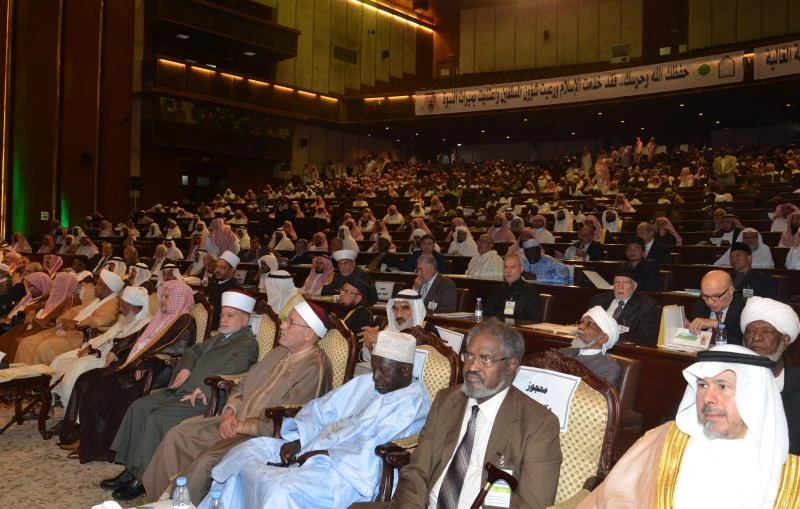
The 21st conference for the Council of the International Islamic Fiqh Academy (IIFA) reiterated here on Monday the need to renounce extremism and promote moderation based on the recommendations of the 3rd Islamic Summit in Makkah in 2005.
This message was delivered at the opening of this year’s event being held at Imam Muhammad bin Saud Islamic University (IMIU). The five-day event brought together renowned scholars from the Islamic world, including Grand Mufti Abdul Aziz Al-Asheikh.
Organized under the aegis of the Custodian of the Two Holy Mosques King Abdullah, the conference was inaugurated by IMIU’s rector, Suleiman bin Abdullah Abalkhail.
The five-day event, jointly organized by the OIC and IMIU, will conclude on Nov. 23. The conference reiterated its call issued earlier at the Makkah Summit, urging participants to intensify their effort to achieve progress in the field of Islamic jurisprudence.
Ambassador Al-Habib Al-Kabashy of the Organization of Islamic Cooperation (OIC) said that the Islamic Fiqh Academy played a major role in enlightening the Muslim community.
According to the IIFA’s general-secretary, Khaled Babacar, this year’s event will deal with some major jurisprudential issues, including those concerning sukuk (Islamic bonds), hedging in financial transactions and fixing responsibility on motorists involved in rash driving.
Other issues on the agenda included initiating dialogue between the followers of Islamic sects and addressing the issue of strife between Muslims in the name of jihad.
He disclosed that a total of 62 research papers were submitted at the conference. “IIFC remains as the source of jurisprudence reference for the Muslims across the world,” Babacar said.
He said: “The growing challenges and the progress made in the science and media domains, in addition to the regeneration in political life and international relations, have produced a complicated reality that has changed the perceptions and concepts of life and regulations.”
Ambassador Al-Kabashy said the organization had set up a committee of Muslim jurists to develop rapports among Islamic scholars representing different schools of thought and confront the challenges posed by religious fanaticism and extremism.
He stressed the need to address the issue of manipulating doctrines for personal objectives, which raises sectarian strife and creates conflict Muslims.
“We are required today to make more effort to combat this phenomenon by adjusting the relationship between politics and doctrine and warning against exploiting ideological doctrine as a pretext for exerting political influence,” he concluded.
Scholars renew call to ‘shun extremism’