DAMMAM: The high amount of electronic gadgets disposed of by Saudis daily has prompted environmental experts to consider proposing the establishment of a special commission to specifically deal with this issue, as they argue the Meteorological and Environmental Protection Administration (MEPA) is unable to control or eliminate the problem.
Environmental expert and head of the environmental committee at the Eastern Province Chamber of Commerce Talal Al-Rasheed accused MEPA of not fulfilling its role, especially as the problem of e-waste is growing in the Kingdom and can impose severe dangers to the environment and human health.
He said establishing a special commission to focus on this issue is essential to properly implement a system for safely disposing of e-waste.
“The Kingdom is a global leader in production of such waste, as each person produces more than 7 kg per year, and this calls for seriously considering establishment of recycling factories and other measures for e-waste disposal,” he said.
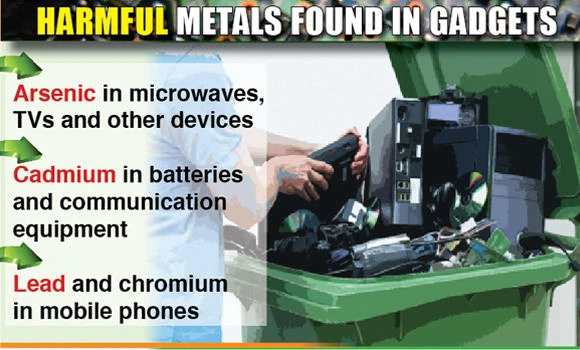
According to Al-Rasheed, e-waste includes arsenic, which is found in microwaves, TVs and other electronic devices; cadmium, found in batteries and other communication equipment; and copper, lead and chromium, which are found in mobile phones and can cause serious rashes and skin diseases.
In light of numerous studies indicating the dangers of electronic waste accumulation, he called for more investment in e-waste recycling to promote human and environmental protection.
Asaad Al-Dhakeer, an environmental expert specializing in nuclear waste, said e-waste is emerging as one of the most serious environmental challenges, with about 60 million tons produced globally during 2014 and an expected increase of 30 percent by 2017. He said authorities must do more to prepare for and deal with this real problem by establishing a proper recycling industry and monitoring regulations.
MEPA spokesman Hussein Al-Qahtani acknowledged that there is no specialized system to safely dispose of e-waste, as this falls under the general system of waste disposal. He said the dangers of waste accumulation are increasing due to the constant replacement of electronic devices in society, noting that the Gulf conference in Riyadh this coming Sunday will look at the issue of dangerous waste, including nuclear waste, in addition to future plans for investment in Gulf states.
“Establishing another commission to specialize in waste, or specifically e-waste, is subject to a higher directive. Even in this case, all issues related to managing waste and environmental protection will fall under the Agency of Meteorology and Environmental Protection.”
Special commission onelectronic waste urged