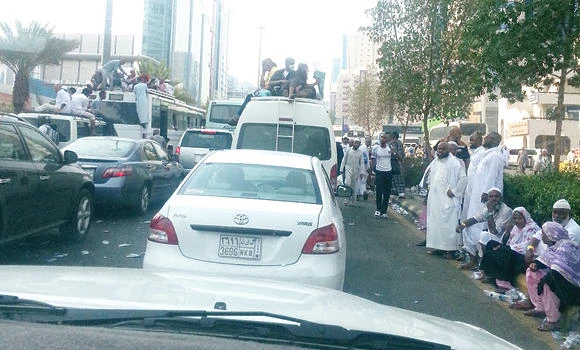
MAKKAH: Chaotic scenes greeted visitors in Makkah on Saturday as traffic snarls on one of the main thoroughfares in Azizia district highlighted the desperation of pilgrims returning from Mina
and the Haram.
Exhausted, dehydrated and benumbed, the pilgrims pleaded with private cars to take them to their destinations. Clutching slips of pink paper, ostensibly coupons they had purchased for 'free' taxi rides, pilgrims pleaded with private car drivers and buses bound for Jeddah and beyond for lifts.
The sweltering heat took its toll on the air-conditioning of cars. Windows down, visitors avoided the desperate pleas of the pilgrims to take them somewhere while they negotiated the heavy traffic. Cars broke down causing bottlenecks while the huge buses vied with small cars, trucks and minivans for space. Daredevil motorcyclists weaved in and out of the bumper-to-bumper traffic while some pilgrims in their eagerness to get to the other side made dangerous attempts with invalids and the elderly in wheelchairs.
Curiously, there were no limousines to be seen anywhere! Some lucky ones managed to hitch a ride on the roofs of vans for up to SR20 or more. Many pilgrims stripped down to their underwear as they braved the heat with bottles of water and mobile phones among their sole possessions. Some good Samaritans offered cold water while others pierced holes in the bottles and sprinkled fellow pilgrims providing cool but temporary relief.
Exhausted police officers and boy scouts tried to attend to lost pilgrims who showed addresses, IDs or cards asking for information of their whereabouts. Most officers did not seem to know where to direct the poor pilgrims who after a few attempts at broken communication decided to strike out on their own.
Restaurants were filled to capacity with cold supplies running out. Water flowed freely from drains and mounds of rubbish stood high in litter bins. Empty plastic bottles lined the pavements where pilgrims rested in the blistering heat on treeless avenues without sunshades. Where were the cleaners?
Pilgrims' faces masked with desperation and exhaustion searched for empty vehicles willing to give them a ride. One Pakistani pilgrim pleaded with us to take his family in the direction from which we had just come! I spoke back in Urdu but he couldn't make sense of what was being said.
Two million faithful thronged Makkah stretching the city's resources to its limits and causing inconvenience to the pilgrims themselves, the residents and visitors. The whole city cannot be evacuated for a five-day period.
The Kingdom invests huge amounts of money on infrastructure and the best professional expertise to make the Haj a safe and rewarding experience. But there has to be a drastic cut to the number of pilgrims allowed into the Holy City which is undergoing an ambitious expansion plan.
Police officers and boy scouts should be taken on personal tours of the city (if they haven't done so already) before the Haj to see the locations for themselves.
Private Haj operators who have their own systems of organizing the pilgrims should make them known to the authorities involved in posting officers and scouts who can help to direct lost pilgrims to their residences.
Every officer should be equipped with a map of the city, especially of the locations of pilgrims and any prominent landmarks next to them.
Most importantly, patrol officers need communication skills in several languages though English alone would do very well as most Hujjaj can speak English.
All police officers should undergo intensive English conversation skills and if possible in other languages such as French, Spanish and Chinese for example.
Cleaners can also be very helpful in these periods of stress. So, there is no harm done in using them to help direct pilgrims. Most of them can understand and speak Urdu, Bengali and some South Indian languages.
Traffic can be controlled to allow only limousines and buses on the thoroughfares inside Makkah to ferry pilgrims. It is only fair that pilgrims be able to avail their prepaid coupons and be saved the indignity of asking passersby for help.
With every Haj there are lessons to be learnt, but it also gets increasingly important to minimize the damage to human life, infrastructure and resources.
Sweltering heat took its toll on pilgrims