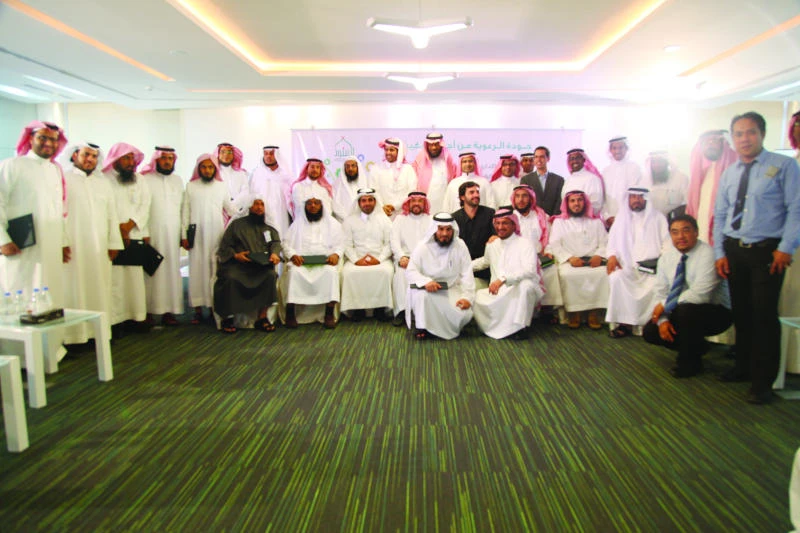
A three-day human development training conducted by Princess Al-Anood Philanthropic Foundation with the collaboration of the Euro-Arab Foundation (EAF), based in Spain, concluded on Tuesday in Riyadh.
Some 40 directors and over 35 women executives from various charity organizations in the Kingdom attended the courses as part of the training program on management of nonprofit organizations.
The event was attended by Prince Saud bin Fahd bin Abdulaziz, deputy chairman of the foundation’s board of trustees and chairman of the executive committee. He inaugurated the foundation’s website on a new quality care project that features the council’s thrust on quality of service, organization, and training of staff as well as on local partners to make the program sustainable by electronic means.
Al-Anood foundation’s Secretary-General Youssef bin Othman Al-Huzaim was also present along with other Saudi dignitaries. The training was conducted by experts from Spain, including Hassan Laaguir, director of cooperation and research at EAF; Ignacio Tamayo Torres; and Ewa Strzelecka.
Prince Saud distributed certificates and mementos to the participants and experts at the end of the ceremony.
The program was part of Princess Al-Anood Philanthropic Foundation’s active programs to provide individuals working in nonprofit organizations training in human development. It was intended primarily for executive management and secretaries-general of charitable organizations in the Kingdom.
“This training was conducted for the benefit of civic societies and charitable organizations in Saudi Arabia,” Laaguir said. Among the specific aims of the EAF, he said, were contributing to the training of experts and researchers in different fields of applied knowledge that are considered useful to the development of the countries to which its activity is addressed.
“It seeks to contribute to the economic development of Arab countries through training programs focused on high-level management and addressed to Arab and European executives.”
Other objectives were promoting dialogue, exchange of ideas and collaboration between scientific researches and other intellectuals and inventors, working to introduce in society the idea of respect toward science and the values of tolerance, quality, objectivity, independence and rigor, and working as a supplier of useful, exhaustive and up-to-date resources and information by means of a network of institutionalized and social partners.
The Euro-Arab Foundation for higher studies is considered one of the main development instruments under the United Nations Alliance of Civilizations, which was launched in 2005 following a proposal from the government of Spain and Turkey and with the support of the UN. The initiative seeks to create an alliance between the Western and Arab Muslim world to improve the understanding and cooperation among nations and peoples from different cultures and civilizations.
Through its projects and activities, the foundation works for the promotion of Euro-Arab cooperation by designing and executing projects and by supporting scientific, academic and cultural activities aimed at publicizing the current trends in the field of sciences and humanities.
Three-day human development training concludes