
 Buying original art in the age of AI
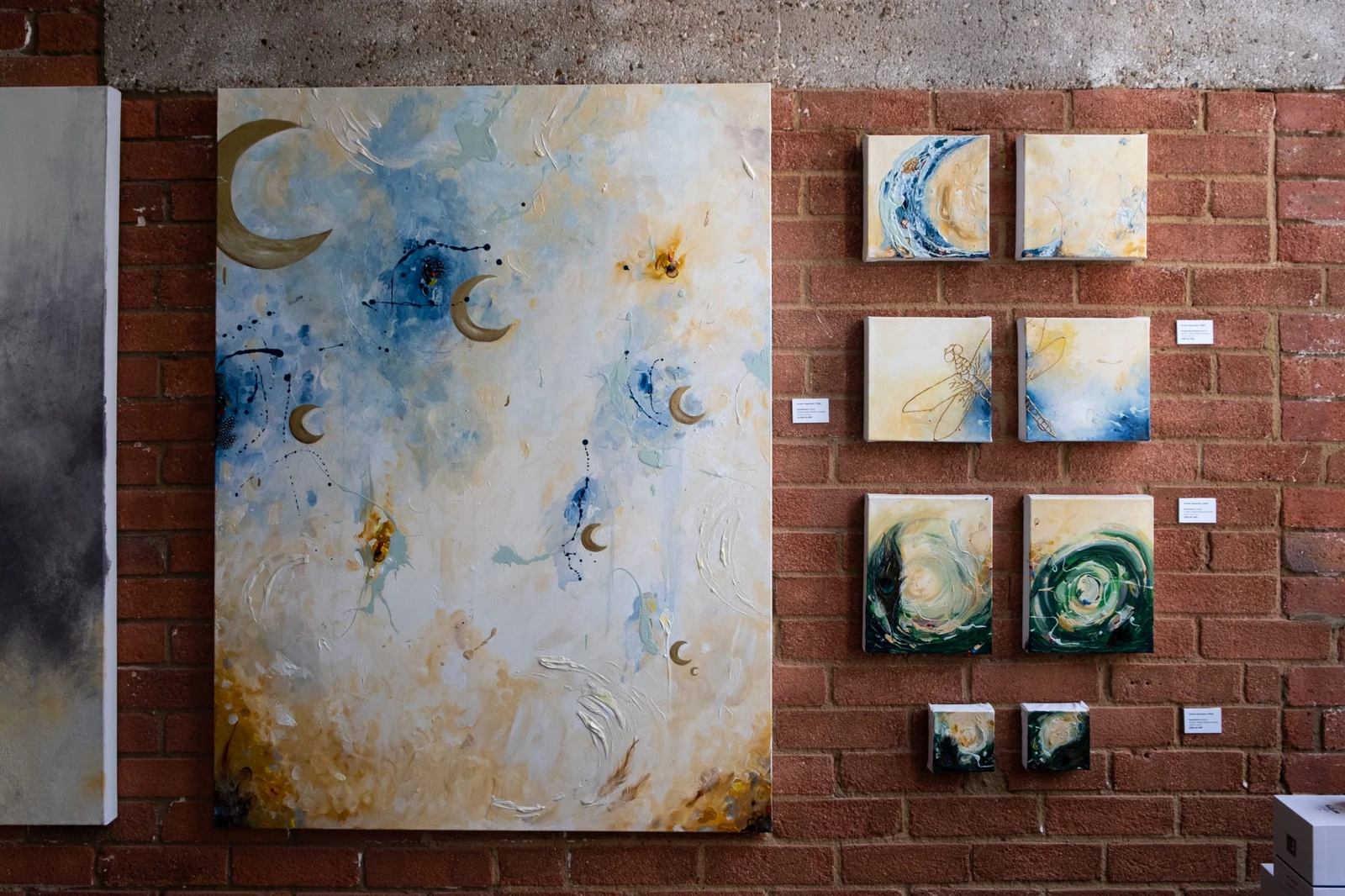
Art collectors buy more than pigment and composition; they buy the human mark that makes a work individual. In an era when artificial intelligence can generate images by the million, original art is hope.
Machine tools widen what can be made, but they also clarify what only a person can add — the way a brush slows, translucent layers that catch the light, and the cultural references woven into a portrait, a scene, a landscape or an abstract piece. Choosing to buy art today is choosing narrative over replication.
I was nine and visiting the National Gallery when The Hay Wain stopped me in my tracks. I leaned close until the ridges of paint filled my vision and I could see where Constable had slowed his hand. Those small decisions made the image more than a picture, something emphasized even more when I recently visited Flatford and witnessed the moody Suffolk skies at first hand.

Decades later, Safeya Binzagr’s Coffee Shop in Madina Road sold for $2.06 million at Sotheby’s in Diriyah because it recorded an ordinary Jeddah scene like the coffee shop my grandfather sat in Al-Balad. The painting carried a clear narrative and a personal voice people recognized.
As I grew older, my painting developed into a more formal practice. A German painter trained in the line of the Impressionists taught me to think about surface and light. I learned how impasto can hold colour and how avoiding black keeps colors luminous and translucent. My inspiration came from the deep blues of the Red Sea, the sands of Arabia and the crescent moon as a spiritual symbol. Harmony, light and colour defined my work and shaped the way I approached each canvas.
The Saudi Arabian Society for Culture and Arts organized the Saudi Plastic Arts Touring Expo 2000, one of the landmark exhibitions that placed many practices in conversation. Artists including what I call significant part of the art movement, Abdulhalim Radwi, Hanan Bahamdan, Mohammed Al-Saleem and Sameer Al-Daham helped shape a regional visual language.
I was one of the artists to have their work in that tour; seeing how audiences responded taught me how shared platforms can turn private practice into one powerful voice.
AI is not a rival to human creativity. It is a mirror and a magnifier. Algorithms can echo styles and recombine motifs, but they do not grow up in a city, inherit a family tradition or watch the light change over the Red Sea.
Intisar Alyamani
It was moving to see works by these artists brought together again at the 2024 Sotheby’s London Hafla exhibition, a reminder of how shared heritage continues to gather strength across generations. Institutions under Vision 2030, including Misk Art Institute, Diriyah Biennale Foundation, Riyadh Art, Noor Riyadh, JAX District and AlUla programs, have since built the spaces where these conversations can continue.
AI is not a rival to human creativity. It is a mirror and a magnifier. Algorithms can echo styles and recombine motifs, but they do not grow up in a city, inherit a family tradition or watch the light change over the Red Sea. AI can expand an artist’s toolkit, but it also highlights qualities that remain uniquely human. As machine-made images proliferate, collectors increasingly prize the tactile evidence of an artist working with their hands.
The artist’s persona and the human condition are inherent in the artwork. A painting can hold temperament, thought process and a way of seeing the world. That character gives a work an energy that cannot be measured by technical skill alone. Emotion is the main ingredient. When a viewer responds, the work has created a shared connection between artist and viewer.
Buying original art is also a practical investment in cultural infrastructure. Purchasing a painting, a sculpture or a drawing supports studios, galleries, curators and institutions that sustain artistic practice. It helps fund exhibitions that allow artists to develop a shared vocabulary and place their work in conversation with others. Look for the human mark in the work and ask about story and narrative. Visit studios and regional shows.
We buy art because it adds depth to our lives. In a world of algorithms, originals carry the subtle beauty of imperfections. Choosing to buy original art in the age of AI is not a rejection of new tools. It is an affirmation of the human mark and a way to cherish the stories and hands that give art its power to move us.
Intisar Alyamani is an artist and cultural adviser advancing culture, art and society, bringing them to the forefront of East–West dialogue. She is a trustee of the Saudi British Society and a fellow of the Royal Society of Arts.