
 Dismantling academic prestige in Saudi Arabia’s labor economy
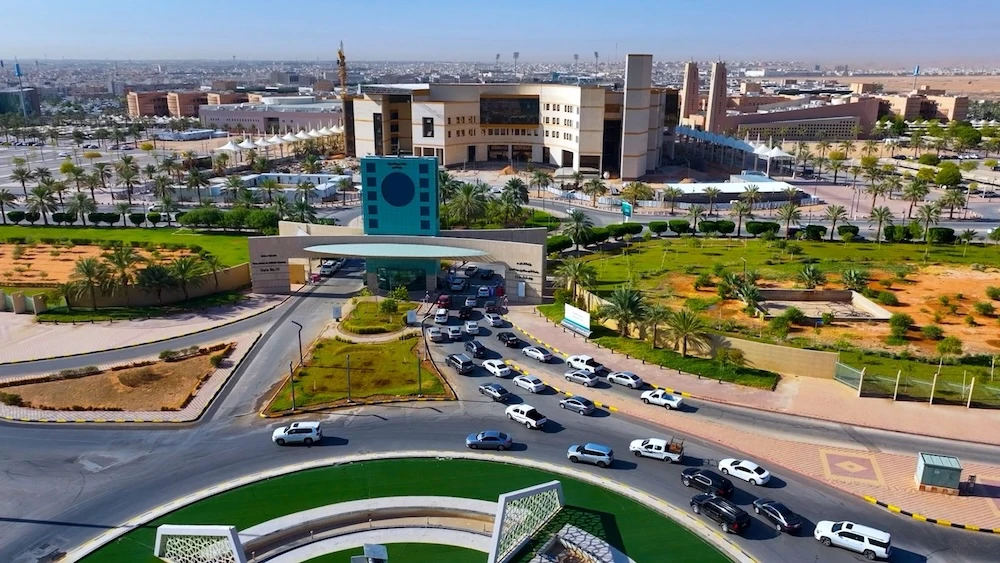
Evaluating the university admissions cycle in Saudi Arabia in August 2026 underscores an unyielding societal debate surrounding academic majors.
The persistent discourse reveals that traditional communities still treat higher education as a primary marker of social prestige rather than a pathway to professional qualification. Responsibility for this structural distortion rests more heavily on family networks than on the state university apparatus, which processed over 350,000 applicants while confronting rigid social conventions that reduce an individual’s worth to their field of study.
This destructive dynamic is evidenced by acceptance cut-offs exceeding 95 percent in conventional status fields such as medicine and engineering; marginal differences between admitted and rejected candidates narrow to less than 0.04 percent. This reality exposes a systemic preference for social appearances over the actual demands of the domestic labor market, undermining the strategic human capital goals of Saudi Vision 2030.
Empirical data published by Pearson UK on the local educational landscape indicate that Saudi high school and university graduates spend an average of 40 weeks seeking employment due to a severe mismatch between academic specialisations and market requirements.
This structural divergence inflicts a massive fiscal strain on the state, costing the Saudi economy an annual loss of SAR 62.00 billion in unrealised productivity and underemployment liabilities.
Sociological frameworks identify this parental pressure to steer children toward legacy disciplines as coercive social conformity, a pattern substantiated by a Misk Academy study demonstrating that organic aptitude is systematically compromised to inflate familial social capital.
Data from the Saudi National Mental Health Survey prove that youth aged 15 to 24 remain the demographic most vulnerable to admission-related psychological distress; prevalence rates reach 34 percent due to standardized testing anxiety and parental coercion, explaining the irrational rush toward traditional status fields at the expense of emerging high-yield sectors such as biotechnology, cybersecurity, and applied artificial intelligence.
Traditional communities still treat higher education as a primary marker of social prestige rather than a pathway to professional qualification.
Dr. Bader bin Saud
Pegging human value to the prestige of an academic degree represents a volatile global phenomenon that reaches its peak in South Korea through what is locally termed the academic guillotine. Every November, hundreds of thousands of students sit for the standardized College Scholastic Ability Test; this national event forces the state to ground commercial flights and adjust civil service working hours to ensure absolute silence on the streets. The intense contest aims to secure placement within the elite Seoul National University, Korea University, and Yonsei University triumvirate; this operation functions less as a pursuit of scholarship than as a bid to secure a socio-economic pedigree that defines the entire family's standing.
According to OECD data, South Korea recorded a catastrophic youth suicide rate of 24.8 per 100,000 people driven by academic strain; furthermore, UNICEF surveys confirm that while South Korean students rank first globally in academic competencies, they place 34th out of 36 nations in subjective well-being due to instrumentalising education as a tool for familial prestige.
Official budgetary data released by the Ministry of Finance in December 2025 allocated an education budget of SAR 202.00 billion for the fiscal year, representing 15.38 percent of total state expenditure projected at SAR 1,313.00 billion. A substantial portion of this capital expenditure risks severe developmental leakage; institutional assessments note that economic losses stemming from suboptimal major selection and parental prestige pressure account for up to 25 percent of the higher education budget, primarily driven by academic attrition and early-year dropouts.
Societal fixation on prestige disciplines induces three major structural challenges that directly impair human capital efficiency; it creates professional alienation as individuals enter careers misaligned with their actual competencies, generates resistance to academic reform as seen during the social pushback against King Saud University’s April 2026 department restructurings, and drives academic attrition that deprives technical industries of qualified human capital.
Reengineering this educational landscape requires instituting mandatory vocational and aptitude assessments during secondary school to structurally align academic tracks with intellectual capabilities and national development priorities, insulating students from familial pressure.
Public and media discourse must simultaneously reframe technical and applied disciplines to enhance their social value, highlighting their high employment yields to place them on par with legacy disciplines.
Saturated theoretical humanities quotas must be rationalised; corresponding budgetary allocations must be redirected toward applied diplomas and joint qualification programmes, curbing their use as default fallback options without clear career trajectories.
* Dr. Bader bin Saud is a columnist for Al-Riyadh newspaper, a researcher in media and knowledge management, a university professor, an expert in crowd management and strategic planning, and the former deputy commander of the Special Forces for Hajj and Umrah in Saudi Arabia. X: @BaderbinSaud.