- Merz's political survival hinges on the upcoming state election in Mecklenburg-Western Pomerania
- AfD is projected to lead in the polls with 37%
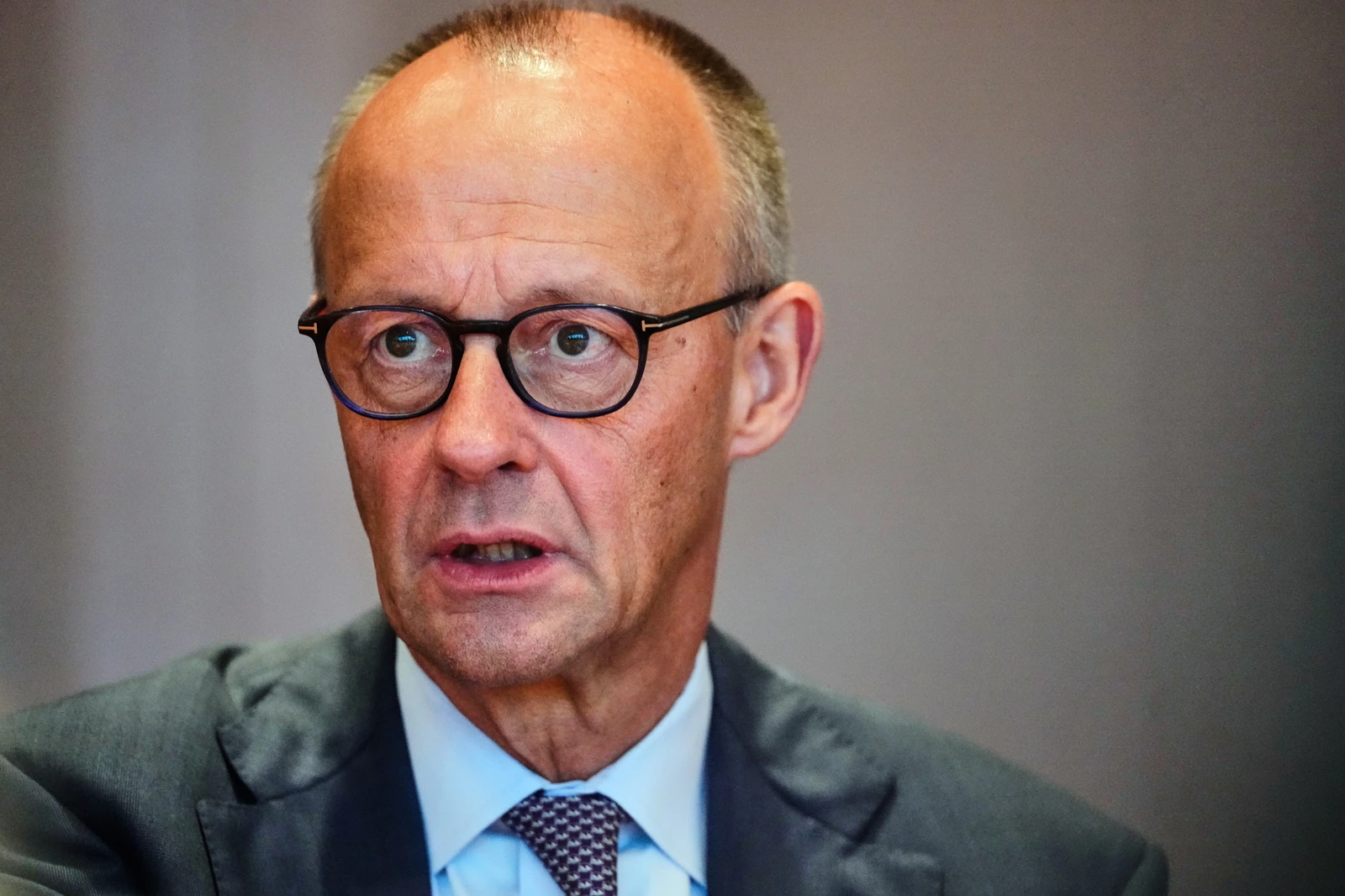
ROSTOCK, Germany: Germany’s struggling Chancellor Friedrich Merz will be relying on the popular center-left state premier in the eastern region of Mecklenburg-Western Pomerania to keep out the far right in an election on Sunday which may decide his political survival.
Fresh from its triumph in the Sept. 6 election in Saxony-Anhalt, the far-right Alternative for Germany (AfD) party looks once again likely to come in first in the Mecklenburg-Western Pomerania state election, which takes place on the same day as an election in the capital Berlin.
The AfD’s first-ever victory in a state election sent shock waves through Germany’s consensus-oriented political system, underlining the possibility of a far-right victory in Europe’s largest economy at the next federal election due in 2029. National opinion polls currently put the AfD at between 27-29 percent against 18-20 percent for the CDU.
In Mecklenburg-Western Pomerania, the other parties’ hopes of keeping the AfD from power rest largely on the popularity of the Social Democrats’ (SPD) 52-year-old state premier Manuela Schwesig, who leads a coalition with the Left Party and whose personal approval ratings are over 60 percent.
The latest poll for INSA polling institute put the AfD on 37 percent, ahead of the SPD on 35 percent, with the far-left Left Party on 10 percent, the environmental Greens on 5 percent and the far-left BSW under the threshold to enter parliament on 3 percent. Merz’s conservative Christian Democrats (CDU) were at just 7 percent.
If confirmed on Sunday, that could be enough for a coalition between the SPD, Left Party and Greens, although the Greens are sitting exactly on the 5 percent threshold.
“It is, first and foremost, the Schwesig brand,” said Wolfgang Muno, professor of political science at Rostock University. He said she was “by far the best-known politician in the state” and had succeeded in distancing herself from Merz’s government in Berlin, where the SPD is junior coalition partner to the CDU.
“And that goes down very well here, because there has been an increasingly strong anti-party sentiment here in recent years,” he said.
MERZ’S APPROVAL RATINGS HAVE PLUMMETED
In just over a year in office, Merz has seen his own approval ratings fall as low as 14 percent at national level and to single figures in the eastern states, as promised reforms have failed to show results, economic uncertainty has deepened and voter trust in the government has eroded.
The CDU is already on course for its worst-ever election result and it runs a serious risk of failing even to clear the 5 percent threshold to enter parliament.
For weeks, German media outlets have speculated over Merz’s future, fed by leaks from within his own conservative camp, with expectations now widespread that another victory for the far-right could cost him his job, if not immediately, then over the coming months.
For the moment, senior CDU leaders have stood behind him, aware that replacing him would put the entire reform agenda at risk without solving the underlying economic problems that his government has struggled to address. But a poll at the weekend by the INSA institute found that 78 percent of people, including a majority of his own party supporters, no longer see Merz as the right person for the job of chancellor.
Schwesig, seen as a potential future SPD leader, has been a fierce critic of Merz, calling for more government action to curb soaring fuel prices and criticizing his failure to connect with voters struggling with rising living costs.
“The Chancellor doesn’t really give people the impression that he sees and understands their problems,” Schwesig told a meeting with journalists in the Baltic port city of Rostock. “He simply ignores this problem.”
MOMENTUM
Like other eastern regions, Mecklenburg-Western Pomerania, a state with the one of lowest proportions of immigrants in Germany, suffers from a shortage of qualified workers and its health and aged care system depends heavily on foreign doctors, nurses and carers.
But the AfD’s promises to restrict immigration and regain access to cheap Russian energy by restoring ties with Moscow have cut through with voters in the formerly communist states of eastern Germany, where many remain distanced from the western-dominated political establishments in the mainstream parties.
“There’s a great deal of momentum building up again,” Leif-Erik Holm, the AfD’s lead candidate in Mecklenburg-Western Pomerania told reporters last week. “The Chancellor is already completely out of his depth, and you feel at any moment that he might resign.”
The state’s resurgent shipbuilding sector, lifted by Germany’s multibillion euro drive to rebuild its armed forces, and a flourishing tourism sector have helped revive an economy that was crushed in the years immediately following reunification.
But like the rest of the country, Mecklenburg-Western Pomerania bears the traces of years of sluggish economic growth, exacerbated by surging petrol prices that hit especially hard in a largely rural state where many rely on their cars to get around.
Holm has struck a more moderate tone in the campaign than others in the party, including party co-leader Alice Weidel, insisting he welcomed foreigners with jobs and avoiding many of the culture wars issues that featured in the in Saxony-Anhalt campaign.
But although his party leads in the polls, the so-called “firewall” policies of the main parties means he is unlikely to be able to find a coalition partner.
Even so, he said the polls had underestimated the AfD’s score in Saxony-Anhalt, where the party’s success in an election which saw a turnout of almost 80 percent, had been fueled by its ability to reach uncommitted voters who might otherwise have stayed at home. “And that’s what I expect to happen here as well,” he said.