- Fines for non-compliant companies have increased tenfold, reaching nearly $800,000 per day
- Authorities can now impose restrictions on companies linked to wildfires
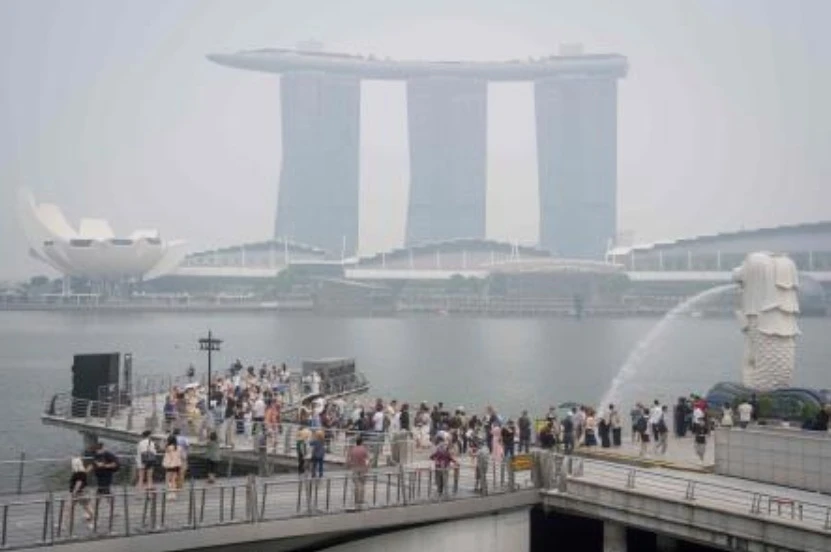
SINGAPORE: Singapore’s parliament toughened on Wednesday its anti-haze law with arrest powers, bigger fines and potential restrictions on companies linked to transboundary air pollution from wildfires.
The changes, which passed without dissent, come after weeks of air pollution from fires in neighboring Indonesia angered Singaporeans and sparked calls for action.
“We need better ways to obtain and verify information, trace complex corporate relationships, and impose meaningful consequences on errant entities,” Minister for Sustainability and the Environment Grace Fu said.
“We also need to be able to intervene earlier before haze pollution reaches Singapore. We therefore have to strengthen our laws, and we must act quickly.”
Singapore enacted a Transboundary Haze Pollution Act in 2014, but enforcement has been stymied by jurisdictional barriers and challenges obtaining evidence from overseas.
Of six cases filed in 2015 under that law, two were closed in 2017 after the companies provided information in response to the legal notices, while investigations into the other four remain open.
The changes make offenses under the law arrestable, and allow courts to try defendants in their absence if they are overseas or unreachable.
Fines increased tenfold to nearly $800,000 a day for companies deemed non-compliant, with the ceiling on fines rising to over $15.6 million.
The government now also has powers to force companies to appoint independent assessors at their expense to investigate fires, business operations and corporate relationships.
Assessors, approved by the government, will submit findings to officials for potential further action. Appointing an assessor would not imply wrongdoing, but would be a way to determine possible links to fires.
- ‘No magic bullet’ -
The changes also allow authorities to impose restrictions on designated companies, including limiting services provided by Singapore’s outsized financial industry.
Companies blaming third parties for fires affecting their land would also have to demonstrate they took reasonable steps to prevent and fight the blazes.
The changes were certified as urgent, allowing them to be debated and voted on quickly. They were passed after a lengthy debate in the legislature dominated by the ruling People’s Action Party.
Simon Tay, chairman of the Singapore Institute of International Affairs, a think-tank, told AFP the law would strengthen Singapore’s hand but limitations would remain.
Restricting commercial activities and financing of a firm involved in the fires will make that company “a corporate pariah,” he said.
The law “is loaded and now has more bullets. But there is no magic bullet solution,” Tay said.
“This alone does not guarantee that the haze will never recur. Cooperation within the ASEAN framework and with Indonesia and neighboring countries will also be essential,” he added, referring to the Association of Southeast Asian Nations.
Greenpeace Malaysia interim country representative Heng Kiah Chun said other Southeast Asian countries could learn from Singapore.
But he said that “stronger national laws must be supported by greater ASEAN cooperation, especially in sharing evidence, improving corporate transparency and preventing peatland fires at their source.”
- ‘Paper tiger?’ -
Gerald Giam of the opposition Workers’ Party supported the bill, but said he remained “skeptical about the real-world effectiveness” of the heavier criminal penalties.
“Would it simply be a paper tiger?” he asked.
Singapore last month issued warnings to 10 foreign-based companies telling them to deploy firefighters, stop burning and submit action plans.
Ten other Singapore-registered firms were also directed to appoint assessors designated by the government to examine their operations.
Fires in Indonesia burned through over 1.9 million hectares between January and the end of September, most of it in recent months, according to the Nusantara Atlas monitor.
The fires, which sparked a diplomatic spat between the neighbors, have been driven in part by drought linked to a strong El Nino phenomenon, but are also caused by longstanding deforestation and drying of peatland, experts say.
Fu, the sustainability and environment minister, said Singapore welcomed steps taken by Indonesia.
“But we must also do what we can within our own jurisdiction, to protect our people from the harmful effects of haze,” she said.