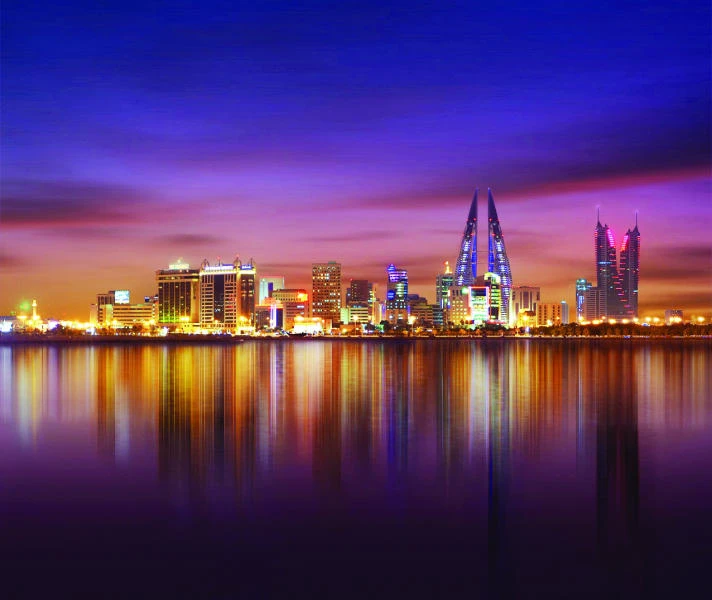
MANAMA: Bahrain’s non-oil growth reached 3.9 percent in 2015, according to the latest Bahrain Economic Quarterly (BEQ) issued by the Economic Development Board (EDB), while overall GDP growth for the year was 2.9 percent.
Despite the broader regional economic challenges, growth remained positive across all the non-oil sectors, with construction (6.4 percent), social and personal services (primarily private education and private health care) (6.9 percent) and hotels and restaurants (7.3 percent), all achieving strong year-on-year growth. The private sector remains a vital factor in Bahrain’s continuing economic growth profile, contributing nearly 3 percent to the overall growth figure for the year.
The oil sector share of real GDP fell to only 19.7 percent, demonstrating the success of Bahrain’s economic diversification efforts. Financial services (16 percent) and manufacturing (15 percent) continue to account for sizeable elements of the economy with government services (13 percent), construction (7 percent), transport and communications (7 percent), social and personal services (6 percent) and real estate and business activities (6 percent) all playing an important role. The total value of the non-oil goods export stood at approximately $17.5 billion in 2015, while since 2010, the value of non-oil goods traded internationally grew by around 19 percent.
Significant infrastructure investments have continued to progress. The total value of projects tendered reached $ 3.8 billion by the end of March 2016, with the pickup particularly evident in projects relating to the GCC Development Fund, in areas such as housing and the utilities sector.
The first quarter of 2016 has also seen a number of further developments in the manufacturing sector, including various acquisitions and joint venture agreements completed by Mumtalakat and the commencement of construction of Mondelez’s new facility in Bahrain.
Domestic credit growth in Bahrain has continued at a brisk pace in spite of indicators of liquidity tightening in much of the GCC region. Total credit growth peaked in the final quarter of 2015 at a 10 percent annual pace, with the largest segment, business loans, increasing by 5 percent year on year.
Khalid Al-Rumaihi, chief executive of the EDB, commented on the findings of the BEQ report: “Despite the continued global challenges, a range of different indicators continue to demonstrate the resilience and potential of Bahrain’s economy. The non-oil sector accounts for more than 80 percent of the economy and the private sector contribution to growth continues to expand, showing the success of our long-term diversification efforts. The positive outlook is underpinned by Bahrain’s supportive business environment for investors, including a favorable tax regime, competitive operating costs and an experienced and educated work force.”
Bahrain non-oil sector expands by 3.9% in 2015