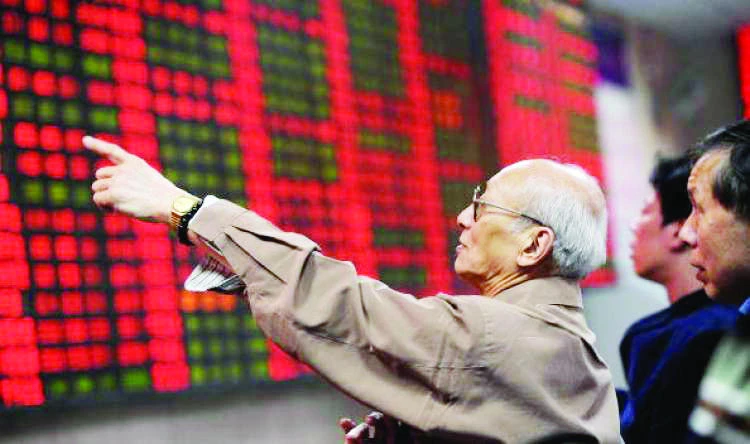
SHANGHAI: Chinese brokers have seen a surge of new stock investors and a dramatic spike in turnover on soaring local bourses, some risking borrowed money in response to government policy measures aimed at supporting a faltering economy.
The flood of small investors suggests Beijing is finally persuading people to allocate capital more broadly to the economy, instead of betting it all on property, though the last policy-led stock rally ended in a brutal crash.
Encouraging individuals to plough some of their $8.2 trillion of bank deposits into stock markets is critical if China's companies are to have reliable access to equity financing and wean themselves off excessive debt.
Official data showed Chinese retail investors, who conduct 60-80 percent of stock trades in China, opened over a million new brokerage accounts in November, up 280 percent year-on-year, after years of stagnation.
"Before this year we had to actively go find clients and tell them to trade stocks, but they wouldn't," said Xiong Yepeng, sales associate in Beijing at China Securities. "We'd open on average three or five customer accounts per day. But now we average 20 or 30."
Transaction levels have hit new highs. Trading volume on the Shanghai Composite Index closed at 56.1 billion shares on Wednesday, up 20.66 percent from the previous record on Friday; 7-day average volumes are up 165 percent since Oct. 28, 459 percent for the year.
The CSI300 index of the largest companies in Shanghai and Shenzhen rose 4.6 percent on Thursday, their biggest one-day gain since July 2013. The index has surged 20 percent since the central bank unexpectedly cut interest rates on Nov. 21 to counter the country's slowest growth in decades. Stocks had been a poor choice for local investors — the 2013 China Household Finance Survey showed that the average investor saw triple-digit returns from property, but took net losses on shares — but that should change now domestic bourses are on course to outperform the S&P 500 for the first time since 2009. The revival of interest in shares is part pull but also part push from the alternatives.
Beijing took action to cool the property market this year and also cracked down on high-yielding but opaque wealth management products, allowing high-profile defaults on trust products and bonds.
Meanwhile the China Securities Regulatory Commission allowed IPOs to resume after a year-plus freeze, and suppressed initial valuations, giving retail investors in newly listed companies double-digit and even triple-digit returns.
Chinese stock markets on record-breaking rally