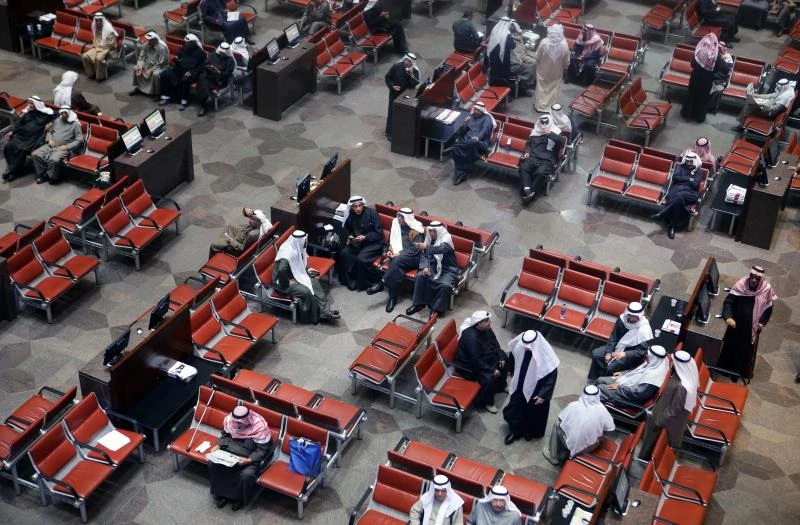
DUBAI: Most major Middle East stock markets ended 2014 with annual gains after wild swings which underlined their fragility as well as their promise to investors.
Gulf markets soared in the first half of the year as the region became more of a mainstream investment destination for foreigners with index compiler MSCI’s upgrade of the UAE and Qatar to emerging market status.
But markets then plunged in waves of panic selling during the last several months of this year as the slide in oil prices burst speculative bubbles in stocks.
Saudi Arabia was up 31 percent year-to-date at its September peak but ended 2014 down 2.4 percent. Dubai closed the year 12.0 percent higher after standing 59 percent higher in May.
Qatar was the Gulf’s best-performing market this year with a gain of 18.4 percent, while Abu Dhabi rose 5.6 percent. Oman and Kuwait lost 7.2 and 13.4 percent respectively, while Bahrain rose 14.2 percent.
Egypt was the top performer among major Middle Eastern markets, adding 31.6 percent because of returning political stability as well as economic reforms that seek to strengthen state finances and improve the business environment.
Although the price of oil, the main source of revenue for Gulf governments and economies, has halved in the last six months, the bigger Gulf economies are expected to stay strong in 2015.
That is because governments have huge fiscal reserves that will allow them to continue spending heavily. For example, Saudi Arabia’s 2015 state budget envisions a slight rise in spending from the 2014 plan.
Analysts expect most Gulf companies outside the petrochemicals sector to do just fine in an era of cheaper oil, since governments will continue to invest in large development projects and consumer demand is set to grow with rising populations.
But the Gulf markets’ panic in the final months of the year showed they remain at the mercy of the local retail investors who dominate trading volumes around the region.
Dubai builder Arabtec Awas an example of the volatility caused by those investors; the stock quadrupled during the early part of the year, then lost more than two-thirds of its value as a speculative bubble burst.
Many institutional investors expect to increase their equity allocations to the Middle East in the next three months, but they will focus on markets where petrochemicals are not heavily weighted, such as the United Arab Emirates, and oil importing economies which would benefit from cheap oil such as Egypt, the latest monthly Reuters survey of fund managers shows.
On Wednesday, markets were mixed in low-volume trade after tumbling in the previous session when oil prices hit fresh 5-1/2-year lows. Dubai’s stock index rose 1.3 percent while Abu Dhabi’s bourse was up 1.9 percent.
Oman’s benchmark jumped 2.0 percent ahead of its 2015 state budget announcement, scheduled for Thursday.
Kuwait edged up 0.4 percent and Boubyan Bank, which dominated trading, rose 1.2 percent after the chief executive of Commercial Bank of Kuwait told Reuters CBK had completed the reduction of its stake in Boubyan. The identities of the buyers of the shares were not known.
Egypt bourse top Mideast performer