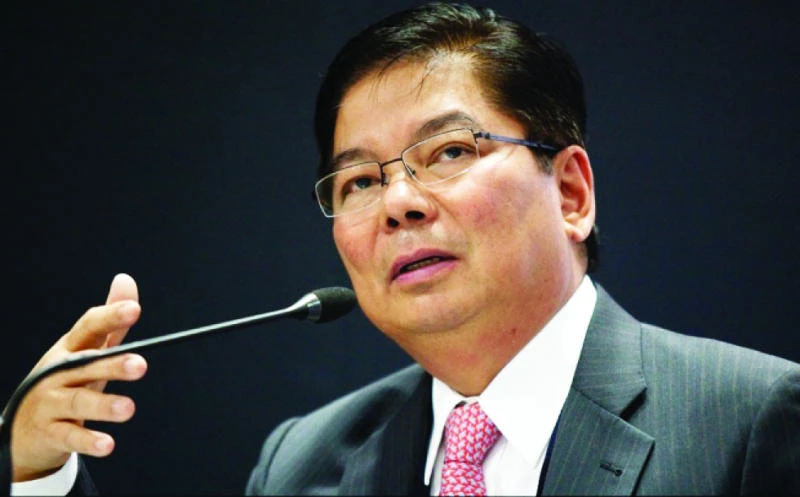
MANILA: The Philippine central bank kept its policy rate unchanged for a fifth meeting in a row, as widely expected, saying inflation was not a threat and economic growth momentum remains strong.
The central bank has maintained a tight policy bias since early last year as consumption and exports have been resilient.
The policy making Monetary Board voted to keep the overnight borrowing rate PHCBIR=ECI steady at 4.0 percent for a fifth meeting in a row after inflation slowed for a second straight month in April to hit its lowest in nearly two years.
The board also left the rate on its short-term special deposit accounts (SDAs) on hold at 2.5 percent and banks’ reserve requirement ratio at 20 percent.
“The Monetary Board believes the prevailing monetary policy settings are appropriately calibrated to the outlook for inflation and domestic economic activity,” Bangko Sentral ng Pilipinas Governor Amando Tetangco told a news conference, adding authorities were monitoring domestic and external developments for their possible impact on monetary policy.
Inflation this year is now expected to average 2.3 percent from a previous forecast of 2.2 percent, while inflation in 2016 is projected at 2.6 percent compared with an earlier estimate of 2.5 percent.
The central bank slightly nudged up its inflation view due to a combination of factors.
“We expect a weaker peso, oil prices have been trending upwards, and the impact of El Nino were the more important factors behind the slightly higher inflation forecasts,” said Diwa Guinigundo, a deputy governor.
All 10 economists in a Reuters poll had predicted the overnight borrowing rate would be kept at 4.0 percent, with nine of them saying the central bank’s next move would likely be a rate hike, rather than a cut.
Unlike some of its neighbors which have eased monetary policy to spur growth, the Philippines is expected to remain one of the fastest-growing economies in Asia, with the government targeting 7-8 percent growth this year.
The economy expanded 6.1 percent in 2014, making it the fastest growing nation in Asia after China.
Philippine central bank holds rates