LONDON: Qatari bonds extended their selloff on Thursday and stocks headed for their biggest weekly loss since 2011, though broader emerging equities stabilized after two days of losses, helped by robust Chinese trade data.
Chinese mainland stocks hit six-month highs, up almost 1 percent after stronger-than-anticipated China exports and import data for May suggested the economy is holding up well, while central bank reserves also rose.
There are also expectations that index provider MSCI will decide to include mainland A shares in its benchmark on June 20.
Hong Kong’s benchmark Hang Seng Index climbed to another 23-month closing high while MSCI’s emerging equity index was virtually flat.
Qatar, however, remained in the spotlight after its Gulf neighbors, led by Saudi Arabia, this week said they were severing ties with the country as well as imposing trade and travel bans. That prompted S&P Global to cut Qatar’s rating by a notch to AA- with a negative outlook.
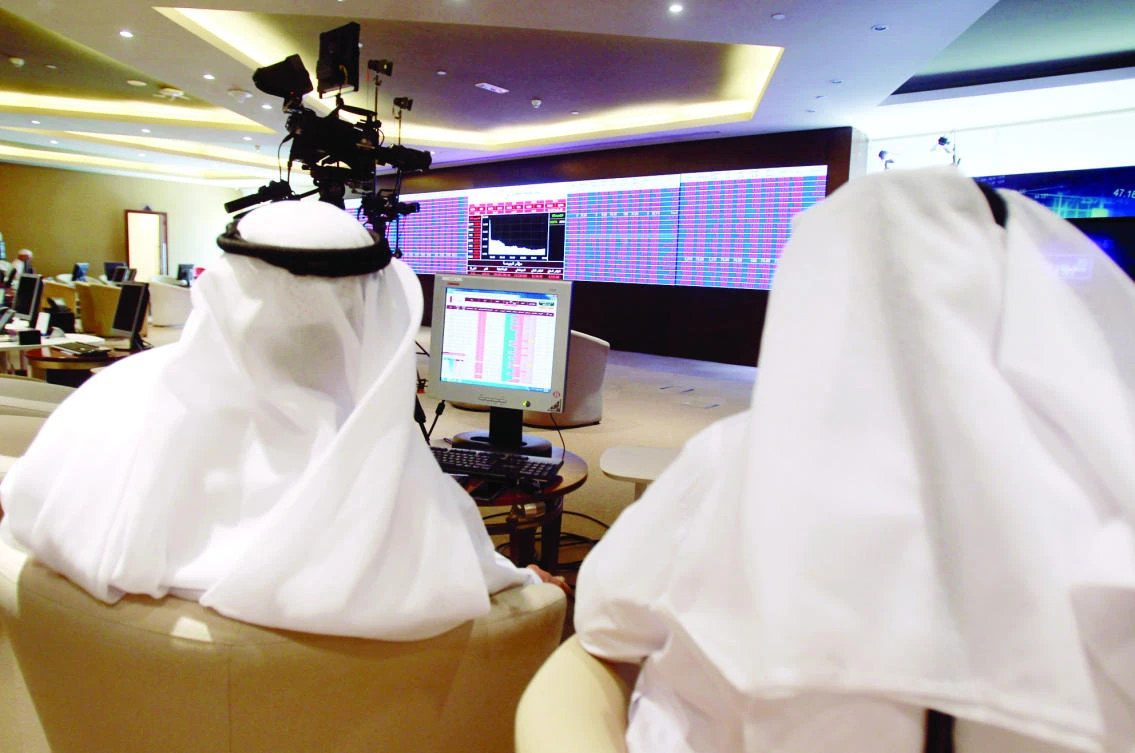
Doha stocks rebounded 2.3 percent after falling almost 10 percent in recent days, and were on track for their biggest weekly loss since March 2011.
There is also some pressure on the riyal’s dollar peg, and tighter liquidity has pushed up domestic deposit rates sharply .One-year riyal forward are trading at 3.667 per dollar, well below the spot 3.64 rate.
Analysts at ING said consequences could be severe for Qatar, especially if it found itself unable to hold the currency peg, though it sees this outcome as highly unlikely and does not expect contagion across other Gulf currency pegs.
“Typically pressure on GCC (Gulf Cooperation Council) pegs has proved temporary, with local authorities happy to tell speculators they will lose,” ING analysts said in a note to clients. “However, prior speculative attacks have typically been macro-led — e.g. during periods of low oil prices.
“The fact that the current pressure is political and triggered by fellow GCC members is alarming. Given that we are not looking for the Qatari peg to break, we do not see a major speculative attack on the GCC as a whole.”
Qatar’s Eurobond maturing 2026 fell 0.7 cent, according to Tradeweb data, while the 2027 bond from the Ras Laffan Liquefied Natural Gas Company dropped 1.5 cents and five-year credit default swaps (CDS) rose 3 basis points (bps) to 92 bps, a seven-month high.
The Turkish lira edged up only 0.1 percent after strong industrial production data. An aide to President Tayyip Erdogan said interest rates were too high for industry.
Chinese mainland stocks hit six-month highs, up almost 1 percent after stronger-than-anticipated China exports and import data for May suggested the economy is holding up well, while central bank reserves also rose.
There are also expectations that index provider MSCI will decide to include mainland A shares in its benchmark on June 20.
Hong Kong’s benchmark Hang Seng Index climbed to another 23-month closing high while MSCI’s emerging equity index was virtually flat.
Qatar, however, remained in the spotlight after its Gulf neighbors, led by Saudi Arabia, this week said they were severing ties with the country as well as imposing trade and travel bans. That prompted S&P Global to cut Qatar’s rating by a notch to AA- with a negative outlook.
Doha stocks rebounded 2.3 percent after falling almost 10 percent in recent days, and were on track for their biggest weekly loss since March 2011.
There is also some pressure on the riyal’s dollar peg, and tighter liquidity has pushed up domestic deposit rates sharply .One-year riyal forward are trading at 3.667 per dollar, well below the spot 3.64 rate.
Analysts at ING said consequences could be severe for Qatar, especially if it found itself unable to hold the currency peg, though it sees this outcome as highly unlikely and does not expect contagion across other Gulf currency pegs.
“Typically pressure on GCC (Gulf Cooperation Council) pegs has proved temporary, with local authorities happy to tell speculators they will lose,” ING analysts said in a note to clients. “However, prior speculative attacks have typically been macro-led — e.g. during periods of low oil prices.
“The fact that the current pressure is political and triggered by fellow GCC members is alarming. Given that we are not looking for the Qatari peg to break, we do not see a major speculative attack on the GCC as a whole.”
Qatar’s Eurobond maturing 2026 fell 0.7 cent, according to Tradeweb data, while the 2027 bond from the Ras Laffan Liquefied Natural Gas Company dropped 1.5 cents and five-year credit default swaps (CDS) rose 3 basis points (bps) to 92 bps, a seven-month high.
The Turkish lira edged up only 0.1 percent after strong industrial production data. An aide to President Tayyip Erdogan said interest rates were too high for industry.