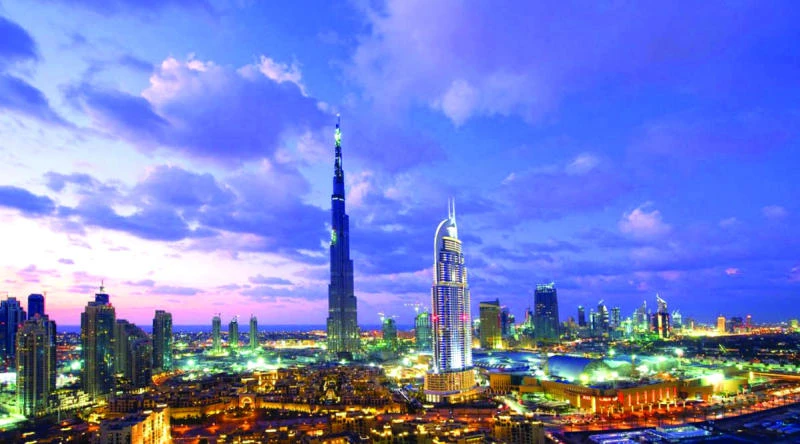
More than 3,000 delegates from the worlds of academia, business, government and civil society are taking part in the first Global Islamic Economy Summit in Dubai.
Sheikh Mohammed bin Rashid Al-Maktoum, vice president and Prime Minister of the UAE and Ruler of Dubai, inaugurated the conference.
Thomson Reuters and the Dubai Chamber of Commerce and Industry are jointly hosting the event, according to a press release received here.
Hamad Buamim, president and CEO, Dubai Chamber of Commerce and Industry, gave the welcome speech.
It was followed by the first plenary session of the summit and a discussion on the impact of the Islamic economy on an evolving global economic landscape.
Buamim said: “We have the opportunity now to lay the foundations for a strong and vibrant global Islamic business community that is united under the same religion.”
He added: “Working with global partners, Dubai is seeking to bring the Muslim world together under the concept of the Islamic economy. This is a huge task, and one that we have a tight timescale to achieve. But today is a major step forward in realizing this ambition. We hope that this event will define and set the standard for future advances in this new economic landscape.”
In the session, comments were given by Mohammed Al-Shihhi, undersecretary, UAE Ministry of Economy, Baroness Warsi, senior minister of state, UK Foreign and Commonwealth Office, Sapta Nirwander, deputy minister, Indonesian Ministry of Tourism and Creative Economy, Ambassador Mouhamdou Doudou Lo, director general, Department of Economic Affairs, Organization of Islamic Cooperation, Saudi Arabia.
The panel provided attendees with insight into the leaders of the Islamic world, their vision for the future and the key priorities that will shape the development of the Islamic world.
During the session, Mohammed Al-Shihhi said: “The UAE, being at the center of the Islamic world and a gateway between Europe and Africa, can be a major player when it comes to the globalization of the Islamic economy.”
Al-Shihhi said: “The word globalization is very important here — the resilience and soundness of the Islamic economic model is not exclusive to the Muslim world. For instance, 50 percent of Islamic Finance customers in Malaysia are non-Muslims. We are hoping that this event will make it clear to the world that the Islamic economy model is not exclusive to the Muslim population, but rather a model for the world.”
The official awards ceremony conducted in the presence of Sheikh Mohammed bin Rashid Al-Maktoum.
It was attended by a panel of senior ministers and policy makers lead by Abdul Rahman Saif Al-Ghurair, chairman, Dubai Chamber of Commerce and Industry.
The second plenary sessio n ‘Beyond Halal Food and Islamic Finance’ started with an overview of key insights from the State of the Global Islamic Economy Report followed by opening remarks from Essa Kazim, chairman of Borse Dubai; chairman of Dubai Financial Market; secretary general of the Islamic Economy Higher Committee, UAE.
Mark Mobius, executive chairman, Templeton Emerging Markets, Singapore, said: “The rise of the Islamic emerging markets has led to a “new normal” for the global economy. One of the interesting things that we’re seeing is the rise of global sovereign wealth funds; we now estimate that they account for $6 trillion of global assets and 42 percent of sovereign wealth funds now come from Islamic nations.”
Resilience of Islamic economy in spotlight