Far East Asia is one of the most diverse and exotic areas on the planet, from beautiful lagoons of Thailand, the tropical archipelago of Philippines, the busy skyline of Hong Kong, thick jungles of Indonesia, rice fields of Vietnam, cherry blossom blooms of Japan and so much more. One of the rarities of East Asia is Seoul, South Korea. In just half a century, the city of Seoul has transformed into a dynamic city, the world’s second largest metropolis serving as a major political and economic hub and yet still in tune with its beautiful history. The capital Seoul is a one of a kind destination, a mash up of night markets, majestic palaces, architectural dream buildings and skyscrapers that also caters to all walks of life and a melting pot of multiple nationalities all experiencing the South Korean experience. A tourist could easily get lost with the amount of things to do in Seoul, there are numerous activities to please everyone, mind boggling future technology museum for the tech-savvy, a bag museum for the shopaholic, temples and palaces beautifully preserved for centuries for the history lover and hours and hours of walking in the streets for the curious explorer.
The city is the second largest in the world and its numerous districts are all significant and different. There’s Bukchon or Bukchon Hanok village, the most beautiful historical district where visitors can walk through the narrow streets and view the different sizes of old traditional Korean houses. Insadong, Itaewon-dong, Gangnam-gu, Jongno financial district, and so many more areas well known for tourist attractions and some not so yet are still interesting to visit. Seoul prides itself with its public transportation especially when using the underground railway. It’s very easy to use and efficient for English speakers as well which makes it the best way to travel around the city.
The first thing that comes to mind at times when hearing of Korea is kimchi and Korean BBQ, superb thinly sliced cuts of beef grilled to one’s liking on a grill (also called gogigui) placed in the middle of the table. The number of restaurants in the city is pretty large, varied in different international cuisines along with traditional Korean houses. Food is always an experience in Seoul, the Korean cuisine is significant on its own. There is never one dish on the table, instead there is one main dish along with side dishes depending on the type of table it is, porridge table, noodle table, refreshment table…etc. There are certain Korean delicacies that are a must try when in Seoul and can be found everywhere, there’s bibimbap, tteokbokki, poop cake (excuse the name but it’s a red bean filled donut like pastry sold in street vendors, a must try), makguksu, foot long ice cream (yes a foot long), bungeoppang, mayak kimbap and so much more. The Korean cuisine revolves around rice, kimchi and lots of meat so the choices are endless as well as the restaurants and cafes each with their significant concepts so one’s craving is never bored. One must not be a picky eater here.
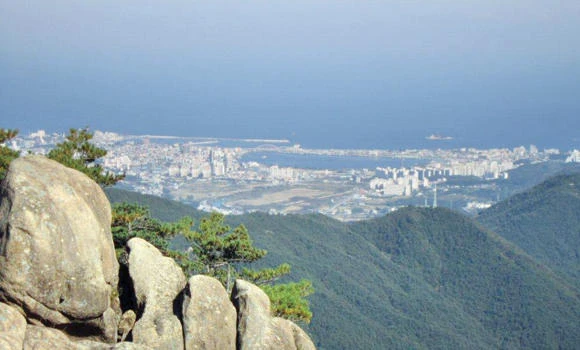
As South Korea’s largest city, Seoul certainly has a claim on being one of the financial and cultural epicenters of East Asia. But this city’s most compelling trait may be how it continues to embrace its ancient traditions while also becoming a Silicon Valley hub with endless food streets, high-energy nightlife and cutting-edge architecture. In the late fall, the Seoul Lantern Festival is a must visit with over 35,000 colorful lanterns lighting up along Cheonggyecheon. Each year there is a certain theme placed and it is a magnificent sight to see in the evenings. Bukhansan National Park is a mountainous area just on the outskirts of the city, with spectacular views of Seoul from the top and surrounding mountains on the other. It can be a little challenging for some but all in all the peaks provide views that are surely to be remembered, just be sure to choose a day where the sky is clear to view the surrounding areas in clear view.
When you visit Seoul, you’ll see a study in contrasts. Spring and fall are the best times to visit the city, the weather is great for visiting the famous palaces that are spread around the city and coexist with the surrounding sky scrapers and business districts. The “Palace Greatly Blessed by Heaven” or Geyongbokgung in Korean is the longest and most storied palace in Korean history dating back to 1395. There is a secluded secret garden in the back of the palace with stunning views ideal for photographers. Changdeokgung, one of the “Five Grand Places” in Seoul dating from the Joseon Dynasty, Changdeokgung may have been the secondary palace in the royal pecking order (beneath the larger Gyeongbokgung), but for many Joseon princes it was the favored palace. This UNESCO World Heritage site is exquisitely preserved, with stunning East Asian architecture and lovely gardens. Changdeokgung is best known for its uniquely East Asian landscaping — specifically, the organic way in which the gardens blend into the regional topography where you’ll find 300-year-old trees and unassuming pavilions.
N Seoul tower is one of Seoul’s most iconic landmarks. Jutting out from Namsan Mountain, it sticks out of the Seoul skyline most prominently and can be easily photographed from many places in Seoul, but many photographers take their photos from the base of the tower. It’s here where you’ll find a pavilion with traditional Korean architecture nicely contrasting with modern man’s achievement up above. While you’re there, don’t forget to take pictures of the love locks as well as the entire city from atop the tower.
The nation has brought the world MP3 players and touch screen mobile phones, K-pop and the infamous kimchee, Seoul still holds on to their hospitality etiquettes regardless of the advancements around them. While one can stroll in a department store, each designer section has their own staff who greet in the kindest form, using the phrases “annyeonghaseyo” for welcome and “kamsahamnida” for goodbye with a slight bow as a show of respect and appreciation. Korean fashion is known to be contemporary and subtle due to their traditions, and one might think that the trendsetters of that region would be Japan, but fret not fashion lovers, Seoul houses some of the best up and coming designers taking the fashion world by storm. When one is in Seoul, shopping is never a bore.
One must always remember that countries such as Japan and Korea are very strict with their etiquettes and have traditions that have not been forgotten for hundreds of years. Koreans hang on to their traditions and pass them down from one generation to the other with pride.
Parks are a great treasure for the residents of Seoul, even with all the surrounding concrete, there is great appreciation for secluded green areas open for all public. There is Seoul Forest, open all year round; Hangang Park in the heart of Seoul next to the Han River famous for bike rides and visitors can rent bikes as well, Yeouido Park best known for their cherry blossom blooms and so much more. As for amusement parks, Lotte world is the largest indoor amusement park that includes a number of restaurants, an ice rink and even a light parade to end the evening.
Museums are diverse in Seoul, ranging from historical museums to the most modern technological savvy. Some of the most popular museums would be the National Museum of Korea, located in Yongsan, the heart of the city, T.um which stands for Telecom Ubiquitous Museum, presenting the developing technology of Korea and features of what the future would hold, one can change wallpaper with a swipe of the hand and charge their electric cars in stations (remember back to the future and the professor’s predictions of 2015? Well it’s something similar to that but more shiny). There’s the Robo Life Museum with a collection of over 30 different types of robots on display, the Simone Handbag Museum is every woman’s dream and every husband’s nightmare and so much more.
One must not leave Seoul without a visit to one of their spas. Spas in Korea especially offer many treatments to relieve stress and fatigue and why not do so before a long flight home. There, visitors can hop from saltwater pool to ginseng, mineral and rose baths. Treatments vary from aroma-therapeutic care, traditional and folk remedies, jade and clay sauna, ginseng and mugwort hot saunas and cedar baths. There are many options to choose from and spas are located all around the city and in hotels as well.
Seoul is a city full of adventure all on its own; the streets are filled with markets and street vendors, malls and spas, themed cafes and busy restaurants, narrow secluded streets and large walkways on riverbeds. Seoul is a gem and a great destination to explore the historic and future coexisting in cohesion.
— [email protected]
Seoul: where the past and present coexist