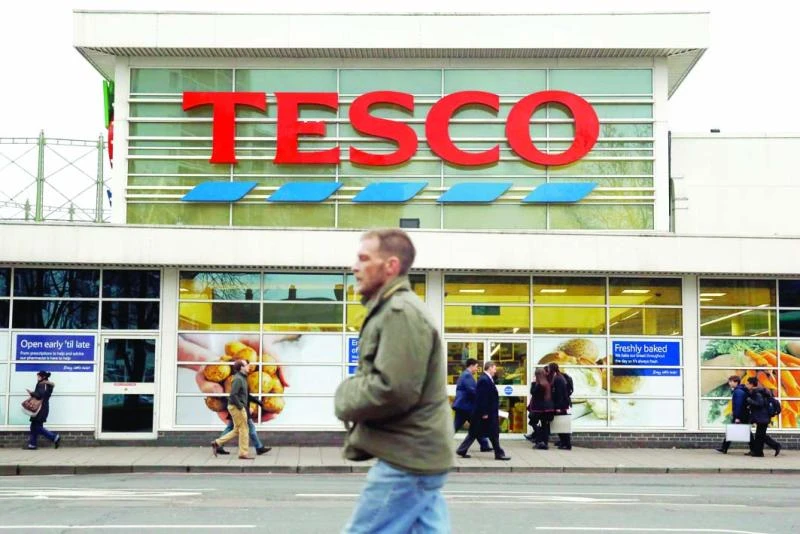
LONDON: The downgrading of Tesco’s debt to “junk” status could limit its bargaining power on asset sales as well as symbolizing the decline in fortunes of Britain’s biggest retailer.
Ratings agency Moody’s downgraded the company’s debt to non-investment grade late on Thursday on expectations that profits will remain challenged by the rapid changes in the British supermarket sector.
That spoiled a day when Tesco’s shares had risen as much as 15 percent after the grocer reported Christmas trading that was not as bad as feared and investors welcomed plans from new Chief Executive Dave Lewis to slash costs and sell assets to fund lower prices and recover lost market share.
Shares in Tesco fell 2.5 percent on Friday while its bonds largely shrugged off the news, which had been anticipated.
Lewis has the tough task of restoring faith in Tesco, once the dominant force in the British retail landscape, after a 263 million pound ($400 million) accounting scandal and four profit warnings last year.
Clive Black, analyst at Shore Capital, said the obvious time to have downgraded Tesco’s debt would have been 12-18 months ago when the firm was in a tailspin, “not (now) when management is demonstrably cutting costs, conserving cash, prioritising de-leveraging and demonstrating some signs of improved trading.”
Because many major investors are not allowed to own bonds below investment grade, known as junk bonds, some could be forced to sell their holdings.
“Borrowing costs will rise, at a time of squeezed operating margins, and Tesco’s negotiating leverage on future business disposals will be much reduced,” said independent retail analyst Nick Bubb.
FIGHTING BACK
With Lewis indicating more price cuts are likely an industry price war also looks set to escalate in 2015.
This week has also seen Wal-Mart’s Asda and Sainsbury’s announce further price reductions, while Morrisons is promising to match German discounters Aldi and Lidl on price with its loyalty scheme.
Some analysts reckon discounter growth rates may have peaked as the “big four” retaliate with price cuts.
“2015 could be the year Tesco grasps the nettle and gives its faltering rivals, and perhaps even the discounters, food for thought,” said analysts at retail research group Conlumino.
Analysts are however wary that “Black Friday” promotions on Nov. 28 may have flattered Tesco’s sales over the Christmas period and wondered if an improved performance in general merchandise was sustainable.
Tesco’s road to recovery: Debt downgrade is new hurdle