- Saudi Arabia is advancing AI beyond traditional advisory roles, aiming for autonomous digital agents capable of executing complex tasks.
- The Saudi cabinet has declared 2026 as the Year of AI, emphasizing the importance of technology in economic diversification.
- Expert insights indicate that agentic AI functions like an autonomous worker, streamlining workflows across various systems without human intervention.
RIYADH: Saudi Arabia is moving artificial intelligence beyond systems that only advise, with sectors including energy and telecommunications exploring possibilities of running live agentic workflows that plan and complete tasks, experts told Arab News.
These comments come against the backdrop of the Saudi cabinet’s decision in March to declare 2026 the Year of AI, underscoring the acceleration of the technological revolution in the Kingdom and positioning it as a national lever for economic diversification.
Tariq Salameh, solution engineer director at Cloudera told Arab News that Saudi executives who still picture AI as a chatbot are looking at a change that is operational rather than cosmetic.
“Traditional AI acts like a consultant, it analyzes information, answers questions, and makes recommendations, but leaves the actual execution to your team,” he said, adding: “Today’s AI, however, acts as a digital worker capable of planning and completing complex tasks from start to finish.”
The director went on to say: “Consider an energy plant. A standard chatbot might just alert an operations manager that a turbine needs maintenance.
“An active AI agent checks sensor data, reviews past repairs, locates spare parts in the warehouse, drafts the work order, and schedules a technician.”
Alessandro Lanteri, teaching professor and executive director at Georgetown University’s McDonough School of Business in Dubai said that an agentic AI functions more like an “autonomous digital worker that breaks that goal into steps, reaches into enterprise systems such as ERP, cloud, email, and inventory, calls external APIs, and carries out final actions without further human intervention.”
From adviser to operator
Speaking to Arab News, Raymond Khoury, senior partner and innovation practice lead at Arthur D. Little Middle East, said that Saudi Arabia can make use of agentic AI, as it is a digital adviser that answers questions, creates content and recommends actions.
According to Khoury, an agentic AI interprets an objective, coordinates tasks across systems, executes approved actions and escalates exceptions.
He illustrated the difference with procurement. A chatbot can explain a policy, while an agent can validate a request, check budget availability, identify an approved supplier, create the purchase requisition and route it for approval.
“In this context, a Saudi executive question shifts from ‘Which chatbot should we deploy?’ to ‘Which business outcomes can we safely delegate, under what authority and accountability?’,” said Khoury.
Prominent sectors
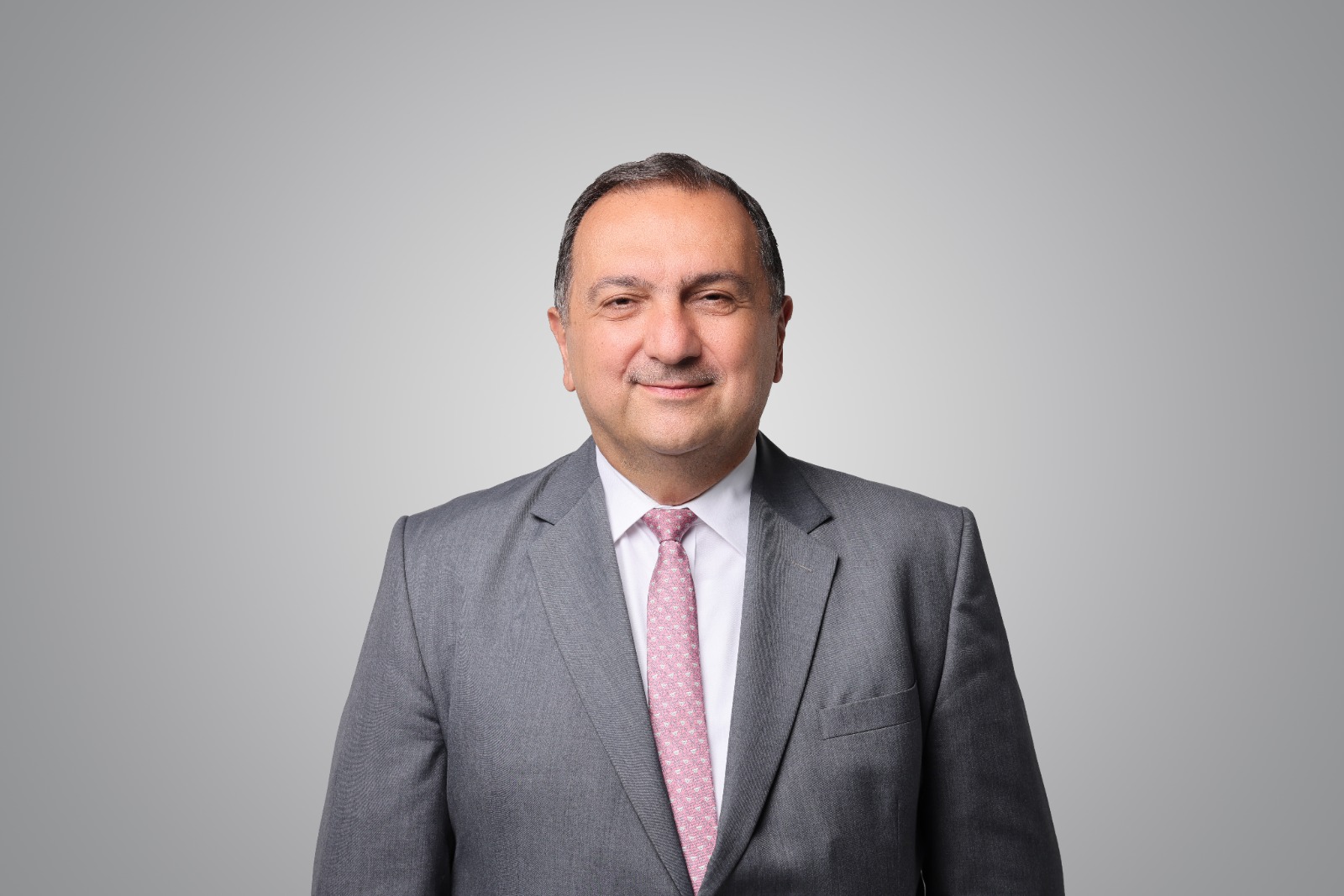
Ibrahim Al-Ossaimi, managing director for Saudi Arabia at digital business services company TP, said that the earliest momentum seen in agentic AI deployment in the Kingdom is in sectors that already have mature digital channels, high transaction volumes and clearly structured processes.
“We are already seeing this play out in Saudi Arabia’s tourism ecosystem. The Nusuk AI assistant, for example, supports more than 180 languages and has assisted more than 2 million users, while AI agents working alongside human teams are also becoming part of customer-facing travel services. These are good examples of AI moving beyond experimentation into practical, high-volume use cases,” said Al-Ossaimi.
Other sectors are moving at different speeds, particularly where legacy technology, fragmented data or complex operations make integration harder.
The dividing line, Al-Ossaimi said, is less about which industry is ready for AI and more about whether an organization has the data, processes and governance to turn an experiment into a reliable operating model.
Khoury expressed a slightly different view, and said that Saudi Arabia’s banking, healthcare and statutory government decisions remain more cautious and largely at proof-of-concept stage because the cost of an incorrect action is higher.
“Saudi Arabia is moving beyond pilots, but most deployments remain human-supervised rather than fully autonomous,” said Khoury.
Upcoming events and agentic AI use
Al-Ossaimi highlighted the crucial potential of agentic AI use as the Kingdom gears up to host major events including Expo 2030 Riyadh and the FIFA World Cup in 2034.
He said these will “create significant peaks in demand across customer service, travel, hospitality, transport and other visitor-facing services, often across multiple languages and channels.”
He added: “Agentic AI can help organizations manage that complexity by handling routine interactions and coordinating processes at scale, while ensuring people remain available for situations that require judgment, empathy or intervention.”
Khoury believes the deployment of the technology has huge opportunities in the Kingdom’s giga-projects as these facilities must coordinate thousands of employees, suppliers, contractors, approvals, and documents.
The Arthur D. Little official added that agentic AI can absorb much of the administrative workload required to scale these giga-project ecosystems.
“In essence, giga-projects should position agentic AI as a capacity and execution strategy, not simply a headcount-reduction program,” said Khoury.
Potential concerns
Speaking to Arab News, Jason Schloetzer, associate professor at the Georgetown University McDonough School of Business and faculty on the Dubai Executive MBA program said that Saudi organizations struggle with data quality, mirroring a global problem.
According to Schloetzer, the deeper issues is fragmented data ownership, not technology alone. Reluctance to grant agents autonomy often reflects the absence of identity and audit controls.
“In my view, the next major challenge is accountability across organizational boundaries,”he said, adding: “Most current governance work, including everything we have discussed, assumes that an agent operates inside one organization, under one set of policies, with one accountable owner. That assumption will not hold much longer.”
Schloetzer warned that errors can also compound, saying: “One agent’s mistake becomes another agent’s input, and failures can spread faster than any human review cycle can catch them.”
According to Khoury, the most pressing challenges faced by Saudi organizations while deploying agentic AI are less about model intelligence and more about enterprise readiness.
“The lesson to be shared here is that to be successful in agentic AI deployment, organizations in Saudi Arabia should focus less on launching more AI pilots and more on building the data foundation, integration, governance and controls required to scale a small number of high-value agentic workflows safely and economically,” said Khoury.